

Tuesday, October 20, 2026
Science
No Result
View All Result
  • Login
  • HOME
  • SCIENCE NEWS
  • CONTACT US
  • HOME
  • SCIENCE NEWS
  • CONTACT US
No Result
View All Result
Scienmag
No Result
View All Result
Home Science News Cancer

Longitudinal cohort links chemotherapy cycles with shifting liver, kidney and electrolyte markers in 60 Kenyan cervical cancer patients

October 20, 2026
in Cancer
Nathaniel Bowman
By Nathaniel Bowman Scienmag Editorial Profile - Precision Oncology
Reading Time: 2 mins read
0
Chemotherapy Quietly Strains Kidneys and Liver in Kenyan Cervical Cancer Patients, Study Finds

Chemotherapy Quietly Strains Kidneys and Liver in Kenyan Cervical Cancer Patients, Study Finds

65
SHARES
587
VIEWS
Share on FacebookShare on Twitter
ADVERTISEMENT

A longitudinal cohort study of 60 patients with cervical cancer receiving chemotherapy at Jaramogi Oginga Odinga Teaching and Referral Hospital in Western Kenya found that kidney-function markers changed from the first treatment cycle, while shifts in several liver-associated enzymes and a decline in serum sodium emerged in later cycles. These findings are reported in the abstract of an open-access BMC Cancer article published on 18 September 2026; the abstract notes that the displayed version may still undergo further edits before the final Version of Record.

The researchers enrolled patients aged 23–80 years between September 2024 and February 2025. Venous blood samples were collected at baseline and at three subsequent 21-day chemotherapy-cycle intervals. They measured alanine aminotransferase, aspartate aminotransferase, alkaline phosphatase and gamma-glutamyl transferase as liver-associated enzymes; urea, creatinine and estimated glomerular filtration rate as kidney-function markers; and sodium, potassium and chloride as serum electrolytes. All measurements were made with the Cobas Integra 400 Plus chemistry analyzer. According to the abstract, Shapiro–Wilk testing indicated non-normal data distributions, so the investigators used Friedman tests for overall longitudinal comparisons. Follow-up comparisons applied a Bonferroni–Holm correction for liver enzymes and a Bonferroni correction for kidney and electrolyte parameters, with significance set at p < 0.05.

Kidney-related measurements showed the earliest changes. Serum creatinine increased significantly from the first cycle onward (Friedman χ² = 28.918, p < 0.001), while estimated glomerular filtration rate declined significantly after the first cycle (χ² = 27.438, p < 0.001). Urea rose significantly by the third cycle (χ² = 7.841, p = 0.049). Serum sodium also declined progressively: the group mean fell from 135.2 ± 4.2 mmol/L at baseline to 131.5 ± 12.2 mmol/L by the third cycle. The overall sodium change was significant from the second cycle onward (χ² = 22.151, p < 0.001), and the group mean was below the study’s stated 135–145 mmol/L reference range by cycle two. Potassium and chloride did not change significantly during treatment, with p-values of 0.881 and 0.333, respectively.

Changes in liver-associated enzymes varied by marker. Alanine aminotransferase and aspartate aminotransferase were significantly elevated in the later cycles, with Friedman statistics of χ² = 17.428 and χ² = 12.898, respectively. Alkaline phosphatase increased progressively from the second cycle onward (χ² = 25.823, p < 0.0001), whereas gamma-glutamyl transferase showed no statistically significant change (p = 0.299). The abstract reports temporal associations within a treated cohort of 60 patients at one hospital. It does not describe an untreated or otherwise unexposed comparison group, so the findings do not establish that chemotherapy caused the observed changes. The abstract also does not report the chemotherapy regimens, clinical outcomes, direct measures of kidney or liver injury, completeness of follow-up or potential confounding factors. The single-center sample and these omitted details limit interpretation and do not show how broadly the results might apply beyond the hospital studied.

Subject of Research: Longitudinal changes in liver, kidney and electrolyte biomarkers during chemotherapy for cervical cancer in Kenya

Article Title: Biochemical changes in liver, kidney, and electrolyte parameters among cervical cancer patients receiving chemotherapy in a kenyan referral hospital

Article References: Ogutu, E. A., Owuor, B., & Nonoh, J. (2026). Biochemical changes in liver, kidney, and electrolyte parameters among cervical cancer patients receiving chemotherapy in a kenyan referral hospital. BMC Cancer. https://doi.org/10.1186/s12885-026-16848-9

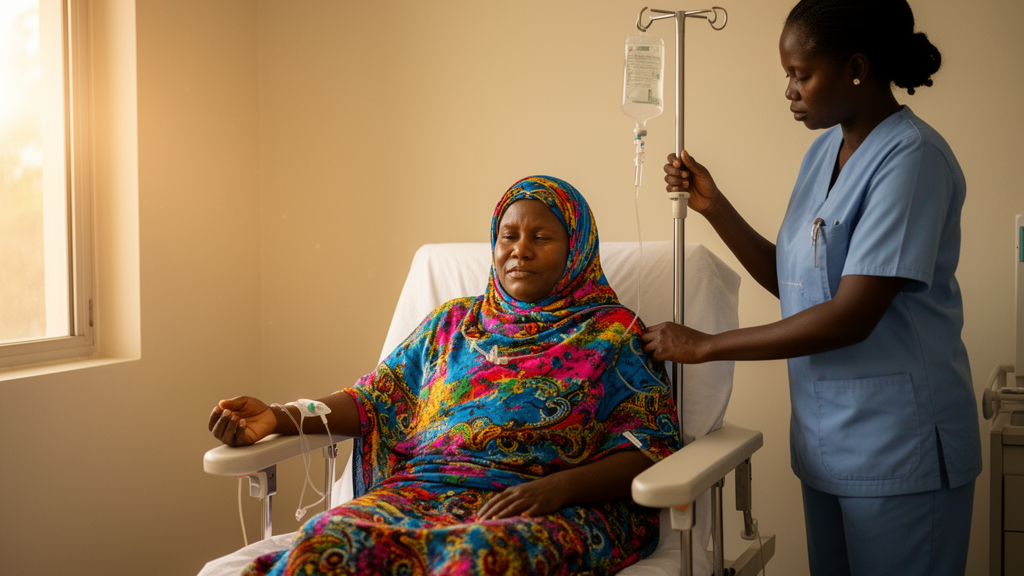
Image Credits: AI Generated

DOI: 10.1186/s12885-026-16848-9

Keywords: cervical cancer, chemotherapy, liver enzymes, kidney function, serum electrolytes, creatinine, estimated glomerular filtration rate, sodium, longitudinal cohort, Kenya, Biochemical, changes

Cite Scienmag News

Nathaniel Bowman. (October 20, 2026). Longitudinal cohort links chemotherapy cycles with shifting liver, kidney and electrolyte markers in 60 Kenyan cervical cancer patients. Scienmag. https://scienmag.com/longitudinal-cohort-links-chemotherapy-cycles-with-shifting-liver-kidney-and-electrolyte-markers-in-60-kenyan-cervical-cancer-patients/


Nathaniel Bowman. "Longitudinal cohort links chemotherapy cycles with shifting liver, kidney and electrolyte markers in 60 Kenyan cervical cancer patients." Scienmag, 20 October 2026, https://scienmag.com/longitudinal-cohort-links-chemotherapy-cycles-with-shifting-liver-kidney-and-electrolyte-markers-in-60-kenyan-cervical-cancer-patients/. Accessed 20 October 2026.

Nathaniel Bowman. "Longitudinal cohort links chemotherapy cycles with shifting liver, kidney and electrolyte markers in 60 Kenyan cervical cancer patients." Scienmag. October 20, 2026. https://scienmag.com/longitudinal-cohort-links-chemotherapy-cycles-with-shifting-liver-kidney-and-electrolyte-markers-in-60-kenyan-cervical-cancer-patients/

Tags: biochemicalbiochemical marker changes in cervical cancer patientscervical cancerchangeschemotherapychemotherapy cycle impact on electrolyte levelscreatinineeffects of chemotherapy cycles on organ functionelectrolyte shifts in cervical cancer therapyestimated glomerular filtration rateimpact of chemotherapy on renal and hepatic functionKenyaKenyan cancer patient biomarker monitoringKenyan cervical cancer chemotherapy effectskidney functionkidney function alterations in chemotherapy patientsliver enzyme changes during cancer treatmentliver enzymeslongitudinal analysis of chemotherapy side effectslongitudinal cohortlongitudinal cohort study on liver and kidney markersserum electrolytesserum sodium decline during cancer treatmentsodium
Share26Tweet16
Previous Post

Qualitative realist evaluation identifies 12 case-management configurations in Canadian primary care

Next Post

Rice PML3 knockout study links Golgi manganese disruption to changes in young tissues

Related Posts

Sphingolipid Metabolism Reprogramming Drives Immunosuppressive MDSCs in Cervical Cancer
Cancer

Murine cervical cancer cell study links KNG1–S1P axis to reprogrammed myeloid-derived suppressor cells

October 20, 2026
Hidden DNA Repair Fallback Pathways Leave Distinct Genomic Scars Across 17 Cancer Types
Cancer

Genome-wide analysis links tumor deletion patterns to alternative DNA repair

October 20, 2026
Subcutaneous trastuzumab linked to higher complete response rates in HER2-positive breast cancer
Cancer

Single-center retrospective study links subcutaneous trastuzumab to higher complete-response odds in HER2-positive breast cancer

October 20, 2026
EP300 Degradation and AKT Inhibition Slow Osteosarcoma in Preclinical Models
Cancer

EP300 Degradation and AKT Inhibition Slow Osteosarcoma in Preclinical Models

October 20, 2026
Real-World Data Suggest Bevacizumab Extends Survival in Advanced Ovarian Cancer
Cancer

Real-world cohort links frontline bevacizumab to longer survival in advanced ovarian cancer

October 20, 2026
Gene Signature Tied to Nodal Spread Predicts Metastasis Risk in Nasopharyngeal Cancer
Cancer

Eight-gene ENE-related RNA signature stratifies metastasis risk and immune features in nasopharyngeal carcinoma

October 20, 2026
Next Post
Golgi Manganese Transporter Holds the Key to Young Rice Tissue Growth

Rice PML3 knockout study links Golgi manganese disruption to changes in young tissues

  • Mothers who receive childcare support from maternal grandparents show more optimized

    Mothers who receive childcare support from maternal grandparents show more parental warmth, finds NTU Singapore study

    27656 shares
    Share 11059 Tweet 6912
  • University of Seville Breaks 120-Year-Old Mystery, Revises a Key Einstein Concept

    1061 shares
    Share 424 Tweet 265
  • Bee body mass, pathogens and local climate influence heat tolerance

    682 shares
    Share 273 Tweet 171
  • Researchers record first-ever images and data of a shark experiencing a boat strike

    546 shares
    Share 218 Tweet 137
  • Groundbreaking Clinical Trial Reveals Lubiprostone Enhances Kidney Function

    531 shares
    Share 212 Tweet 133
Science

Embark on a thrilling journey of discovery with Scienmag.com—your ultimate source for cutting-edge breakthroughs. Immerse yourself in a world where curiosity knows no limits and tomorrow’s possibilities become today’s reality!

RECENT NEWS

  • Brazilian Portuguese Resonant Leadership Scale shows validity evidence in two-hospital sample of São Paulo nurses
  • Scopus bibliometric review maps 2015–2025 growth in AI research for sustainable water management
  • Rice PML3 knockout study links Golgi manganese disruption to changes in young tissues
  • Longitudinal cohort links chemotherapy cycles with shifting liver, kidney and electrolyte markers in 60 Kenyan cervical cancer patients

Categories

  • Agriculture
  • Anthropology
  • Archaeology
  • Athmospheric
  • Biology
  • Biotechnology
  • Blog
  • Bussines
  • Cancer
  • Chemistry
  • Climate
  • Earth Science
  • Editorial Policy
  • Marine
  • Mathematics
  • Medicine
  • Pediatry
  • Policy
  • Psychology & Psychiatry
  • Science Education
  • Science News
  • Social Science
  • Space
  • Technology and Engineering

Subscribe to Blog via Email

Enter your email address to subscribe to this blog and receive notifications of new posts by email.

Join 5,150 other subscribers

© 2025 Scienmag - Science Magazine

Welcome Back!

Login to your account below

Forgotten Password?

Retrieve your password

Please enter your username or email address to reset your password.

Log In
No Result
View All Result
  • HOME
  • SCIENCE NEWS
  • CONTACT US

© 2025 Scienmag - Science Magazine

Discover more from Science

Subscribe now to keep reading and get access to the full archive.

Continue reading