

Tuesday, October 20, 2026
Science
No Result
View All Result
  • Login
  • HOME
  • SCIENCE NEWS
  • CONTACT US
  • HOME
  • SCIENCE NEWS
  • CONTACT US
No Result
View All Result
Scienmag
No Result
View All Result
Home Science News Medicine

BMI change patterns linked to hospitalization risk in prospective cohort of 20,329 high-risk Chinese adults

October 20, 2026
in Medicine
Ophelia Keating
By Ophelia Keating Scienmag Editorial Profile - Health Services Research
Reading Time: 3 mins read
0
Rapid Weight Loss May Not Always Help: Massive Chinese Study Links BMI Shift Patterns to Hospitalization Risk

Rapid Weight Loss May Not Always Help: Massive Chinese Study Links BMI Shift Patterns to Hospitalization Risk

65
SHARES
587
VIEWS
Share on FacebookShare on Twitter
ADVERTISEMENT

In a prospective cohort of 20,329 adults at high cardiovascular risk in China’s Anhui region, four body mass index (BMI) change patterns were associated with different risks of hospitalization. People whose BMI increased rapidly from a normal baseline had higher risks of both all-cause and cardiovascular disease (CVD) hospitalization than those whose weight remained stable at a normal BMI. A group characterized by persistent obesity and rapid weight loss also had elevated all-cause hospitalization risk, while its association with CVD hospitalization was borderline and its confidence interval included no difference.

The findings are summarized in the published abstract of a study drawing on the China PEACE Million Persons Project between 2017 and 2023. Participants were considered at high cardiovascular risk if they had a history of cardiovascular disease, hypertension or dyslipidemia, or a 10-year CVD risk of at least 20%. Investigators used K-means clustering to identify BMI trajectories from baseline BMI and the annual rate of BMI change. Multivariable Cox models then assessed associations between those trajectories and the primary outcomes of all-cause and CVD hospitalization. During a median follow-up of 3.6 years, the study recorded 2,272 all-cause hospitalizations and 617 CVD hospitalizations.

Four trajectories were identified. The largest, comprising 50.9% of participants, was normal weight-stable. Rapid gainers accounted for 4.4% and had a normal baseline BMI with a median annual increase of 1.80 kg/m² per year. Obese-slow losers represented 39.5%, remaining obese with minimal weight reduction and a median annual change of −0.20 kg/m² per year. Obese-rapid losers made up 4.9%; this group had the highest baseline BMI and a median annual change of −2.20 kg/m² per year.

Compared with normal weight-stable participants, rapid gainers had an adjusted hazard ratio of 1.44 (95% confidence interval [CI] 1.10–1.88) for all-cause hospitalization, while obese-slow losers had an adjusted hazard ratio of 1.17 (95% CI 1.07–1.28). Obese-rapid losers also had higher all-cause hospitalization risk, with an adjusted hazard ratio of 1.39 (95% CI 1.09–1.78). For CVD hospitalization, the association was significant among rapid gainers, with an adjusted hazard ratio of 1.86 (95% CI 1.16–2.96), and obese-slow losers, with an adjusted hazard ratio of 1.26 (95% CI 1.06–1.50). The corresponding estimate for obese-rapid losers was 1.57 (95% CI 0.97–2.54), which the abstract described as borderline.

The results are observational associations and do not establish that BMI changes caused the hospitalization outcomes. The obese-rapid-loser group had higher socioeconomic status but also a greater burden of comorbidity, complicating interpretation of its elevated all-cause risk. The study’s scope was limited to adults at high CVD risk in Anhui, and the available source is the article abstract rather than a full assessment of the published paper. The authors concluded that rapid weight loss among people with obesity was not uniformly associated with favorable hospitalization outcomes and called for evaluation of the nature of weight loss, not only its magnitude.

Subject of Research: Associations between BMI change patterns and hospitalization risk among high-cardiovascular-risk adults in Anhui, China

Article Title: Body mass index change patterns and risk of hospitalization among populations at high cardiovascular risk: findings from the China PEACE Million Persons Project

Article References: Wang, Q., Wang, K., Liu, Z., Wu, G., Yuan, F., & Chen, K. (2026). Body mass index change patterns and risk of hospitalization among populations at high cardiovascular risk: findings from the China PEACE Million Persons Project. BMC Public Health. https://doi.org/10.1186/s12889-026-29855-z

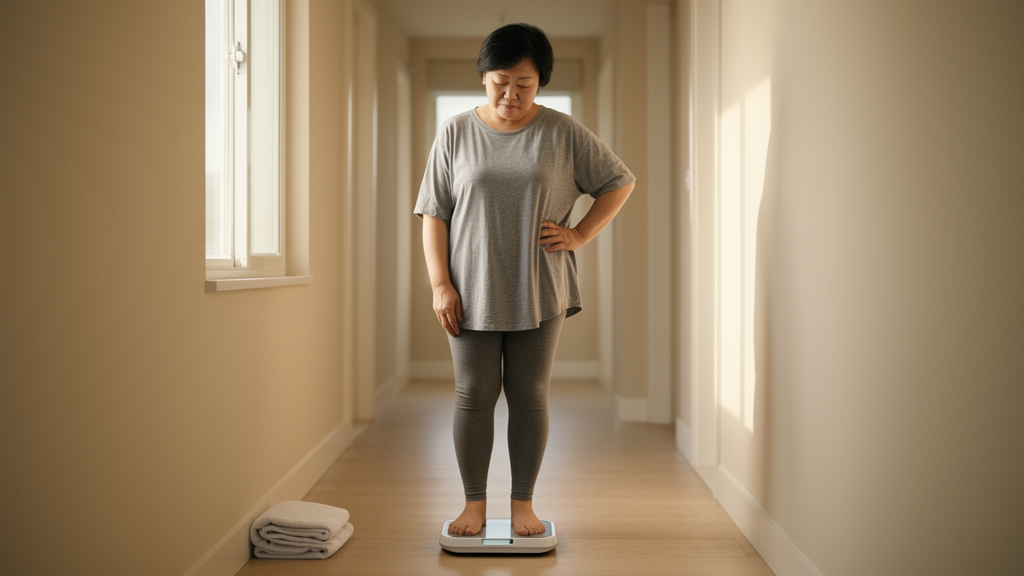
Image Credits: AI Generated

DOI: 10.1186/s12889-026-29855-z

Keywords: body mass index, BMI trajectories, hospitalization risk, cardiovascular disease, high-risk adults, prospective cohort, weight change, China, Body, mass, index, change

Cite Scienmag News

Ophelia Keating. (October 20, 2026). BMI change patterns linked to hospitalization risk in prospective cohort of 20,329 high-risk Chinese adults. Scienmag. https://scienmag.com/bmi-change-patterns-linked-to-hospitalization-risk-in-prospective-cohort-of-20329-high-risk-chinese-adults/


Ophelia Keating. "BMI change patterns linked to hospitalization risk in prospective cohort of 20,329 high-risk Chinese adults." Scienmag, 20 October 2026, https://scienmag.com/bmi-change-patterns-linked-to-hospitalization-risk-in-prospective-cohort-of-20329-high-risk-chinese-adults/. Accessed 20 October 2026.

Ophelia Keating. "BMI change patterns linked to hospitalization risk in prospective cohort of 20,329 high-risk Chinese adults." Scienmag. October 20, 2026. https://scienmag.com/bmi-change-patterns-linked-to-hospitalization-risk-in-prospective-cohort-of-20329-high-risk-chinese-adults/

Tags: BMI change patternsBMI trajectoriesbodybody mass indexcardiovascular diseasecardiovascular disease risk factorschangeChinaChina PEACE studyhigh cardiovascular riskhigh-risk adultshospitalization riskindexK-means clustering BMIlongitudinal BMI monitoringmassobesity and hospitalizationprospective cohortprospective cohort analysisweight changeweight change and hospitalizationweight gain and health outcomes
Share26Tweet16
Previous Post

Joint course-and-grade model cuts error in single-university study

Next Post

Retrospective two-center study associates postoperative radiotherapy with improved survival in 33 high-risk patients with neuroendocrine cervical carcinoma

Related Posts

Childhood Cancer Survivors Face a Hidden Financial Aftermath, Study Finds
Medicine

Swiss focus-group study finds intertwined insurance, legal and financial hardships among childhood cancer survivors

October 20, 2026
Genetic Test Fails to Predict Liver Injury in Tuberculosis Patients, Study Finds
Medicine

Retrospective Henan tuberculosis cohort finds no significant link between slow NAT2 acetylation and new liver abnormalities

October 20, 2026
Half of Myasthenia Gravis Patients Face Crises That Quadruple Their Medical Bills
Medicine

US claims study links generalized myasthenia gravis exacerbations to higher healthcare use and costs

October 20, 2026
PSMA PET reveals uneven prostate-bed recurrence after prostatectomy
Medicine

PSMA PET reveals uneven prostate-bed recurrence after prostatectomy

October 20, 2026
Portuguese breast cancer study validates trauma symptom scale, finds mixed growth-scale validity
Medicine

Portuguese breast cancer study validates trauma symptom scale, finds mixed growth-scale validity

October 20, 2026
2022 Cross-Sectional Study Links Multisetting Generalist Groups to Lower Medicare MIPS Scores
Medicine

2022 Cross-Sectional Study Links Multisetting Generalist Groups to Lower Medicare MIPS Scores

October 20, 2026
Next Post
Three Tissue Clues Could Decide Who Needs Radiation After Cervical Cancer Surgery

Retrospective two-center study associates postoperative radiotherapy with improved survival in 33 high-risk patients with neuroendocrine cervical carcinoma

  • Mothers who receive childcare support from maternal grandparents show more optimized

    Mothers who receive childcare support from maternal grandparents show more parental warmth, finds NTU Singapore study

    27656 shares
    Share 11059 Tweet 6912
  • University of Seville Breaks 120-Year-Old Mystery, Revises a Key Einstein Concept

    1061 shares
    Share 424 Tweet 265
  • Bee body mass, pathogens and local climate influence heat tolerance

    682 shares
    Share 273 Tweet 171
  • Researchers record first-ever images and data of a shark experiencing a boat strike

    546 shares
    Share 218 Tweet 137
  • Groundbreaking Clinical Trial Reveals Lubiprostone Enhances Kidney Function

    531 shares
    Share 212 Tweet 133
Science

Embark on a thrilling journey of discovery with Scienmag.com—your ultimate source for cutting-edge breakthroughs. Immerse yourself in a world where curiosity knows no limits and tomorrow’s possibilities become today’s reality!

RECENT NEWS

  • Retrospective two-center study associates postoperative radiotherapy with improved survival in 33 high-risk patients with neuroendocrine cervical carcinoma
  • BMI change patterns linked to hospitalization risk in prospective cohort of 20,329 high-risk Chinese adults
  • Joint course-and-grade model cuts error in single-university study
  • Sevoflurane reduced myocardial injury in rat and cell ischemia-reperfusion models through a circ_SMG6-related pathway

Categories

  • Agriculture
  • Anthropology
  • Archaeology
  • Athmospheric
  • Biology
  • Biotechnology
  • Blog
  • Bussines
  • Cancer
  • Chemistry
  • Climate
  • Earth Science
  • Editorial Policy
  • Marine
  • Mathematics
  • Medicine
  • Pediatry
  • Policy
  • Psychology & Psychiatry
  • Science Education
  • Science News
  • Social Science
  • Space
  • Technology and Engineering

Subscribe to Blog via Email

Enter your email address to subscribe to this blog and receive notifications of new posts by email.

Join 5,150 other subscribers

© 2025 Scienmag - Science Magazine

Welcome Back!

Login to your account below

Forgotten Password?

Retrieve your password

Please enter your username or email address to reset your password.

Log In
No Result
View All Result
  • HOME
  • SCIENCE NEWS
  • CONTACT US

© 2025 Scienmag - Science Magazine

Discover more from Science

Subscribe now to keep reading and get access to the full archive.

Continue reading