


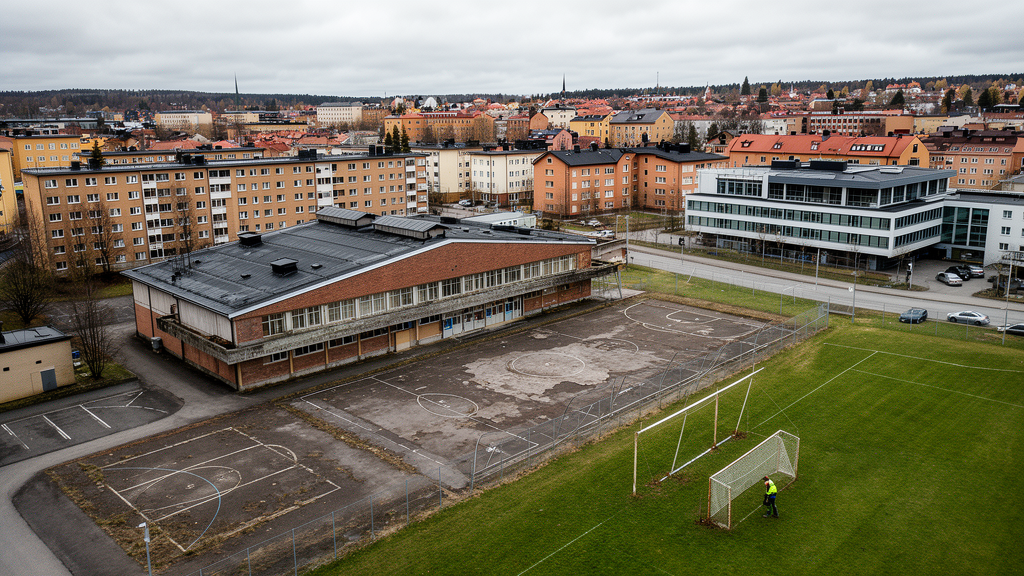
Sweden’s widely debated shortage of urban sport facilities is not a simple count of missing pitches, halls and swimming pools. A qualitative study combining policy-document analysis with semi-structured interviews of five senior informants from national sport, municipal and research organisations concludes that perceived shortages emerge from mismatches among supply, demand, scheduling, design and local priorities. The same facilities may be available but unsuitable for particular sports, age groups or communities, while booked time can remain unused. The authors caution that adding infrastructure alone may not resolve the problem, although the research did not measure whether additional construction increases participation.
The study, published in Frontiers in Sports and Active Living, examines how provision in urban Sweden is shaped by competing institutional priorities rather than attempting to establish a nationwide facility deficit. It combines documents from national umbrella organisations and public authorities with interviews of representatives from the Swedish Sports Confederation, the Swedish Association of Local Authorities and Regions, the Swedish Research Council for Sport Science and the Swedish Association of Local Authority Leisure and Cultural Services. Two additional interviews with government and national planning representatives provided methodological context but were excluded from the results. The five interviews in the results were conducted remotely in March and April 2026, lasted 65 to 88 minutes and were analysed inductively before being interpreted through path dependency and new institutional theory.
Organised sport supplied the dominant narrative. Surveys cited in the documents repeatedly showed that non-profit clubs experienced restricted access to time and space, and an RF representative said facility provision ranked among the leading priorities identified by Stockholm sport federations. Yet the same representative resisted treating “shortage” as a complete explanation, instead distinguishing demand, expectations, supply and the degree to which those elements aligned. Knowledge-producing and municipal informants similarly said there was no agreed definition of shortage, for whom it occurred or which facilities it concerned. Needs differed across sports, age groups and local settings, making the familiar political label both widely accepted and analytically imprecise.
Urban land pressure adds another layer. Densification increases competition for space at the same time as sport participation becomes more diverse. Traditional Swedish facilities were commonly standardised around federation requirements, competitive activity and club users, whereas growing numbers of people participate informally, at different times and in activities not accommodated by conventional halls or pitches. This creates what the study calls structural mismatch: a facility may exist and even be nearby, yet its size, equipment, opening times, ownership, booking system or location may prevent effective use. Ownership structures, sport-specific requirements and increased training frequency can therefore restrict access even where the physical stock appears larger than expected.
Booked time cannot be treated as a direct measure of use. A Swedish project using cameras and artificial intelligence to register activity in sport halls found heavy weekday-evening and weekend-morning occupancy but substantial unused time during daytime, late evenings and school or vacation holidays. The present study did not calculate utilisation across Sweden, but it used this evidence to distinguish nominal capacity from actual use. Government-commissioned mapping of school sport halls similarly found many halls unavailable for booking despite a perceived shortage; the mapping concluded that opening them might add little practical capacity because some were small, poorly equipped or unsuitable for organised sport. One research informant also noted that children’s teams may require full-sized pitches even when a smaller adaptable space would support the activity.
Quantification remains important but incomplete. Municipalities increasingly request numerical benchmarks, including estimates of how many sport halls are needed, while geographical mapping and visualisation tools can reveal spatial differences among sports and municipalities. However, the informants warned that available data often record perceptions or bookings rather than robust measures of activity and that comparable datasets remain limited. Numbers also fail to capture qualitative experiences such as usability, inclusion, social value, safety and belonging. The study’s institutional interpretation therefore places numerical indicators alongside contextual knowledge and professional judgement rather than treating them as substitutes for it. It also warns that a focus on readily measurable quantities can obscure the social and organisational dimensions of access.
Path dependence helps explain why familiar solutions persist. Many Swedish facilities and planning assumptions date from the post-war period, when local public support and voluntary sport organisations helped build a public system centred on organised competition. Later investment in ageing facilities creates what one practitioner described as accumulated maintenance debt, a burden that can crowd out experimentation, while standardised buildings and federation standards narrow the options considered politically and professionally legitimate. Specialisation may improve conditions for elite or rule-bound sports but reduce flexibility, increase costs and disadvantage smaller clubs or emerging activities. Repeated investment in familiar halls, fields and regulated standards can therefore reproduce institutional inertia even as participation changes.
Responsibility is both central and fragmented. Municipalities generally plan, finance, build and operate facilities, but internal divisions between urban planning and leisure services can complicate coordination and delay consideration of sport in planning processes. National agencies, the RF, municipal networks, researchers, clubs and other actors add expertise and advocacy, with mandates that can shift over time. The 2026 and 2027 initiatives described in the study included support from the National Board of Housing, Building and Planning for municipalities and clubs and SEK 240 million allocated through the RF for co-financing local construction and renovation. These measures indicate growing national attention, but the research did not evaluate their effects and was not designed to test whether additional funding raises participation. The transfer of a national sport-facility knowledge platform to Boverket also reflected changing institutional mandates, including a stronger focus on traditional facilities for organised sport.
The study has important limits. It offers a national-level account built from a small, purposive set of influential informants, most of whom were based in or around Stockholm, rather than a representative survey of municipalities, clubs or users. The authors also note that the material constitutes the first phase of a two-year project, with later work intended to examine grassroots clubs’ experiences and adaptability. The findings therefore illuminate how influential national actors frame, interpret and negotiate facility challenges, but they do not establish how uniformly those interpretations apply across Sweden or whether all local actors share them. The study’s broader conclusion is that shortage is multidimensional and context-dependent: it can reflect structural mismatches, changing participation patterns, institutional constraints and competing priorities. That finding challenges a policy frame in which construction numbers alone are treated as a sufficient measure of either adequacy or success.
Subject of Research: Governance and perceived shortages of urban sport facilities in Sweden
Article Title: Sport facilities in urban contexts: a multi-perspective discussion
Article References: Book, K. (2026). Sport facilities in urban contexts: a multi-perspective discussion. Frontiers in Sports and Active Living, 8, Article 1882349. https://doi.org/10.3389/fspor.2026.1882349
Image Credits: AI Generated
DOI: 10.3389/fspor.2026.1882349
Keywords: urban sport facilities, Sweden, facility shortages, urban planning, sport governance, path dependency, institutional theory, organised sport, facility utilisation, public infrastructure, Sport, facilities
Cite Scienmag News
Courtney Benton. (October 20, 2026). Swedish Urban Sport Facility Shortages Reflect Governance Mismatches, Not Just Infrastructure Deficits. Scienmag. https://scienmag.com/swedish-urban-sport-facility-shortages-reflect-governance-mismatches-not-just-infrastructure-deficits/
Courtney Benton. "Swedish Urban Sport Facility Shortages Reflect Governance Mismatches, Not Just Infrastructure Deficits." Scienmag, 20 October 2026, https://scienmag.com/swedish-urban-sport-facility-shortages-reflect-governance-mismatches-not-just-infrastructure-deficits/. Accessed 20 October 2026.
Courtney Benton. "Swedish Urban Sport Facility Shortages Reflect Governance Mismatches, Not Just Infrastructure Deficits." Scienmag. October 20, 2026. https://scienmag.com/swedish-urban-sport-facility-shortages-reflect-governance-mismatches-not-just-infrastructure-deficits/


