


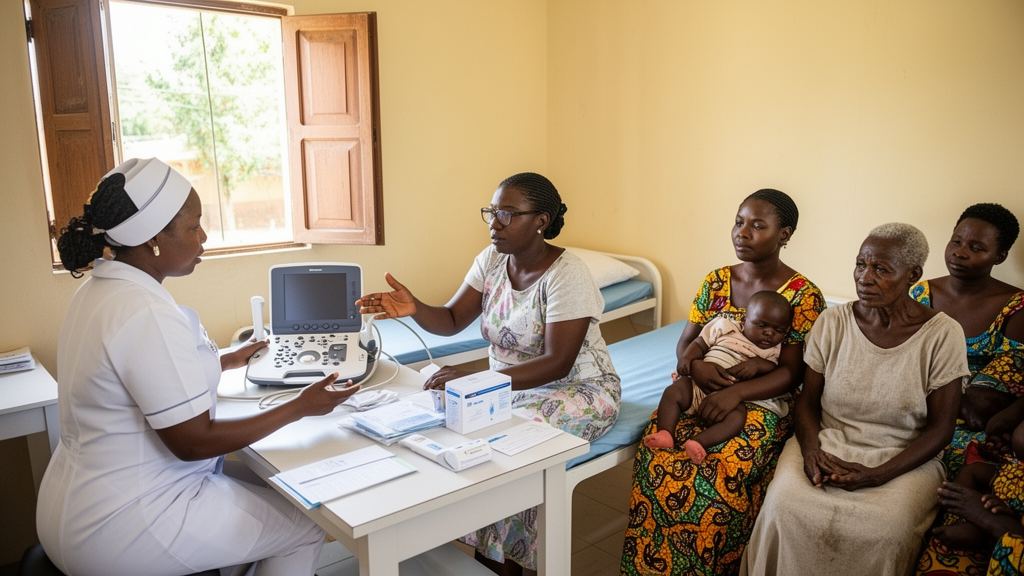
A cross-sectional analysis of 14,972 women in Ghana found that cervical and breast cancer screening were more common among women in wealthier households, with education and household wealth accounting for the largest measured shares of the inequalities. In the 2022 Ghana Demographic and Health Survey, 4.96% of participants reported ever having been tested for cervical cancer by a healthcare provider, while 18.41% reported having their breasts examined by a doctor or another healthcare provider to check for breast cancer. The study was the first to examine socioeconomic inequalities in both screening outcomes in Ghana, using the Wagstaff decomposition approach to estimate the contributions of individual factors to the observed gaps.
Researchers assessed socioeconomic status with a household wealth index and used concentration curves and the Erreygers-corrected concentration index, or ECCI, to measure how screening was distributed across the wealth distribution. Both concentration curves were below the line of equality, and both ECCIs were positive, indicating pro-rich inequalities in screening uptake. The ECCI for cervical cancer screening was 0.068, with a 95% confidence interval of 0.06 to 0.08, while the breast cancer screening ECCI was 0.210, with a 95% confidence interval of 0.20 to 0.22. The larger breast cancer index showed a stronger concentration of reported screening among women at the wealthier end of the distribution. Survey weights were applied in all analyses.
The geographic comparisons showed distinct patterns for the two outcomes. Cervical cancer screening inequality was lower in rural areas, where the ECCI was 0.037, than in urban areas, where it was 0.067; the respective 95% confidence intervals were 0.03 to 0.05 and 0.05 to 0.08. The rural-urban difference was wider for breast cancer screening: the ECCI was 0.121 in rural areas and 0.202 in urban areas, with 95% confidence intervals of 0.10 to 0.14 and 0.18 to 0.22. At the regional level, cervical cancer screening inequality was highest in Northern Ghana, with an ECCI of 0.069, and similar across the Middle Belt and Southern Ghana. Breast cancer screening inequality was lower in Northern Ghana, at 0.187, than in the Middle and Southern regions, where the ECCI was 0.207. These regional comparisons describe differences in measured inequality rather than changes over time.
Decomposition analysis estimated how much of each pro-rich disparity was associated with measured individual characteristics. Education was the largest contributor, accounting for 54.6% of the cervical cancer screening inequality and 44.5% of the breast cancer screening inequality. Wealth status was the second-largest contributor, explaining 37.9% and 36.3% of the respective inequalities. Urban residence, media exposure and health insurance coverage also contributed to pro-rich inequalities in both screening outcomes. These are decomposition estimates based on the survey data, not proof that changing one characteristic would directly cause a specified reduction in screening inequality. The study used cross-sectional, self-reported measures of screening, and the authors cautioned that its findings should be interpreted as associations rather than causal effects.
The results identify major socioeconomic disparities in cancer screening within a population where uptake was low for both services examined. The study covered women aged 15 to 49 years and measured cervical screening as an affirmative response to having ever been tested by a healthcare provider. Breast screening was measured as an affirmative response to having had their breasts examined by a doctor or another healthcare provider to check for breast cancer. On the basis of these findings, the authors called for expanded insurance coverage, increased access to quality education and media, greater economic empowerment of women, and integration of cervical and breast cancer screening into primary healthcare facilities to improve equitable access. The cross-sectional design and reliance on self-reported screening histories limit causal interpretation, even though the analysis identifies education and wealth status as the leading measured contributors to the observed pro-rich inequalities.
Subject of Research: Socioeconomic inequalities in cervical and breast cancer screening among women aged 15 to 49 years in Ghana
Article Title: Explaining socioeconomic inequalities in cervical and breast cancer screening among women in Ghana using decomposition analysis
Article References: Zumah, F., Debuo Der, A., & Chirwa, G. C. (2026). Explaining socioeconomic inequalities in cervical and breast cancer screening among women in Ghana using decomposition analysis. Discover Social Science and Health. https://doi.org/10.1007/s44155-026-00502-7
Image Credits: AI Generated
DOI: 10.1007/s44155-026-00502-7
Keywords: Ghana, cervical cancer screening, breast cancer screening, socioeconomic inequality, household wealth, education, decomposition analysis, healthcare access, health insurance, media exposure, Explaining, socioeconomic
Cite Scienmag News
Nathaniel Bowman. (October 20, 2026). Explaining socioeconomic inequalities in cervical and breast cancer screening among women in Ghana using decomposition analysis. Scienmag. https://scienmag.com/explaining-socioeconomic-inequalities-in-cervical-and-breast-cancer-screening-among-women-in-ghana-using-decomposition-analysis/
Nathaniel Bowman. "Explaining socioeconomic inequalities in cervical and breast cancer screening among women in Ghana using decomposition analysis." Scienmag, 20 October 2026, https://scienmag.com/explaining-socioeconomic-inequalities-in-cervical-and-breast-cancer-screening-among-women-in-ghana-using-decomposition-analysis/. Accessed 20 October 2026.
Nathaniel Bowman. "Explaining socioeconomic inequalities in cervical and breast cancer screening among women in Ghana using decomposition analysis." Scienmag. October 20, 2026. https://scienmag.com/explaining-socioeconomic-inequalities-in-cervical-and-breast-cancer-screening-among-women-in-ghana-using-decomposition-analysis/


