


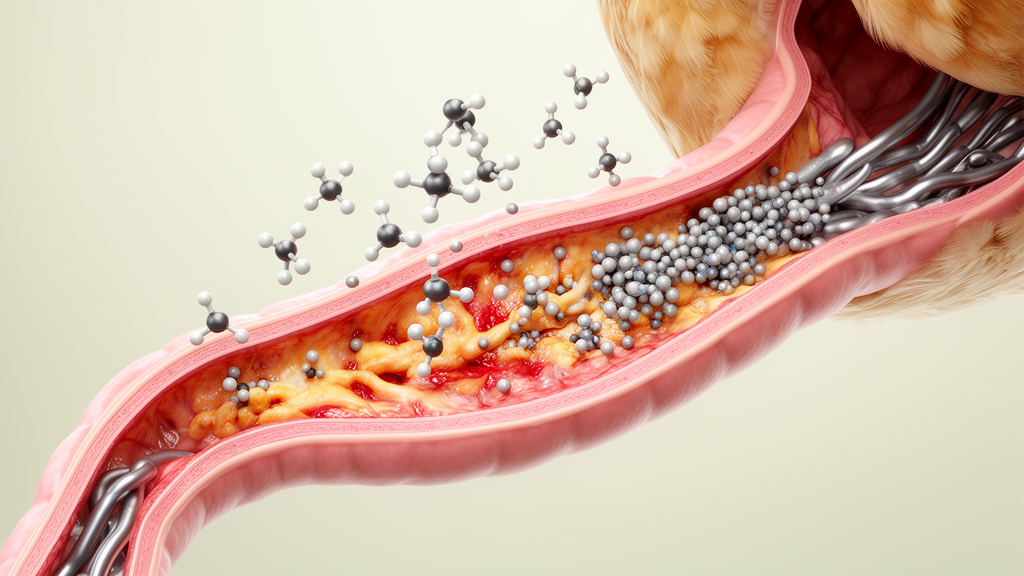
A controlled feeding trial in 288 broiler chickens found that dietary baicalin, a flavonoid obtained from Scutellaria baicalensis, partially alleviated ileal barrier injury caused by avian pathogenic Escherichia coli (APEC). Birds receiving 150 or 300 mg/kg baicalin during repeated APEC challenges showed improved villus architecture, more goblet cells, altered tight-junction gene expression and reduced inflammatory transcripts. The study also linked these responses to shifts in the ileal microbiota and neuro-immune-related gene expression, although it did not establish a direct causal mechanism or demonstrate improved growth performance.
Researchers randomly assigned one-day-old Arbor Acres broilers to four groups, each comprising six replicate pens with 12 birds, with equal numbers of males and females. One group received a basal diet and saline, while the other three received oral challenges with APEC O78. The challenged birds ate either the unsupplemented basal diet or diets containing 150 or 300 mg/kg baicalin. APEC was administered by oral gavage on days 18–20 and again on days 39–41, with samples collected on days 21 and 42. The second sampling therefore represented the response to the second challenge rather than a delayed response to the first. The researchers evaluated ileal morphology, goblet-cell numbers, serum permeability-related markers, barrier, inflammatory and Nrf2-related gene expression, ileal microbiota and transcriptomic profiles.
At both sampling ages, APEC-challenged birds without baicalin had shorter ileal villi, a lower villus-to-crypt ratio, deeper crypts and fewer goblet cells in villi and crypts than saline-treated controls. Both baicalin doses increased villus height and the villus-to-crypt ratio in challenged birds at days 21 and 42, while also increasing goblet-cell numbers. At day 21, the high-dose group reduced crypt depth, and at day 42 both supplemented groups reduced crypt depth relative to the unsupplemented challenged group. These structural results indicated that baicalin partially counteracted the mucosal changes associated with the challenge.
Barrier-related molecular measurements showed age- and dose-dependent effects. At day 21, APEC did not significantly change serum diamine oxidase, D-lactic acid or lipopolysaccharide relative to saline controls. Compared with unsupplemented challenged birds, however, both baicalin doses reduced serum diamine oxidase and lipopolysaccharide, while the low dose also reduced D-lactic acid. After the second challenge, APEC significantly increased serum diamine oxidase and lipopolysaccharide compared with saline controls, but baicalin did not significantly change either marker at day 42. Baicalin also increased expression of tight-junction genes including ZO-1, ZO-2 and Claudin-1 in challenged birds, although the pattern varied by dose and age. These partial and inconsistent permeability responses limit any conclusion that baicalin completely restored barrier function.
APEC challenge also induced an inflammatory transcriptional response. At both sampling ages, ileal NF-κB and TNF-α expression rose above levels in saline controls. At day 21, both baicalin doses reduced NF-κB, TNF-α, IL-6 and IL-8 expression relative to unsupplemented challenged birds, while the high dose additionally reduced IL-1β. Responses at day 42 differed by dose: the high-dose group reduced NF-κB and TNF-α, whereas the low-dose group reduced NF-κB but increased IL-8. The researchers therefore described the anti-inflammatory effect as more pronounced after the first challenge and more variable after the second.
Antioxidant-related transcription followed a different pattern. APEC increased expression of Nrf2, HO-1, NQO1, SOD1 and CAT at both sampling ages, consistent in the authors’ interpretation with a compensatory response to oxidative stress. Baicalin reduced several of these APEC-associated increases, including Nrf2, HO-1 and NQO1 at day 21 and Nrf2 and NQO1 at day 42; the high dose also reduced SOD1 at day 42. Because the study did not directly measure oxidative stress, the lower antioxidant-gene expression cannot establish that baicalin reduced oxidative damage. It may instead indicate that the supplemented birds required less compensatory activation of the Nrf2-related pathway.
16S rRNA gene sequencing showed that APEC altered the structure and richness of the ileal microbial community. At day 21, challenged birds had lower observed-species, ACE, Chao1, Shannon and Simpson indices than saline controls. The high-dose baicalin group recovered several of these richness and diversity measures, and the low-dose group increased the relative abundance of Corynebacterium, Weissella, Aerococcus, Kurthia and Glutamicibacter relative to unsupplemented challenged birds. After the second challenge, APEC increased the relative abundances of Serratia, Erwinia and Pygmaiobacter. Baicalin again increased Corynebacterium and, in the low-dose group, Luteitalea, while Ligilactobacillus, Lactobacillus, Limosilactobacillus, Klebsiella and Citrobacter decreased to varying extents in the supplemented groups. These findings establish compositional associations, not beneficial or pathogenic functions of individual taxa.
Ileal transcriptomics identified thousands of differentially expressed genes and reinforced the distinction between the two challenge periods. At day 21, APEC was associated with 1,229 differentially expressed genes, including 847 upregulated and 382 downregulated relative to saline controls, with enrichment in glutathione metabolism, cell adhesion, arachidonic acid metabolism and antigen processing. Baicalin produced a separate signature of 1,493 differentially expressed genes versus the unsupplemented challenged group, including 379 upregulated and 1,114 downregulated. Neuroactive ligand–receptor interaction and cyclic AMP signaling were enriched, and NPY and MYL10 emerged as hub genes in a protein–protein interaction network. At day 42, APEC was associated with 1,940 differentially expressed genes, with enrichment in defense and cytokine-related pathways; IL-10 and IFN-γ were identified as hub genes.
Relative to unsupplemented challenged birds at day 42, baicalin was associated with 1,456 differentially expressed genes, including 869 upregulated and 587 downregulated, and again with neuroactive ligand–receptor and cyclic AMP signaling. NPY and AGTR1 were hub genes in this comparison. Quantitative PCR confirmed changes in NPY, NPY1R, AGTR1, IL-10, IFN-γ and MYL10: baicalin increased NPY, NPY1R and IL-10 and decreased IFN-γ and MYL10 at both ages, with additional changes in AGTR1. These are transcriptional associations, not proof that the genes mediated barrier protection. The microbiota–gene correlations likewise identified candidate relationships, including links involving Z O-1, MUC2, NF-κB, Nrf2, NPY, AGTR1 and MYL10, but did not demonstrate causal mechanisms.
Overall, the experiment provides laboratory evidence that baicalin can partially lessen APEC-associated ileal damage in broilers without producing a clear growth benefit. APEC challenge did not significantly reduce final body weight, average daily gain or average daily feed intake, although the feed-to-gain ratio was significantly decreased in challenged birds during days 1–21. The trial used one APEC strain, two dietary doses, two sampling points and an oral challenge model, while the mechanisms remain limited by the absence of direct oxidative-stress measurements, functional validation of responsive microbes and experimental tests of whether the highlighted genes cause the observed tissue protection. Sequencing and correlation analyses identify candidate pathways for follow-up, but the recovery of villus structure, reduced inflammatory transcription and altered microbial or neuro-immune profiles should not be mistaken for proven mediation.
Subject of Research: Dietary baicalin in APEC-challenged broiler chickens
Article Title: Baicalin alleviates APEC-induced ileal barrier injury in broiler chickens by modulating inflammatory responses, microbiota composition, and neuro-immune-related transcriptional profiles
Article References: Liu, W., Liu, X., Li, J., Zhang, Q., Li, J., Wang, H., Ji, X., Li, S., & Zhang, F. (2026). Baicalin alleviates APEC-induced ileal barrier injury in broiler chickens by modulating inflammatory responses, microbiota composition, and neuro-immune-related transcriptional profiles. Frontiers in Cellular and Infection Microbiology, 16, Article 1967613. https://doi.org/10.3389/fcimb.2026.1967613
Image Credits: AI Generated
DOI: 10.3389/fcimb.2026.1967613
Keywords: avian pathogenic Escherichia coli, baicalin, broiler chickens, ileal barrier injury, intestinal inflammation, ileal microbiota, neuro-immune signaling, flavonoid feed additive, poultry health, tight junctions, alleviates, APEC-induced
Cite Scienmag News
Juliet Wilcox. (October 20, 2026). Baicalin partly eases APEC-induced ileal injury in broiler chickens. Scienmag. https://scienmag.com/baicalin-partly-eases-apec-induced-ileal-injury-in-broiler-chickens/
Juliet Wilcox. "Baicalin partly eases APEC-induced ileal injury in broiler chickens." Scienmag, 20 October 2026, https://scienmag.com/baicalin-partly-eases-apec-induced-ileal-injury-in-broiler-chickens/. Accessed 20 October 2026.
Juliet Wilcox. "Baicalin partly eases APEC-induced ileal injury in broiler chickens." Scienmag. October 20, 2026. https://scienmag.com/baicalin-partly-eases-apec-induced-ileal-injury-in-broiler-chickens/


