

Tuesday, October 20, 2026
Science
No Result
View All Result
  • Login
  • HOME
  • SCIENCE NEWS
  • CONTACT US
  • HOME
  • SCIENCE NEWS
  • CONTACT US
No Result
View All Result
Scienmag
No Result
View All Result
Home Science News Biology

Multi-locus study of Polyporales maps lineages and describes ten new species

October 20, 2026
in Biology, Science News
Roger Howard
By Roger Howard Scienmag Editorial Profile - Mycology
Reading Time: 2 mins read
0
Multi-locus study of Polyporales maps lineages and describes ten new species

Multi-locus study of Polyporales maps lineages and describes ten new species

65
SHARES
587
VIEWS
Share on FacebookShare on Twitter
ADVERTISEMENT

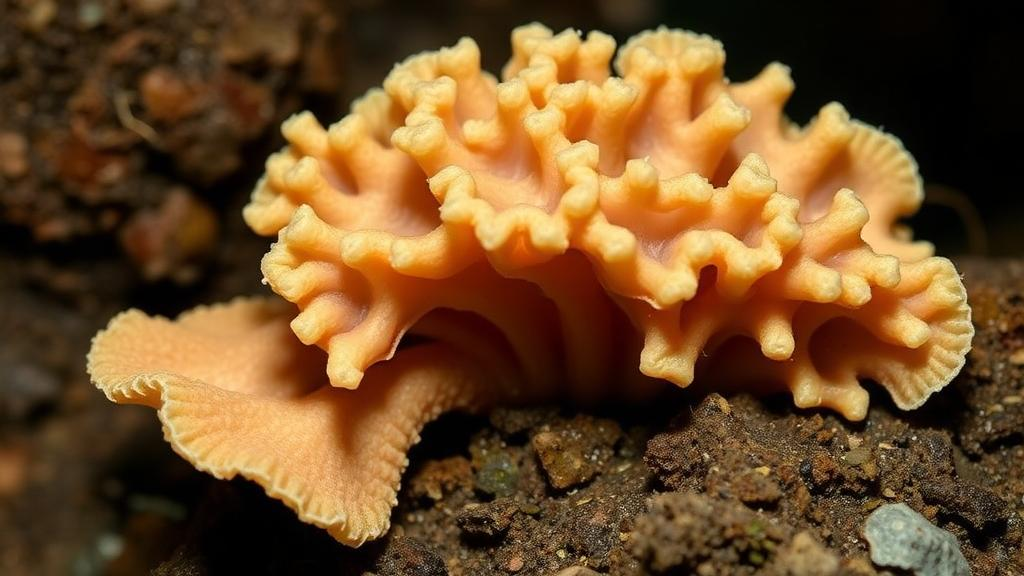
A multi-locus phylogenetic and morphological study of wood-decaying fungi in the Polyporales identified ten new species across three genera and estimated that the families Irpicaceae and Meripilaceae emerged near the boundary between the early and late Cretaceous. The taxonomic work focused primarily on Ceriporia and Meripilus , both genera known to cause white rot in angiosperm and gymnosperm wood, alongside the related genus Meruliopsis . Researchers used DNA sequences from six gene regions to reconstruct relationships among Ceriporia , Meripilus and other related fungi.

These included the internal transcribed spacer region, nuclear large and small subunit ribosomal RNA genes, translation elongation factor 1-alpha, and the RNA polymerase subunits RPB1 and RPB2. Separate five-locus combined datasets were assembled for Ceriporia and Meripilus . Their results supported the description and illustration of three new Ceriporia species, one new Meruliopsis species and six new Meripilus species.

Both have a monomitic hyphal system containing cyanophilous generative hyphae with simple septa. Ceriporia typically has resupinate basidiomata with a white or brightly colored pore surface when fresh, usually without a color change when bruised, and cylindrical to allantoid basidiospores. Meripilus instead ranges from resupinate and effused-reflexed to pileate basidiomata; its pore surface can turn red when bruised, and it produces ellipsoid to globose basidiospores.

These combined observations were evaluated alongside the molecular phylogenies in the taxonomic assessment. The researchers also estimated evolutionary timing for Polyporales, including Irpicaceae and Meripilaceae, through Bayesian analysis of conserved ITS, nLSU and TEF1 sequences. The analysis assigned Irpicaceae a mean crown age of 108.9 million years and Meripilaceae a mean crown age of 97.23 million years, placing their estimated emergence at the early–late Cretaceous junction.

The estimated mean crown age of Ceriporia was 83.61 million years, with a 95% highest posterior density interval of 65.25–106.35 million years. For Meripilus , the mean crown age was 81.38 million years, with a 95% interval of 61.89–105.78 million years. These model-based estimates indicate that the initial diversification of both genera occurred during the late Cretaceous, while the ten new taxa expand the documented diversity of the sampled fungal lineages.

Subject of Research: Phylogeny, divergence times, and taxonomy of fungi in Irpicaceae and Meripilaceae

Article Title: Studies in phylogeny and divergence times of Irpicaceae and Meripilaceae (Polyporales, Basidiomycota), with an emphasis on Ceriporia and Meripilus including ten new species

Article References: Wang, C.-G., Wu, Y.-D., Zhang, X., Dai, Y.-C., Li, Z.-H., & Yuan, Y. (2025). Studies in phylogeny and divergence times of Irpicaceae and Meripilaceae (Polyporales, Basidiomycota), with an emphasis on Ceriporia and Meripilus including ten new species. IMA Fungus, 16, Article e161336. https://doi.org/10.3897/imafungus.16.161336

Image Credits: AI Generated

DOI: 10.3897/imafungus.16.161336

Keywords: Fungal phylogeny, Ceriporia, Meripilus, Meruliopsis, White rot, New species, Bayesian dating, Cretaceous diversification, Basidiomycota, Polyporales, Studies, phylogeny

Cite Scienmag News

Roger Howard. (October 20, 2026). Multi-locus study of Polyporales maps lineages and describes ten new species. Scienmag. https://scienmag.com/multi-locus-study-of-polyporales-maps-lineages-and-describes-ten-new-species/


Roger Howard. "Multi-locus study of Polyporales maps lineages and describes ten new species." Scienmag, 20 October 2026, https://scienmag.com/multi-locus-study-of-polyporales-maps-lineages-and-describes-ten-new-species/. Accessed 20 October 2026.

Roger Howard. "Multi-locus study of Polyporales maps lineages and describes ten new species." Scienmag. October 20, 2026. https://scienmag.com/multi-locus-study-of-polyporales-maps-lineages-and-describes-ten-new-species/

Tags: BasidiomycotaBayesian datingCeriporiaCeriporia genusCretaceous diversificationCretaceous emergence of fungal lineagesevolutionary history of Polyporalesfungal morphological characterizationfungal phylogeneticsFungal phylogenyIrpicaceae and Meripilaceae familiesMeripilusMeripilus genusMeruliopsismulti-locus DNA analysisnew fungal species discoverynew speciesphylogenyPolyporalesPolyporales taxonomystudieswhite rotwhite-rot fungiWood-decaying fungi
Share26Tweet16
Previous Post

Cross-border river assessments diverge despite European harmonization

Next Post

Napo treefrog confirmed in Vietnam, extending its documented range

Related Posts

Research report: Compiling preliminary SEEA Ecosystem Accounts for the OSPAR regional sea: experimental findings and lessons learned
Science News

Research report: Compiling preliminary SEEA Ecosystem Accounts for the OSPAR regional sea: experimental findings and lessons learned

October 20, 2026
Parasitoid wasp recorded attacking pine wilt vector in Korea
Science News

Parasitoid wasp recorded attacking pine wilt vector in Korea

October 20, 2026
Napo treefrog confirmed in Vietnam, extending its documented range
Biology

Napo treefrog confirmed in Vietnam, extending its documented range

October 20, 2026
Cross-border river assessments diverge despite European harmonization
Earth Science

Cross-border river assessments diverge despite European harmonization

October 20, 2026
Governance moderates circular economy’s link to European energy diversification
Social Science

Governance moderates circular economy’s link to European energy diversification

October 20, 2026
Panax Notoginseng Saponins Repair Diabetic Wounds in Mice via Mitochondrial Protection
Agriculture

Panax Notoginseng Saponins Repair Diabetic Wounds in Mice via Mitochondrial Protection

October 20, 2026
Next Post
Napo treefrog confirmed in Vietnam, extending its documented range

Napo treefrog confirmed in Vietnam, extending its documented range

  • Mothers who receive childcare support from maternal grandparents show more optimized

    Mothers who receive childcare support from maternal grandparents show more parental warmth, finds NTU Singapore study

    27656 shares
    Share 11059 Tweet 6912
  • University of Seville Breaks 120-Year-Old Mystery, Revises a Key Einstein Concept

    1061 shares
    Share 424 Tweet 265
  • Bee body mass, pathogens and local climate influence heat tolerance

    682 shares
    Share 273 Tweet 171
  • Researchers record first-ever images and data of a shark experiencing a boat strike

    546 shares
    Share 218 Tweet 137
  • Groundbreaking Clinical Trial Reveals Lubiprostone Enhances Kidney Function

    531 shares
    Share 212 Tweet 133
Science

Embark on a thrilling journey of discovery with Scienmag.com—your ultimate source for cutting-edge breakthroughs. Immerse yourself in a world where curiosity knows no limits and tomorrow’s possibilities become today’s reality!

RECENT NEWS

  • Research report: Compiling preliminary SEEA Ecosystem Accounts for the OSPAR regional sea: experimental findings and lessons learned
  • Parasitoid wasp recorded attacking pine wilt vector in Korea
  • Napo treefrog confirmed in Vietnam, extending its documented range
  • Multi-locus study of Polyporales maps lineages and describes ten new species

Categories

  • Agriculture
  • Anthropology
  • Archaeology
  • Athmospheric
  • Biology
  • Biotechnology
  • Blog
  • Bussines
  • Cancer
  • Chemistry
  • Climate
  • Earth Science
  • Editorial Policy
  • Marine
  • Mathematics
  • Medicine
  • Pediatry
  • Policy
  • Psychology & Psychiatry
  • Science Education
  • Science News
  • Social Science
  • Space
  • Technology and Engineering

Subscribe to Blog via Email

Enter your email address to subscribe to this blog and receive notifications of new posts by email.

Join 5,149 other subscribers

© 2025 Scienmag - Science Magazine

Welcome Back!

Login to your account below

Forgotten Password?

Retrieve your password

Please enter your username or email address to reset your password.

Log In
No Result
View All Result
  • HOME
  • SCIENCE NEWS
  • CONTACT US

© 2025 Scienmag - Science Magazine

Discover more from Science

Subscribe now to keep reading and get access to the full archive.

Continue reading