


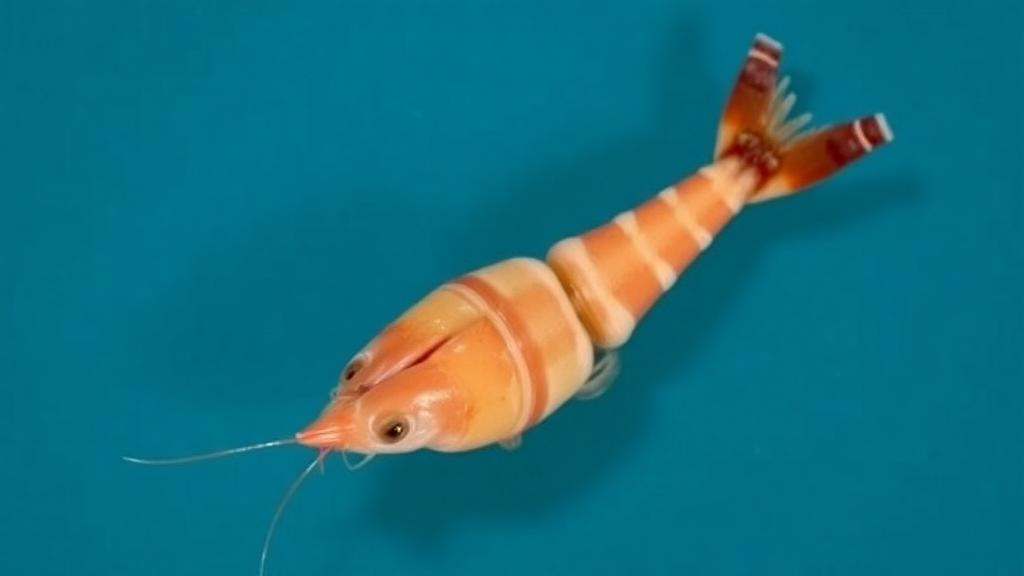
The Pacific white shrimp, Penaeus vannamei, is the most productive crustacean in global aquaculture, prized for its mild flavor and high nutritional value, and worldwide production reached roughly 5.8 million tonnes in 2020 according to FAO figures. Yet in the Philippines, where the species is a cornerstone of coastal livelihoods, output has been dragged down by repeated disease outbreaks. A central vulnerability lies at the very start of the production chain: hatcheries depend on fresh biological baits such as polychaetes, mussels, squid, and oysters to enrich the nutrients of broodstock during reproduction. These raw feeds carry pathogenic bacteria and viruses, offer unstable nutrient content, suffer from unreliable supply, and command high prices, all of which threaten the healthy development of broodstock and of specific pathogen-free seed. A new feeding trial published in Acta Ichthyologica et Piscatoria now points to an unlikely ingredient that could help break this dependency: the foot tissue of the golden apple snail, an invasive freshwater gastropod that Philippine farmers have cursed for decades.
The golden apple snail, Pomacea canaliculata, locally known as golden kuhol, is native to South America and was introduced to the Philippines between 1982 and 1984, where it quickly became notorious for devouring young rice plants. But the snail is also remarkably protein-rich, and its foot tissue meal, abbreviated GASFTM, offers high protein content at a fraction of the cost of squid meal, the expensive main protein ingredient in conventional broodstock maturation diets. Compound diets have long been attractive to hatchery managers because they are easier to manage and store and are less susceptible to pathogenic contamination than fresh feeds, but formulating adequate diets has been hampered by poorly defined nutritional requirements for shrimp broodstock, and artificial diets have so far delivered less promising results than raw feeds. The new study set out to evaluate whether GASFTM could serve as a viable alternative protein source in the gonad maturation diet of female P. vannamei broodstock, potentially replacing squid meal entirely.
The experimental design was rigorous. Mature golden apple snails were gathered from Barotac Nuevo in Iloilo, Philippines, and their raw tissues were washed, boiled, and separated from the shells. The collected foot tissues were dried, ground, and sifted through a 100 micrometer sieve to produce a powdered snail meal that was incorporated into the maturation diet as a substitute for squid meal. Ninety female P. vannamei broodstock, each weighing approximately 30 grams and aged six months, with translucent ovaries, were obtained from the University of the Philippines Visayas Multi-Species Hatchery, where they had been reared on formulated feeds from the early juvenile stage. After a seven-day acclimation period on a control diet, all females in the intermolt stage were unilaterally eyestalk-ablated by tying the eyestalks with surgical thread and marked with eye tags for individual identification, a standard endocrine manipulation that accelerates ovarian development in penaeid shrimp.
The ablated females were randomly allocated at a density of 15 individuals per 6 cubic meter rounded maturation tank, with one tank assigned for each treatment in a completely randomized design with three replicates. Five isonitrogenous and isolipidic experimental diets were formulated containing increasing levels of GASFTM: a control with 0 percent, and test diets with 25, 50, 75, and 100 percent inclusion replacing squid meal on a gram-for-gram basis. Frozen polychaetes and squid served as the positive control, while a basal diet served as the negative control. The diets were designed to meet the nutrient requirements for P. vannamei broodstock, with crude protein levels around 45 percent and crude lipid around 13 to 15 percent across treatments, based on a previous formulation described by Paibulkichakul and colleagues in 2008. Cholesterol, soybean lecithin, fish oil, vitamin premixes, and mineral mixes were adjusted to keep the diets nutritionally balanced as the snail meal content rose. The shrimp were fed at 10 percent of their body weight three times a day for 32 days, with excess feed, feces, and exuviae removed each following morning.
Water quality was carefully maintained throughout the trial at the Miagao, Iloilo hatchery: temperature at 27 to 28 degrees Celsius, salinity at 28 to 33 ppt, pH at 8.0 to 8.5, dissolved oxygen above 5 milligrams per liter, ammonia nitrogen below 0.5 milligrams per liter, and nitrite below 0.1 milligrams per liter. Water depth was held at 0.50 meters with a total daily water replacement of 30 percent using filtered seawater, and the photoperiod followed a natural cycle of 13 hours light and 11 hours dark. Ovarian development was tracked every four days by measuring body width and ovary shadow width at the dorsal exoskeleton of the first pleonite with a caliper. Only females at an early stage of ovarian development, with an initial ovary shadow ratio between 22 and 27 percent, were randomly selected for all treatments. Ovarian maturation time was defined as the mean days elapsed for shrimp ovaries to develop from the initial to the maximum ovary shadow ratio, ranging from 40 to 45 percent.
The results were striking. The maximum ovary shadow ratio, a measure of ovarian size, was not significantly different among the treatments, indicating that all diets supported comparable ultimate ovarian development. But ovarian maturation time told a different story: the test diets with 50, 75, and 100 percent GASFTM produced significantly shorter maturation times than the basal diet and the 25 percent GASFTM groups. The 75 percent GASFTM diet delivered the fastest maturation at 7.8 days, followed by the 100 percent diet at 9.7 days and the 50 percent diet at 9.9 days, compared with 14.1 days for the polychaete and squid positive control and 14.6 days for the 25 percent GASFTM group. The study concluded that diets with 75 and 100 percent GASFTM inclusion were the most effective on P. vannamei ovarian maturation, followed by the 50 percent diet.
Reproductive performance measures showed no significant differences among the test diets, but the groups fed with polychaetes and with diets containing 50 and 75 percent GASFTM showed the highest total egg production and spawning rates. The 50 and 75 percent GASFTM groups achieved spawning rates of 53.33 percent, compared with 46.60 percent for the polychaete and squid positive control and 40.00 percent for the basal diet. Total egg production in the 75 percent GASFTM group reached approximately 118,861 eggs, the highest among all treatments. Survival rates of female broodstock did not differ significantly across diets, and growth performance was similarly unaffected: final mean body weight, specific growth rate, and feed conversion ratio showed no significant differences between the test diets and the control group. The group fed with polychaetes and the 75 percent GASFTM group had the highest mean body weight after 32 days, at 39.50 grams.
The nutritional explanation lies in the amino acid and mineral profile of the snail tissue. In sexually maturing animals, feed protein requirements are believed to be higher than during non-reproductive stages because intense biosynthesis occurs during these processes. Currently, maturation diets contain at least 44 percent protein, but still lower than the protein content of diets based on fresh food. The dietary provision of essential amino acids has been reported to be crucial for the success of maturation and spawning in crustaceans, with ten amino acids identified as essential for P. japonicus and similarly required in other penaeid species: arginine, methionine, valine, threonine, isoleucine, leucine, lysine, histidine, phenylalanine, and tryptophan. Golden apple snail is an ideal protein source for aquatic organisms because of its high content of these essential amino acids, especially lysine and methionine. Earlier work documented that the level of arginine in golden apple snail meal was higher than in fish meal, while leucine and threonine contents were comparable with fish meals, and lysine and tryptophan were found higher in the snail meal than in all other feed ingredients evaluated. The snail’s protein content of about 54 percent and its good essential amino acid profile are comparable with those of fish and squid meal.
Minerals may also play a role. Pomacea canaliculata has a high content of minerals and vitamins, with phosphorus reported at 35 percent and 1.2 percent in different measures. Earlier works on crustacean breeding have shown that mineral deficiencies or imbalances can inhibit crustacean reproduction, and mineral malnutrition can change the composition and quality of the eggs. Minerals are important in minimizing the impacts of stress that can lead to oocyte resorption or reduced reproductive fitness in shrimp broodstocks. Squid meal includes significant amounts of phosphorus and sulfur, two elements involved in various salts, proteins, phospholipids, and other compounds, and marine waters and sediments allow squid to accumulate small amounts of other minerals such as calcium, magnesium, zinc, copper, iron, and manganese. The complete replacement of squid meal with GASFTM to promote ovarian maturation could therefore be attributed in part to the mineral contents of this ingredient.
Beyond the laboratory, the implications are considerable. Golden apple snails can be obtained in large quantities and continuously to meet various needs such as animal feed and fish feed. They flourish in a variety of public waters, have quick growth and reproduction, and are relatively easy to maintain, including in aquaculture ponds. The present work demonstrates that a formulated diet containing golden apple snail could be used as a maturation diet comparable to the effect of using fresh raw feeds, polychaete, and squid in promoting ovarian maturation of P. vannamei broodstocks. This could lessen the dependence of shrimp hatcheries on fresh feeds that can introduce diseases to the hatchery and lead to significant economic and production losses. The findings suggest that complete replacement of squid meal with GASFTM in broodstock maturation diets does not compromise either ovarian maturation or reproductive performance, offering a sustainable, locally available, and inexpensive protein ingredient for an industry under pressure.
Subject of Research: Aquaculture Nutrition
Article Title: Evaluation of foot tissue meal of golden apple snail, Pomacea canaliculata ( Gastropoda , Ampullariidae ), as an ingredient in the gonad maturation diet of female shrimp Penaeus vannamei ( Malacostraca , Penaeidae ) broodstocks
Article References: Pagapulan, M. J. B. B., Traifalgar, R. F. M., Lumayno, S. D. P., Huervana, F. H., & Gomez, D. K. (2025). Evaluation of foot tissue meal of golden apple snail, Pomacea canaliculata (Gastropoda, Ampullariidae), as an ingredient in the gonad maturation diet of female shrimp Penaeus vannamei (Malacostraca, Penaeidae) broodstocks. Acta Ichthyologica et Piscatoria, 55, 139-144. https://doi.org/10.3897/aiep.55.133988
Image Credits: AI Generated
Keywords: aquaculture, shrimp farming, golden apple snail, broodstock nutrition, ovarian maturation, Penaeus vannamei, feed formulation, invasive species, Evaluation, foot, tissue, meal
Cite Scienmag News
Patricia Pace. (October 19, 2026). Invasive Snail Turned Feed: Apple Snail Meal Speeds Ovarian Maturation in Farmed Shrimp. Scienmag. https://scienmag.com/invasive-snail-turned-feed-apple-snail-meal-speeds-ovarian-maturation-in-farmed-shrimp/
Patricia Pace. "Invasive Snail Turned Feed: Apple Snail Meal Speeds Ovarian Maturation in Farmed Shrimp." Scienmag, 19 October 2026, https://scienmag.com/invasive-snail-turned-feed-apple-snail-meal-speeds-ovarian-maturation-in-farmed-shrimp/. Accessed 19 October 2026.
Patricia Pace. "Invasive Snail Turned Feed: Apple Snail Meal Speeds Ovarian Maturation in Farmed Shrimp." Scienmag. October 19, 2026. https://scienmag.com/invasive-snail-turned-feed-apple-snail-meal-speeds-ovarian-maturation-in-farmed-shrimp/


