


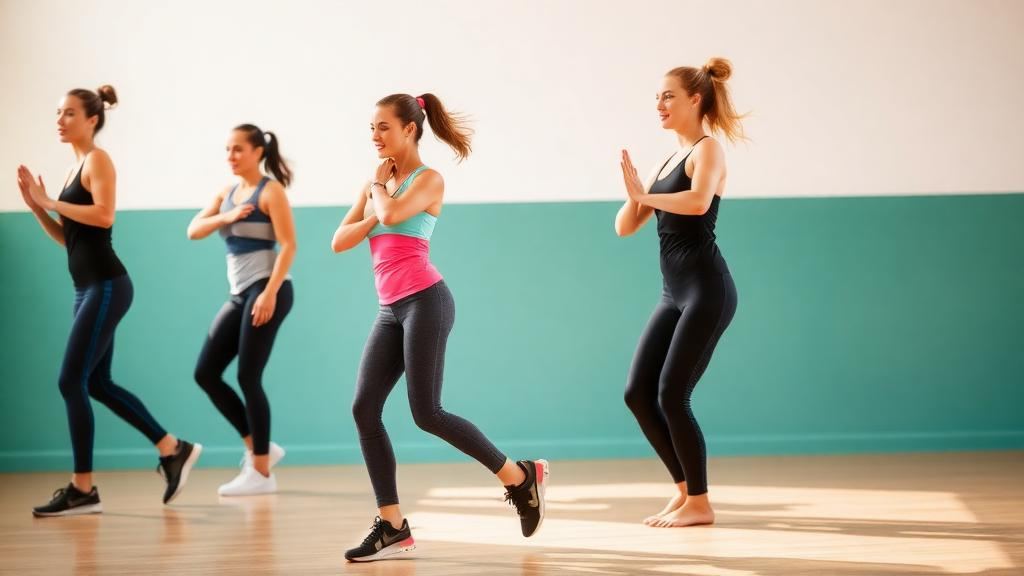
A 12-week university aerobics course did more than raise heart rates. Undergraduates who took the class ended the semester more attuned to their bodies, more appreciative of them, and more confident in themselves than classmates enrolled in a standard physical-education course, according to a quasi-experimental study published in Frontiers in Psychology. The findings, drawn from 240 students at a single Chinese university, add fresh momentum to a provocative idea now circulating in psychology: that how we feel our bodies from the inside may matter more for self-worth than how we judge them from the outside.
The research team, led by Sihua Liu of Nanchang Institute of Technology and Yuanyuan Ma of Henan Finance University, set out to test an embodiment-based account of body image. Most exercise interventions aimed at undergraduates, they note, chase fitness gains or appearance change—outcomes that can paradoxically reinforce an appearance-focused relationship with the body. An alternative framework argues that body image improves more sustainably when activities strengthen how a person attends to and experiences the body internally. Aerobics, with its sustained rhythmic whole-body movement, attention to breathing, posture, coordination, and the internal sensations of exertion and recovery, offered a plausible testing ground for that hypothesis.
The study enrolled 240 undergraduates aged 18 to 24, nested within eight intact physical-education classes: four aerobics classes and four comparison classes. Thirty students were randomly sampled from each class, and all were assessed at baseline and again at weeks 4, 8, and 12. Because students chose their courses before recruitment, the design was quasi-experimental rather than a randomized controlled trial—a distinction that shapes how the results should be read. The aerobics course met once weekly for 60 minutes across 12 consecutive weeks, while the comparison condition comprised usual-practice physical-education classes scheduled at the same frequency and duration.
Three validated instruments captured the psychological outcomes. Body awareness was measured with the Body Awareness Questionnaire, an 18-item self-report scale assessing habitual attentiveness to internal bodily processes such as heartbeat, breathing, and bodily tension. Body appreciation was assessed with the Body Appreciation Scale-2, a 10-item measure of accepting one’s body and respecting its functions. Self-esteem was gauged with the Rosenberg Self-Esteem Scale, a 10-item summed total ranging from 10 to 40. Baseline physical activity was recorded using the International Physical Activity Questionnaire–Short Form, allowing the researchers to control for pre-existing exercise exposure.
At week 12, after adjusting for baseline scores, sex, age, BMI, baseline physical activity, and prior aerobics experience, the aerobics group scored significantly higher than the comparison group on all three outcomes. The adjusted difference was largest for body awareness, with a coefficient of 0.43 and a 95 percent confidence interval of 0.29 to 0.56, followed by body appreciation at 0.18 (0.09 to 0.28) and self-esteem at 0.77 (0.62 to 0.91). In standardized effect-size terms, the between-course difference reached Hedges’ g of 0.78 for body awareness, 0.55 for body appreciation, and 0.44 for self-esteem—a pattern suggesting the clearest practical signal of the course was in students’ self-reported attentiveness to bodily states, with changes in broader body appreciation and especially global self-esteem more modest.
Because only eight classes contributed independent replication—four per condition—the researchers took statistical precautions that go well beyond conventional practice. With so few clusters, cluster-robust standard errors alone can be unreliable, so the team corroborated every primary contrast with a wild cluster bootstrap-t procedure. With eight classes, there are exactly 256 possible Rademacher sign-weight combinations; all 256 were enumerated exhaustively rather than approximated by random resampling. All three outcomes attained the smallest two-sided p-value attainable under this exhaustive sign-flip procedure, approximately 0.0078, and remained significant after Holm’s sequential correction across the three primary tests. A class-level sensitivity analysis treating each class as a single unit showed all four aerobics classes with larger mean change than all four comparison classes on every outcome, with no overlap between the two sets of class means.
The timing of the differences offered a suggestive descriptive pattern. Body awareness diverged between conditions as early as week 4, body appreciation followed a similar early trajectory that leveled off after week 8, and self-esteem did not show a clearly separated difference until week 8. This ordering is compatible with the researchers’ hypothesized sequence—course condition, then change in body awareness, then change in body appreciation, then change in self-esteem—but the authors are emphatic that it does not establish temporal precedence, because the underlying change intervals overlap in time and the analytic model specified the mediator ordering a priori rather than deriving it independently from the measurement schedule.
An exploratory mediation analysis, bootstrapped at the class level with 5,000 resamples of intact classes, produced an indirect estimate following the hypothesized serial chain that was different from zero: 0.146, with a 95 percent confidence interval of 0.079 to 0.240. Yet the authors urge restraint in interpreting this number. The serial estimate was similar in magnitude to the indirect pathway through body awareness alone (0.162) and through body appreciation alone (0.157), meaning the data do not indicate that the specific sequential ordering is a stronger mechanism than either construct operating independently. The mediation findings, the researchers write, should be read as descriptive and hypothesis-generating rather than as confirmation of a privileged psychological pathway.
The theoretical resonance is hard to ignore. The results align with embodiment-based accounts of body-attentive movement, including evidence from yoga practitioners showing that internal-experience-focused practice shifts self-evaluation away from appearance and toward functionality. They also fit functionality-based models of positive body image, which treat body appreciation as consistently associated with broader self-esteem. But the authors caution that several alternative explanations cannot be ruled out by this design: differences in instructor style or enthusiasm, the inherent enjoyment or novelty of aerobics choreography, heightened social interaction or group cohesion fostered by synchronized group movement and shared music, differences in objective exercise intensity, self-selection of more body-motivated students into the aerobics elective, and participants’ awareness of the study’s likely hypotheses given repeated body-focused questionnaires alongside a body-focused course.
The study also faces substantive measurement constraints. All outcomes were self-report, and only scale-level composite scores were retained in the de-identified analytic dataset, meaning item-level scoring cannot now be independently reconstructed, sample-specific reliability coefficients cannot be calculated, and measurement invariance across time or condition cannot be tested. The comparison condition was an incompletely characterized usual-practice comparator rather than a standardized active control, with information on its specific activities, instructors, use of music, attendance procedures, and exercise intensity unavailable. Intervention attendance could not be reliably verified because original attendance registers were not retained. Generalizability is limited to undergraduates from a single Chinese university, and replication across additional institutions and populations is needed.
Still, the study’s applied implications are worth considering. If a routine, non-mindfulness-based aerobics course—one that did not formally include interoceptive or mindfulness instruction—was associated with measurable gains in body awareness, body appreciation, and self-esteem over a single semester, the psychological benefits of structured movement may be broader than commonly assumed. The authors stress that the present mediation findings do not indicate whether body awareness, body appreciation, or their sequential ordering should be preferentially targeted in university physical-education programs, since the mediators were not experimentally manipulated and the three indirect pathways were of broadly similar magnitude. Experimental studies that manipulate these components separately would be required to distinguish among competing possibilities.
For now, the study stands as a preliminary between-course association rather than evidence of an aerobics-specific causal effect. The authors call for replication with a substantially larger number of independently observed classes and instructors, ideally within randomized, multi-site designs with fully documented intervention and comparison protocols. Until then, the idea that a semester of rhythm, breath, and coordinated movement might quietly reshape how students relate to their bodies—and, through that relationship, how they value themselves—remains an intriguing hypothesis worth watching as the science of embodiment continues to evolve.
Subject of Research: Psychology
Article Title: Changes in body awareness, body appreciation, and self-esteem during a university aerobics course: a quasi-experimental study
Article References: Liu, S., & Ma, Y. (2026). Changes in body awareness, body appreciation, and self-esteem during a university aerobics course: a quasi-experimental study. Frontiers in Psychology, 17, Article 1952535. https://doi.org/10.3389/fpsyg.2026.1952535
Image Credits: AI Generated
DOI: 10.3389/fpsyg.2026.1952535
Keywords: Changes, body, awareness, appreciation, self-esteem, during, university, aerobics, course, quasi-experimental, scientific research
Cite Scienmag News
Courtney Benton. (October 19, 2026). Aerobics Course Linked to Sharper Body Awareness and Higher Self-Esteem in Students. Scienmag. https://scienmag.com/aerobics-course-linked-to-sharper-body-awareness-and-higher-self-esteem-in-students/
Courtney Benton. "Aerobics Course Linked to Sharper Body Awareness and Higher Self-Esteem in Students." Scienmag, 19 October 2026, https://scienmag.com/aerobics-course-linked-to-sharper-body-awareness-and-higher-self-esteem-in-students/. Accessed 19 October 2026.
Courtney Benton. "Aerobics Course Linked to Sharper Body Awareness and Higher Self-Esteem in Students." Scienmag. October 19, 2026. https://scienmag.com/aerobics-course-linked-to-sharper-body-awareness-and-higher-self-esteem-in-students/


