


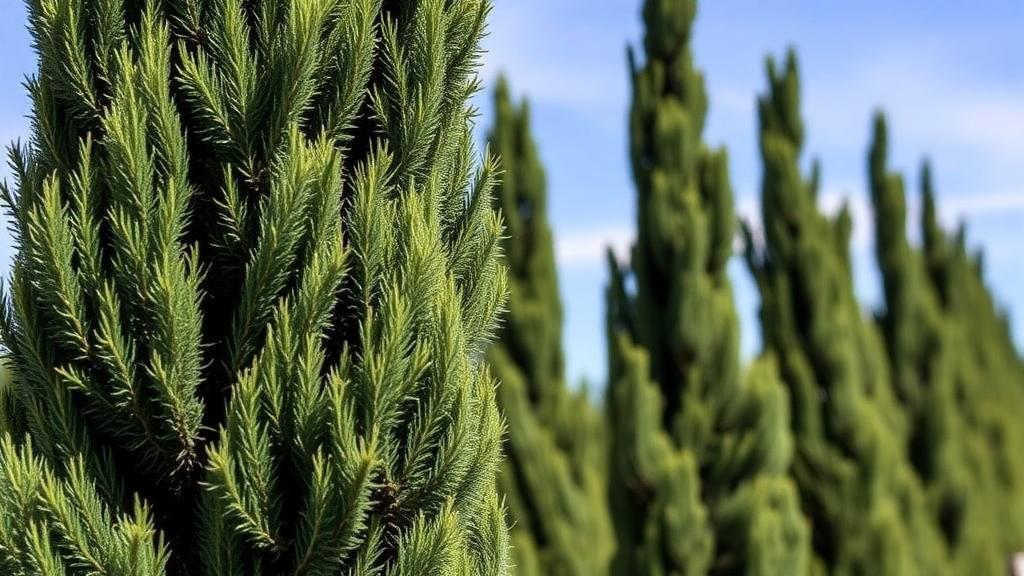
A small moth from the Mediterranean is quietly eating its way through Hungary’s ornamental evergreens, and gardeners have been blaming the wrong culprit all along. Cydia interscindana, a tortrix moth described from Andalusia in 1866, has been caught in pheromone traps across the Carpathian Lowlands since 2014, but a new three-year survey shows it is far more widespread than anyone realised. The larvae tunnel through the phloem of cypress relatives, the same nutrient-transporting tissue that keeps these trees alive, and heavy infestations can turn prized garden specimens yellow, then dry them out entirely. Worse still, the damage has long been misattributed to a metallic wood-boring beetle, meaning management efforts have targeted only one of two pests sharing the same trees.
The study, published in Nota Lepidopterologica, began in September 2018 when a horticulturist in Székesfehérvár, in central Hungary, submitted a freshly emerged moth from a Leyland cypress. When researchers examined the tree, they found larvae of Lamprodila festiva, a jewel beetle that had erupted in Budapest in 2012 and caused serious damage to ornamental gymnosperms, alongside an unidentified caterpillar. That caterpillar soon died, but it was preserved for genetic analysis. Similar larvae turned up in three neighbouring villages: Velence, Sukoró and Pákozd. DNA sequencing of the immature specimen identified it as C. interscindana, marking the first time this pest had been identified from a larval stage by molecular methods rather than by rearing it to adulthood.
To map the moth’s actual distribution, the team deployed CSALOMON-type pheromone traps originally designed for the codling moth, Cydia pomonella, a technique that had serendipitously produced the first Hungarian record of C. interscindana in Budapest in 2014. The survey started at three sites in 2019, in Zalaegerszeg, Békéscsaba and Kápolnásnyék, then expanded country-wide in 2020 to 18 localities with 21 sampling points in total. Traps operated from mid-May to the end of September, were checked weekly at most sites, and baits were replaced every four weeks. The results confirmed the moth at nine localities between 2018 and 2020, most of them clustered around Székesfehérvár, but with isolated populations in Debrecen and Békéscsaba hundreds of kilometres apart.
That scattered pattern tells a story about how invasive species actually move. Natural range expansion is slow and incremental, but the two isolated eastern populations suggest the moth is hitching rides with humans, most likely on inadequately inspected nursery plants. The researchers point out that when a species is introduced rather than expanding naturally, the propagule pressure is greater and the success of colonisation is correspondingly higher. Alien species also escape the predators, parasitoids and competitors that constrain them in their original Mediterranean habitats, and even where local parasitoids exist, they are unlikely to adapt to a novel host within a short time. The first Hungarian population in Budapest was probably established by imported ornamentals as well, and the authors warn that a country-wide invasion is likely in the near future.
The survey also settled the question of what the moth eats in Hungary. Its original host, the prickly juniper Juniperus oxycedrus, is not native there, but three popular ornamental evergreens are: Leyland cypress (Cupressus × leylandii), Oriental arborvitae (Platycladus orientalis) and Lawson cypress (Chamaecyparis lawsoniana). All 52 examined trees of these three species were infected by C. interscindana, while the beetle L. festiva attacked only 30 of them. Larval counts were highest on Leyland cypress, with 23 larvae recorded across seven localities, followed by 18 on Lawson cypress and 12 on Oriental arborvitae, making the arborvitae the least preferred host. Until now, the beetle had been blamed for essentially all damage on these three genera in Hungary, and control measures had been carried out only against it.
The damage itself is distinctive once you know what to look for. C. interscindana larvae mine along branches and trunks, reaching the phloem, and their tunnels are packed with frass that differs conspicuously from the reddish frass of the co-occurring beetle. Plant tissue around the mines becomes loose, slightly swollen and somewhat sponge-like, a reaction the authors suggest may represent gall induction, with the larva consuming the modified tissue. Because the phloem performs the vital physiological roles of transporting and storing nutrients, attacked plants yellow, fade and dry out, and heavily infested specimens may die. Exit holes of the moth and the beetle’s tunnels at tunnel entrances provide additional diagnostic signs.
The study also filled in the pest’s life history with technical detail previously unavailable. The pupa, described for the first time, is light brown, with rows of tiny but strong teeth along the caudal edge of each abdominal segment dorsally, accompanied by an additional transverse row in the central third of the segment. The caudal end is slightly rounded and nearly truncated, bearing three pairs of narrow, hooked cremastal setae. The pupal stage lasts 10 to 12 days, and the brown exuviae protrude by two-thirds from the wood, where they were found in Velence and Székesfehérvár. Adults of the first generation fly from mid-May to mid- or late June, and those of the second from mid-August until mid- or late September, depending on weather. The two generations do not overlap, and specimens overwinter as mature larvae before pupating in early spring.
Molecular analysis strengthened the identification and clarified the moth’s relationships. The team amplified the 658-base-pair COI barcode region of mitochondrial DNA using the standard Folmer primers, and the final dataset contained 547 aligned nucleotide positions. Remarkably, all three Hungarian specimens, from Székesfehérvár, Budapest and Velence, shared an identical sequence in this region, and that sequence matched an Austrian specimen exactly. In a Maximum Likelihood phylogeny built under the General Time Reversible model with discrete Gamma distribution, the Hungarian and Austrian populations formed a common clade with their closest relative, C. duplicana, from which they differed by a genetic distance of 3 percent, or 17 nucleotides. That value falls squarely within typical species-level differences, and a bootstrap support of 98 percent confirmed the two are not conspecific.
The practical payoff of the barcoding work is considerable. Immature stages of tortricid moths are notoriously difficult to identify from morphology alone, and conventional practice requires rearing larvae through to adults, a slow and failure-prone process. DNA barcodes bypass that bottleneck entirely, allowing a dead or damaged caterpillar to be identified from a small piece of tissue, as happened with the Székesfehérvár larva that died before it could be reared. The sequences have been deposited in GenBank, giving plant health inspectors and researchers elsewhere in Europe a reference tool for detecting this pest at its earliest stages of arrival.
For now, C. interscindana has been confirmed in only four counties of Hungary, but the authors believe it is probably much more widespread, and further survey work is needed to establish its true range. Together with L. festiva, whose abundance in Hungary is increasing due to climatic change, the moth has already caused significant damage, and local populations can serve as sources for further spread. The researchers argue that only strict examination of transported plant materials can slow the invasion, a conclusion that echoes a broader lesson of invasion biology: by the time an emerging pest is noticed in gardens, the trade pathways that carried it have usually delivered it to many other places as well.
Subject of Research: Bionomics and host plants of the invasive Cydia interscindana (Möschler, 1866) (Lepidoptera, Tortricidae), an emerging pest in the Carpathian Lowlands
Article Title: Bionomics and host plants of the invasive Cydia interscindana (Möschler, 1866) ( Lepidoptera , Tortricidae ), an emerging pest in the Carpathian Lowlands
Article References: Takács, A., Szabóky, C., Tóth, B., Bozsó, M., Kutas, J., Molnár, S., Farkas, G., Erdélyi, K., Tunyoginé Búzás, I., Hargitai, C., Terman, N., Menyhárt, A., Bodnár, S., Gajdos, É., Bogya, S., Csabai, J., Molnár, B., & Nagy, A. (2022). Bionomics and host plants of the invasive Cydia interscindana (Möschler, 1866) (Lepidoptera, Tortricidae), an emerging pest in the Carpathian Lowlands. Nota Lepidopterologica, 45, 53-64. https://doi.org/10.3897/nl.45.74236
Image Credits: AI Generated
DOI: 10.3897/nl.45.74236
Keywords: Bionomics, host, plants, invasive, Cydia, interscindana, schler, Lepidoptera, Tortricidae, emerging, pest, Carpathian
Cite Scienmag News
Juliet Wilcox. (October 19, 2026). Invasive moth quietly devastating Hungary’s ornamental cypress trees. Scienmag. https://scienmag.com/invasive-moth-quietly-devastating-hungarys-ornamental-cypress-trees/
Juliet Wilcox. "Invasive moth quietly devastating Hungary’s ornamental cypress trees." Scienmag, 19 October 2026, https://scienmag.com/invasive-moth-quietly-devastating-hungarys-ornamental-cypress-trees/. Accessed 19 October 2026.
Juliet Wilcox. "Invasive moth quietly devastating Hungary’s ornamental cypress trees." Scienmag. October 19, 2026. https://scienmag.com/invasive-moth-quietly-devastating-hungarys-ornamental-cypress-trees/


