


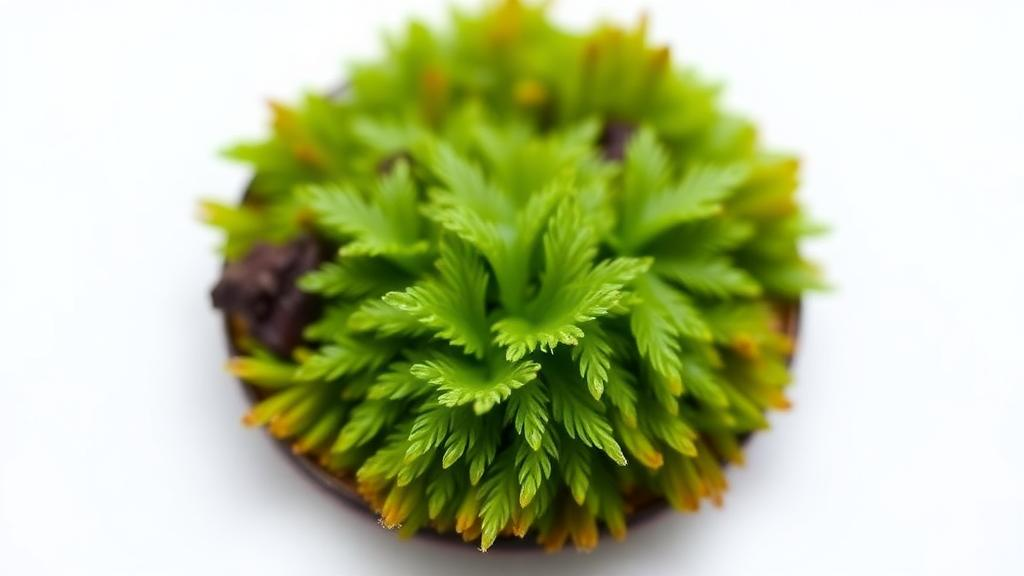
Deep in the Gaoligong Mountains of western Yunnan Province, growing almost invisibly at the base of a tree beside the Zaotang River, a small moss has just rewritten part of China’s bryophyte record. Researchers surveying the region’s rich flora in 2023 collected a tiny population of the genus Fissidens and, after careful microscopic study, identified it as Fissidens pokhrensis, a species previously known only from India, Japan, and Myanmar. The discovery, published in the journal PhytoKeys, marks the first time this moss has been documented in China and prompted the authors to produce an updated identification key for the country’s most confounding members of the genus.
Fissidens is no ordinary group of mosses. As the sole genus of the family Fissidentaceae, it encompasses an estimated 450 to 500 species worldwide, making it one of the most diverse moss genera on Earth and, with 65 species and 11 varieties currently documented, one of the most diverse in China as well. What sets these plants apart is their extraordinary leaf architecture. Each leaf consists of paired vaginant laminae, which sheath the stem like a folded pocket, plus an apical lamina at the tip and a dorsal lamina beneath. Arranged in a single plane along the shoot, these leaves create the dorsiventrally flattened, feather-like appearance that gives the genus its distinctive silhouette among mosses.
Most members of the genus are terrestrial, carpeting rocks and soil, but a select few have taken to life on tree trunks. In China, roughly 11 species and two varieties of Fissidens are known to grow epiphytically, and the newly recorded F. pokhrensis joins this exclusive club. The Chinese population was found clinging to a trunk near the base of a tree at an elevation of about 1,575 meters in Baoshan City’s Longyang District, a humid forest setting typical of the species’ known preferences across its range.
Identifying the specimen required a meticulous anatomical workup. The researchers examined the plants with an Olympus SZX16 stereomicroscope and an Olympus BX53 light microscope, capturing field images with a Nikon Z5 camera and documenting cellular detail with a digital imaging system. The resulting description, based exclusively on the newly collected material and deposited in the herbarium of Xiamen University, reveals a plant of modest proportions: shoots just 2.0 to 2.7 millimeters long and 1.0 to 1.3 millimeters wide, bearing 8 to 12 pairs of leaves that curl when dry.
Several characters combine to distinguish F. pokhrensis from its relatives. The leaves are oblong to oblong-obovate with distinctly acute apices, and the costa, the central nerve of the leaf, is of the bryoides type and terminates 7 to 19 cells below the apex. The laminal cells are thin-walled, irregularly quadrate to hexagonal, measuring roughly 6 to 8 micrometers across, and are pluripapillose, studded with four to six papillae at the cell corners. Perhaps most tellingly, the limbidium, a border of differentiated cells along the leaf margin, is entirely absent from the vegetative leaves and, based on the original description and related accounts, restricted to the vaginant laminae of the perichaetial leaves, the modified leaves that surround the female reproductive structures.
That combination of traits separates the species from its two closest look-alikes, F. gardneri and F. pallidinervis, which share pluripapillose laminal cells and a similar limbidium distribution but typically bear broadly acute, obtuse, or rounded leaf apices rather than the sharply acute tips of F. pokhrensis. It also distinguishes the new arrival from China’s other epiphytic Fissidens species, including F. anomalus, F. crispulus var. robinsonii, F. dubius, F. flabellulus, F. ganguleei, F. gymnogynus, F. holleanus, F. linearis var. obscuriretis, F. pseudoadelphinus, F. serratus, F. teysmannianus, and F. virens. Because no sporophytes or perichaetial leaves were present in the Chinese collection, the identification rests on gametophytic characters alone, but the authors argue that the small stature, pluripapillose cells, vaginant laminae extending about half the leaf length, complete absence of a vegetative limbidium, and epiphytic habit together provide a robust basis for the determination.
The biogeographic story behind the find is as compelling as the morphology itself. Fissidens pokhrensis was first validly described in 1979 from three specimens collected on the southern Himalayan slopes of northwestern India, all of them epiphytic. It later turned up in Japan, where fertile plants grew not on trees but on a cliff, and displayed narrowly lanceolate leaves that contrasted with the ovate-lingulate leaves of the original material. More recently it has been reported from Myanmar and from the Western Ghats of India, with those specimens once again collected from tree trunks. Taken together, the known occurrences span four global biodiversity hotspots: the Himalaya, the Western Ghats and Sri Lanka, Indo-Burma, and Japan. The Gaoligong Mountains, situated within the Mountains of Southwest China hotspot and adjacent to both the Indo-Burma and Himalaya hotspots, are precisely the kind of place this species might be expected to appear, making the discovery biogeographically unsurprising even as it extends the moss’s mapped range.
The Gaoligong range itself deserves attention. Extending roughly 600 kilometers along the western margin of the Hengduan Mountains, it sits at the intersection of three biodiversity hotspots, and its complex geological history and heterogeneous environments have produced exceptional biological richness. A comprehensive survey by Ma and colleagues in 2020 recorded 840 bryophyte species from the region based on the examination of approximately 8,000 specimens, a testament to the area’s floristic wealth. Yet even such foundational catalogs leave gaps, and the authors emphasize that detailed, group-by-group taxonomic studies remain essential to refining our understanding of the region’s composition and evolutionary history. The F. pokhrensis record is a case in point: a species hiding in plain sight on a tree trunk until someone looked closely enough to see it.
Classification of the species has itself been a moving target, reflecting broader upheavals in Fissidens systematics. Suzuki and colleagues established the first comprehensive infrageneric classification in 2018 using chloroplast rbcL and rps4 genes, recognizing three subgenera. In 2023, Budke and colleagues expanded the genomic scope with target-capture sequencing of 400 loci, producing high-resolution phylogenomic trees that supported the monophyly of some groups, including subg. Aloma, subg. Octodiceras, subg. Pachyfissidens, subg. Neoamblyothallia sect. Neoamblyothallia, and subg. Fissidens sect. Areofissidens, but found all other subgenera and sections in the two systems to be non-monophyletic. These results underscore the evolutionary lability of key morphological traits and suggest that broader taxon sampling and more extensive molecular data will be needed to settle the genus’s internal tree.
Against that shifting backdrop, the authors assign F. pokhrensis to subg. Polypodiopsis sect. Antennidens, following the revised framework of Bruggeman-Nannenga, who demonstrated that the old sect. Semilimbidium, together with sections Polypodiopsis, Areofissidens, and Aloma, forms a clade corresponding to a redefined subg. Polypodiopsis, characterized by bryoides-type costae, capsules with roughly 32 columns of exothecial cells, and scariosus-type peristomes. Sect. Antennidens, the senior synonym of sect. Semilimbidium, is defined by typically semilimbate leaves, small to medium-sized laminal cells that are pluripapillose, mammillose, or rarely smooth, and bryoides-type costae. To help future researchers navigate this thorny group, the paper presents an updated identification key covering the Chinese species with small to medium-sized plants, mammillose or papillose laminal cells, and a limbidium restricted to the vaginant laminae, from F. capitulatus and F. rupicola through F. serratus, F. schwabei, F. virens, the two varieties of F. crenulatus, F. linearis var. obscuriretis, F. wichurae, F. kinabaluensis, F. incognitus, F. holleanus, F. ceylonensis, and finally F. pokhrensis, F. gardneri, and F. pallidinervis, separated by leaf apex shape, plant size, and peristome type.
The variability documented across the species’ range, in leaf morphology, substrate preference, and distribution, raises an intriguing question about what F. pokhrensis really is. Japanese plants on cliffs with lanceolate leaves, Indian and Myanmar plants on trunks with ovate leaves, and now a Chinese population in the mountains of Yunnan may represent a single ecologically flexible species or a complex of closely related forms. The authors call for further molecular and detailed morphological studies to clarify the full taxonomic limits and geographical range. For now, the moss stands as a reminder that even in well-surveyed landscapes, and even within a genus as familiar as Fissidens, new national records can still emerge from a single glance at the base of a tree, and that the world’s biodiversity hotspots continue to yield surprises to anyone patient enough to kneel down and look.
Subject of Research: First record of the moss Fissidens pokhrensis in China and an updated taxonomic key for Chinese Fissidens species with semilimbate leaves and papillose or mammillose laminal cells
Article Title: Discovery of Fissidens pokhrensis ( Fissidentaceae ) in China and an updated key to Chinese species with semilimbate leaves and papillose or mammillose laminal cells
Article References: Liu, Z.-Q., Ke, A.-R., Ho, B.-C., Wang, S.-L., Wei, Y.-M., & Ye, W. (2026). Discovery of Fissidens pokhrensis (Fissidentaceae) in China and an updated key to Chinese species with semilimbate leaves and papillose or mammillose laminal cells. PhytoKeys, 276, 25-33. https://doi.org/10.3897/phytokeys.276.187004
Image Credits: AI Generated
DOI: 10.3897/phytokeys.276.187004
Keywords: Fissidens pokhrensis, Fissidentaceae, mosses, bryophytes, Yunnan, Gaoligong Mountains, biodiversity hotspot, epiphytic plants, taxonomy, plant morphology, PhytoKeys, new record
Cite Scienmag News
Margaret Porter. (October 19, 2026). Tiny Moss With Feather-Like Leaves Turns Up in China for the First Time. Scienmag. https://scienmag.com/tiny-moss-with-feather-like-leaves-turns-up-in-china-for-the-first-time/
Margaret Porter. "Tiny Moss With Feather-Like Leaves Turns Up in China for the First Time." Scienmag, 19 October 2026, https://scienmag.com/tiny-moss-with-feather-like-leaves-turns-up-in-china-for-the-first-time/. Accessed 19 October 2026.
Margaret Porter. "Tiny Moss With Feather-Like Leaves Turns Up in China for the First Time." Scienmag. October 19, 2026. https://scienmag.com/tiny-moss-with-feather-like-leaves-turns-up-in-china-for-the-first-time/


