


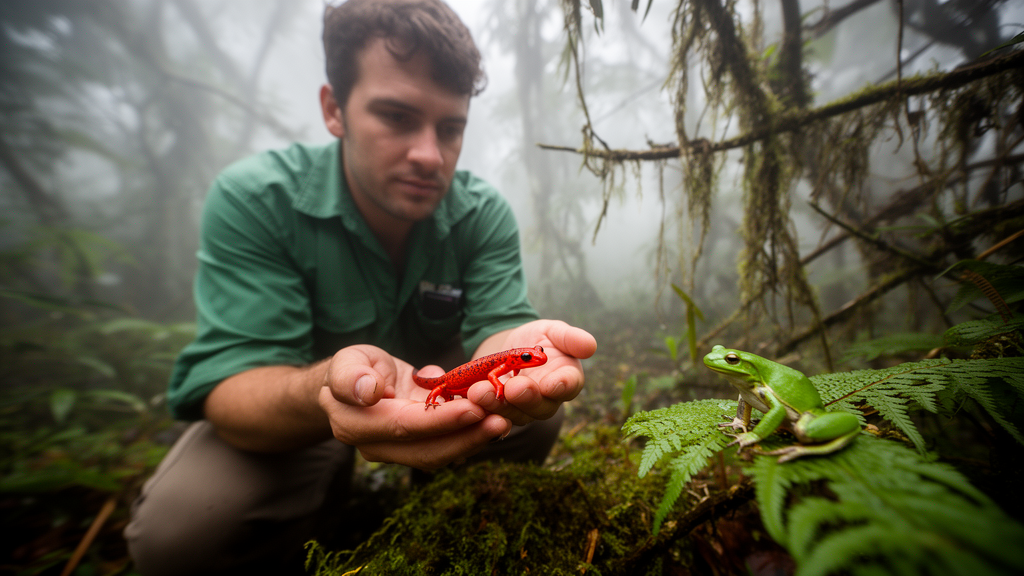
A seventeen-year conservation and research initiative in Cusuco National Park, located in the Sierra de Omoa of northwestern Honduras, has yielded a comprehensive updated inventory of the region’s herpetofauna. The study confirms the presence of 105 distinct species of amphibians and reptiles within the protected area, a figure that significantly expands upon previous records and underscores the park’s status as a critical biodiversity hotspot. This extensive documentation, derived from systematic surveys conducted between 2007 and 2023, highlights the exceptional ecological value of the isolated cloud forest ecosystem, which harbors approximately 26% of all recorded Honduran herpetofauna. The findings reinforce the urgent need to protect this globally valuable region, which serves as a refuge for numerous threatened and regionally endemic species facing severe pressures from habitat degradation and climate change.
The herpetofaunal community of Cusuco National Park is characterized by a high degree of endemism, including four micro-endemic amphibian and four micro-endemic reptile species known exclusively from this single locality. These unique taxa, such as the salamander Bolitoglossa diaphora and the frog Plectrohyla exquisita, are restricted to the park’s core zone, emphasizing the irreplaceable nature of the habitat. The study identifies 30 amphibian species, comprising salamanders and frogs, and 75 reptile species, including lizards and snakes. This diversity is not only numerically significant but also taxonomically complex, with many species belonging to cryptic lineages that have only recently been distinguished through molecular analysis. The presence of such specialized fauna in a relatively small geographic area makes the park a prime example of the ‘sky island’ effect, where isolated high-elevation forests foster unique evolutionary trajectories.
Methodologically, the research relied on annual surveys conducted from early June to early August, with the exception of the 2020 and 2021 seasons due to the global pandemic. Teams of students and volunteers, supervised by experienced herpetologists, monitored standardized transects across seven field camps situated in both the core and buffer zones of the park. Data collection involved diurnal visual encounter surveys and nocturnal opportunistic searches, with careful recording of species identity, location, and morphometric measurements. To ensure accuracy, only species occurrences supported by photographic evidence or expert verification were included in the final inventory. This rigorous approach allowed researchers to distinguish between widespread species and those with restricted ranges, providing a robust baseline for future conservation assessments.
Among the most notable findings is the rediscovery and confirmation of several rare and elusive species. The canopy-dwelling frog Ecnomiohyla salvaje, a cryptic species endemic to the region, was observed in the core zone, where it now finds its primary refuge following the loss of forests in nearby areas. Similarly, the secretive salamander Nototriton brodiei, typically found in dense leaf litter and moss mats, was confirmed in high-elevation habitats. These records are critical for conservation planning, as they indicate that the park still provides viable habitat for species that are critically endangered or facing significant population declines. The detection of these species, often in low numbers, underscores the importance of continued monitoring to track population trends and assess the effectiveness of protective measures.
The reptile fauna of Cusuco National Park has seen a substantial increase in documented diversity since the last major inventory in 2006, with 46 new species records added during the study period. This expansion includes 18 lizard and 28 snake species, many of which were found in lower-elevation habitats within the buffer zone. Notable additions include the Honduran endemic blind snake Amerotyphlops stadelmani and the lizard Laemanctus julioi, the latter of which represents a significant range extension for the species. The presence of these taxa in previously underexplored areas highlights the need for comprehensive surveys across all elevational gradients. The high proportion of endemic and threatened reptile species in the park further emphasizes its role as a center of herpetofaunal diversity, with many species showing high Environmental Vulnerability Scores due to their restricted distributions and specialized habitat requirements.
Conservation status assessments reveal that a significant portion of the park’s herpetofauna is at risk. Almost half of the recorded amphibian species are listed as Critically Endangered or Endangered by the IUCN Red List, with many also exhibiting high vulnerability to environmental degradation. The spread of the amphibian chytrid fungus Batrachochytrium dendrobatidis poses an additional threat, with high infection rates observed in several endemic species. Despite these challenges, the park remains a vital stronghold for biodiversity, and the continued presence of species like Craugastor milesi, which was previously thought to be extinct, offers hope for recovery. However, the potential local extinction of some species, if not detected in recent years, would mark a significant loss for the region’s ecological heritage.
Threats to Cusuco National Park are multifaceted, with habitat degradation and climate change being the primary drivers of biodiversity loss. Deforestation for coffee plantations and livestock has resulted in the loss of 7% of the park’s forested area between 2000 and 2017, with encroachment increasingly affecting the core zone. The lack of permanent forest guards and the growing population in surrounding areas exacerbate these pressures, making community-based conservation schemes essential for the park’s long-term survival. Payment for ecosystem services programs could provide sustainable socio-economic benefits to nearby livelihoods, incentivizing the protection of the remaining pristine cloud forest. The buffer zone, while supporting a mosaic of disturbed habitats, still harbors a variety of reptiles and amphibians, indicating that even fragmented landscapes can contribute to regional biodiversity.
Looking ahead, the study emphasizes the need for expanded biodiversity research across other extant forest regions in Honduras to refine species distribution ranges and facilitate timely conservation measures. The Wallacean shortfall, or the lack of knowledge about species distributions, remains a significant barrier to effective conservation in Mesoamerica. Additional field surveys and molecular studies are necessary to fill knowledge gaps and identify undescribed diversity. DNA barcoding and comparative genetic analyses can provide insights into population connectivity and genetic diversity, informing strategies for preserving the evolutionary potential of herpetofaunal communities. As climate change continues to alter temperature and precipitation regimes, the potential for upslope elevational shifts in vegetation and animal distributions poses a risk of ‘escalator to extinction’ for high-elevation specialists.
In conclusion, Cusuco National Park stands as an irreplaceable hotspot of Mesoamerican biodiversity, supporting a remarkable array of reptile and amphibian species. The long-term monitoring program has provided a detailed understanding of the park’s herpetofaunal community, highlighting both its richness and its vulnerability. The findings underscore the urgent need for active protection of the park and the broader Mesoamerican cloud forest ecosystem. By integrating conservation efforts with community engagement and scientific research, it is possible to safeguard the future of this unique biodiversity and ensure the persistence of its endemic species in the face of ongoing environmental challenges.
Subject of Research: The amphibians and reptiles of Cusuco National Park, Northwest Honduras: updates from a long-term conservation programme
Article Title: The amphibians and reptiles of Cusuco National Park, Northwest Honduras: updates from a long-term conservation programme
Article References: Laking, A. E., Solís, J. M., Brown, T., Maddock, S. T., Burdekin, O., Taylor, P., Lonsdale, G., Green, S. E. W., Martin, T. E., Galdamez, J. R., Kolby, J. E., Erens, J., & Jocque, M. (2024). The amphibians and reptiles of Cusuco National Park, Northwest Honduras: updates from a long-term conservation programme. Neotropical Biology and Conservation, 19(2), 87-112. https://doi.org/10.3897/neotropical.19.e120902
Image Credits: AI Generated
DOI: 10.3897/neotropical.19.e120902
Keywords: amphibians, reptiles, Cusuco, National, Park, Northwest, Honduras, updates, long-term, conservation, programme, scientific research
Cite Scienmag News
Margaret Porter. (October 18, 2026). Honduran Cloud Forest Reveals 105 Reptile and Amphibian Species. Scienmag. https://scienmag.com/honduran-cloud-forest-reveals-105-reptile-and-amphibian-species/
Margaret Porter. "Honduran Cloud Forest Reveals 105 Reptile and Amphibian Species." Scienmag, 18 October 2026, https://scienmag.com/honduran-cloud-forest-reveals-105-reptile-and-amphibian-species/. Accessed 18 October 2026.
Margaret Porter. "Honduran Cloud Forest Reveals 105 Reptile and Amphibian Species." Scienmag. October 18, 2026. https://scienmag.com/honduran-cloud-forest-reveals-105-reptile-and-amphibian-species/


