


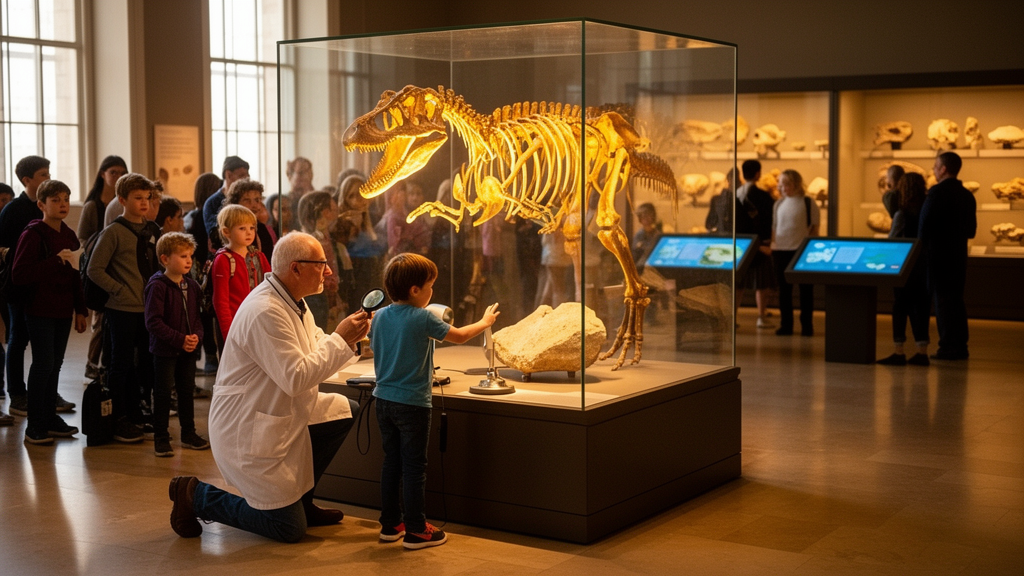
Natural history collections have traditionally been viewed as static repositories, filled with drawers of preserved specimens that serve primarily as reference points for taxonomists and evolutionary biologists. However, a recent publication in the journal Natural History Collections and Museomics highlights a significant shift in how institutions like the Queen Victoria Museum and Art Gallery (QVMAG) in Tasmania approach these holdings. The museum is actively redefining the role of its entomological collection, moving beyond mere preservation to create a dynamic resource that bridges the gap between rigorous scientific inquiry and public engagement. This dual purpose requires a delicate balance, ensuring that the integrity of research-grade specimens is maintained while simultaneously developing materials that can withstand the rigors of public interaction and educational programming.
The historical context of the QVMAG collection reveals a long-standing disparity between its vertebrate and invertebrate holdings. For decades, the museum’s natural history focus was heavily skewed toward vertebrates, reflecting the research priorities of previous curators and the lack of significant private donations of insect collections. Unlike larger mainland Australian institutions that benefited from extensive private bequests, QVMAG struggled with a modest entomological collection that lacked both taxonomic depth and geographic coverage. This limitation created a significant gap in the museum’s ability to support comprehensive biodiversity studies, particularly those focused on the unique ecosystems of northern Tasmania, which are increasingly under threat from climate change and environmental shifts.
The turning point for the institution arrived in 2013, when the Natural Sciences team hired staff with specialized expertise in arthropods, including insects and spiders. This strategic move allowed the museum to address critical gaps in its invertebrate holdings through targeted fieldwork and the acceptance of major donations. A pivotal moment in this expansion was the acquisition of more than 16,000 pinned specimens, primarily butterflies, from the nationally significant Trevor Lambkin–Ian Knight private collection. This donation, combined with ongoing fieldwork, has led to an exponential growth in the collection, with approximately 140,000 insects and spiders added over the past decade. Nearly 40,000 of these specimens are now registered and accessible through digital platforms such as the Online Zoological Collections of Australian Museums and the Atlas of Living Australia, enhancing their utility for global research.
Despite this growth, the museum faced a distinct challenge: the lack of surplus specimens suitable for public education. In larger institutions, such as Museums Victoria, it is common to designate thousands of specimens with limited associated data for long-term public displays. At QVMAG, however, most registered specimens are vital for scientific research and are too fragile or valuable to be handled by the public. Furthermore, many local Tasmanian species, while ecologically significant, lack the vibrant coloration or large size necessary to capture the imagination of general audiences, particularly children. This realization prompted the Natural Science team to develop a dedicated outreach collection in 2018, repurposing historical specimens with little scientific value to create a robust resource for educational initiatives.
The development of this outreach collection represents a distinct curatorial approach, one that prioritizes durability and visual impact over the precise data requirements of scientific research. These specimens are housed in a dedicated cabinet and are managed with specific conservation practices to ensure they can withstand frequent handling, light exposure, and humidity fluctuations. The collection serves as a crucial tool for the museum’s Learning and Engagement team, supporting hands-on activities that connect the public with nature. By separating these outreach specimens from the core scientific collection, the museum ensures that its research integrity remains uncompromised while still providing tangible, interactive experiences for visitors.
Upcoming developments at QVMAG include the launch of the “BUGS” STEAM gallery, which will showcase specimens from this outreach collection. The gallery is designed to engage audiences, particularly children, through a multidisciplinary framework that integrates science, technology, engineering, arts, and mathematics. Interactive displays and creative activities will allow visitors to examine insects and arthropods up close, fostering a deeper understanding of their roles in ecosystems and their evolutionary significance. The gallery will emphasize Tasmanian species, providing a local context for biodiversity education, while also featuring visually striking specimens from other regions to maximize audience engagement. This initiative aims to extend the museum’s impact beyond its walls, inspiring young minds to explore science and biodiversity in their everyday environments.
To support the longevity of the “BUGS” exhibition, the museum has invested in advanced display technology, including Avelon VEL showcases that provide environmental control for temperature and humidity. These cases are designed to preserve specimens in optimal condition for long-term exhibitions, addressing the conservation challenges associated with public-facing displays. The flexibility of these showcases also allows the museum to present shorter-term exhibitions using collection specimens, further enhancing the educational value of the gallery. The curation of outreach drawers is an ongoing process, requiring continuous collaboration between curators, collection officers, and educators to ensure that the specimens remain both engaging and intact for years to come.
The management of outreach collections requires a well-structured collaboration between the Natural Sciences and Learning and Engagement teams. While the Natural Sciences team provides expertise in curation and preservation, the Learning and Engagement staff play a crucial role in integrating these specimens into educational programs. This partnership necessitates clear protocols for responsible specimen handling and the allocation of resources to support both research and outreach efforts. By treating outreach collections as distinct entities, the museum can ensure that its educational initiatives do not divert focus from its core research activities, maintaining a balance that benefits both the scientific community and the general public.
As natural history museums continue to evolve, the integration of scientific discovery and public education remains a central challenge. The experience of QVMAG demonstrates that with careful planning, dedicated resources, and interdisciplinary collaboration, it is possible to create collections that serve multiple purposes without compromising their integrity. By viewing outreach collections as essential components of the museum’s mission, institutions can enhance their relevance and accessibility, inspiring future generations of scientists and naturalists while preserving the biodiversity of our planet for future study.
Subject of Research: Balancing discovery and education in natural history collections
Article Title: Balancing discovery and education in natural history collections
Article References: Arriaga Jiménez, A., & Fearn, S. (2025). Balancing discovery and education in natural history collections. Natural History Collections and Museomics, 2, 1-8. https://doi.org/10.3897/nhcm.2.147409
Image Credits: AI Generated
Keywords: Balancing, discovery, education, natural, history, collections, scientific research
Cite Scienmag News
Courtney Benton. (October 18, 2026). Museums Balance Scientific Discovery with Public Education. Scienmag. https://scienmag.com/museums-balance-scientific-discovery-with-public-education/
Courtney Benton. "Museums Balance Scientific Discovery with Public Education." Scienmag, 18 October 2026, https://scienmag.com/museums-balance-scientific-discovery-with-public-education/. Accessed 18 October 2026.
Courtney Benton. "Museums Balance Scientific Discovery with Public Education." Scienmag. October 18, 2026. https://scienmag.com/museums-balance-scientific-discovery-with-public-education/


