


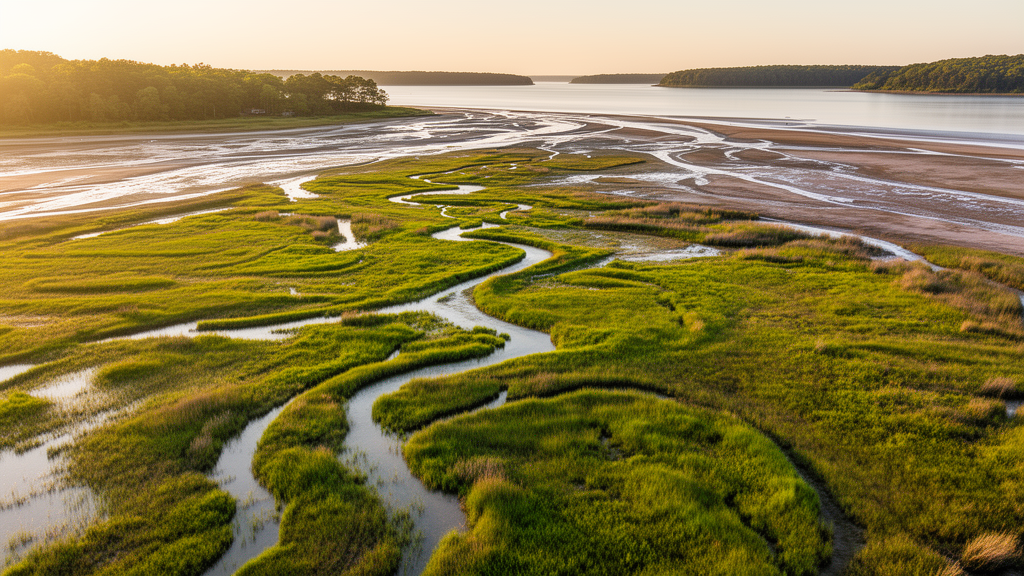
Across the floodplains of Central Europe and the tidal marshes of the Baltic coast, a quiet biogeochemical rescue mission is underway. A new review published in Nature Conservation examines how degraded floodplains and coastal wetlands can be restored as nutrient sinks, focusing on the removal of nitrogen and phosphorus from waters that would otherwise fuel eutrophication downstream. The study, led by researchers synthesizing case studies from Denmark and Germany, argues that while complete recovery of natural functions is rare, key ecological processes such as denitrification and sedimentation can be reactivated within surprisingly short time frames. The catch, the authors caution, is that nutrient legacies buried in soils and altered site characteristics can delay or even undermine these gains, making every restoration project a custom-tailored exercise in patience and precision.
Wetlands have always been integral to human civilization, from the fertile Mesopotamian marshes that earned the region its reputation as the cradle of civilization to the diminished remnants still worked by Marsh People today. Their value lies in a natural hydrology that periodically or seasonally floods, drawing nutrient-laden water from upstream sources into inundated zones where a complex interplay of hydrological, physical, chemical, and biological processes strips away excess nitrogen and phosphorus. Floodplains and coastal wetlands are particularly effective at this mitigation, retaining more than 10 kilograms of phosphorus per hectare per year in some cases, one to two orders of magnitude higher than in other wetland types such as minerotrophic peatlands. The pathways of water flow, whether surface runoff, groundwater, flooding, or tidal exchange, ultimately determine which nutrient cycling processes dominate and how much removal occurs.
Sedimentation is the first and most visible of these processes. When a stream overflows its banks, flow velocity decreases abruptly, allowing suspended material to deposit across the floodplain. Similarly, in coastal wetlands, suspended sediment settles when tidal cycles stagnate and flow velocities approach zero. The intensity and frequency of flooding shape the amount, type, and location of sediment in these areas, while water chemistry promotes flocculation, causing particles to aggregate and settle. Vegetation plays a critical role too, as wetland plants reduce water flow, promote particle deposition, and prevent resuspension and bank erosion, particularly when trees grow along stream channels. Coarse particles like sand settle quickly in low-flow areas, while finer clay, silt, and organic matter remain suspended longer. Microbes may even enhance sediment retention by binding particles, though bioturbation by worms and crustaceans can mix soil layers and reduce it.
Beneath the sediment surface, microbial transformations drive the most consequential nutrient removal. Denitrification, where nitrate is reduced to nitrogen gases and permanently removed from the aquatic system, is the key water purification process in wetlands, occurring mainly under anaerobic conditions in waterlogged soils. During flooding events, when nitrate-enriched water influxes into riparian zones, nitrogen removal efficiency can often exceed 90 percent. Yet the process is delicately balanced. At elevated nutrient loads, bacterial denitrification may be limited by carbon availability, which serves as the energy source and electron donor needed to reduce nitrate. Temperature matters as well, though significant nitrate removal can occur even below 5 degrees Celsius during winter. Effectiveness declines under fluctuating water tables, low pH, or high nitrate concentrations, leading to incomplete denitrification and the release of nitrous oxide, a potent greenhouse gas. Alongside microbial denitrification, an abiotic process involving nitrate reduction through pyrite oxidation has been observed in carbon-poor groundwater systems.
Phosphorus follows a different trajectory. Rather than being converted to a gas, it is retained through sorption to iron, aluminum, and calcium minerals, as well as by precipitation as insoluble compounds. In calcium-rich wetlands, phosphorus can precipitate with calcium to form calcium phosphate minerals under alkaline conditions. Phosphorus binding is favored at pH ranges of 4 to 6, thanks to the negative charge of phosphate species and the isoelectric point of metal oxides in the circum-neutral range. However, in coastal wetlands, high concentrations of sulfate can outcompete phosphorus for positively charged binding sites, and when sulfate is reduced to sulfide in anaerobic sediments, it promotes sulfate-mediated phosphorus mobilization or internal eutrophication, significantly altering the phosphorus cycle. Plant uptake provides yet another retention pathway, with mangroves and salt marshes particularly effective at assimilating nutrients into biomass.
The effectiveness of all these processes is now under threat from human activities and climate change. Hydrological connectivity is the key factor controlling the sink function of wetlands, facilitating nutrient exchange between aquatic and terrestrial environments. Fragmentation leads to smaller, isolated, and hydrologically disconnected wetlands, impairing this exchange and reducing nutrient removal efficiency. Excessive nutrient loading from agricultural runoff, wastewater discharge, and urban development leads to eutrophication, hypoxia, and harmful algal blooms, as frequently documented for the Baltic Sea over the last century. Climate change introduces further complexity, with rising temperatures, altered precipitation patterns, and more frequent droughts affecting soil chemistry and microbial processes like denitrification. Sea-level rise particularly threatens coastal wetlands by increasing erosion, altering salinity, and disrupting nutrient cycling, and even low levels of increased salinity can profoundly reshape microbial community composition and promote internal phosphorus mobilization in surface sediment.
Restoration, the review emphasizes, does not necessarily lead to all-natural processes, even if natural conditions are created. The physical structure for a particular ecosystem and its biotic composition may self-assemble, but the re-establishment of the microbiome can take several years. Successful projects must restore hydrological connectivity, enhance sediment and nutrient dynamics, and re-establish critical ecosystem processes such as denitrification and phosphorus sorption. For floodplains, this typically involves filling ditches and drains, reconnecting groundwater flow to the riparian aquifer, re-meandering channels, removing or breaching embankments, and reinstating natural surface flow dynamics. In coastal wetlands, restoring tidal flows enhances water exchange with the adjacent marine environment, supporting nutrient cycling and improving the removal or storage of excess nitrogen and phosphorus.
The evidence from long-term case studies is compelling. In 2003, a 6.5-kilometer stretch of River Odense in southern Denmark was re-meandered, allowing natural inundation of the floodplain every winter. Over the following two decades, sedimentation rates varied considerably between years, from zero to 11 kilograms of dry weight per square meter annually, while tracer measurements using cesium-137 indicated a longer-term average of 6 kilograms per square meter per year. Flooding enhanced nitrate removal in groundwater by 20 to 42 kilograms of nitrogen per hectare per year, creating a stagnant zone beneath the floodplain that increased residence time and upward flow into the highly reactive organic-rich topsoil. Seed richness and diversity from winter-deposited sediment peaked at 16 meters from the river channel, coinciding with a confluence zone emerging within the floodplain. Yet incubation experiments revealed that between 11 and 25 percent of the phosphorus deposited on the floodplain could be released as dissolved inorganic phosphorus following deposition, a reminder that restoration gains are never entirely one-directional.
On Rügen Island in Germany, a coastal fen peatland known as Polder Drammendorf was rewetted during winter 2019 through dike removal and is now permanently flooded by Baltic Sea water. Analysis of elevation-dependent soil characteristics revealed significant spatial variability in soil organic matter content and ammonium release behavior. A strong negative correlation between soil organic matter and elevation indicated restricted organic matter mineralization in low-lying areas. Soils at low elevations released significantly higher ammonium concentrations during initial leaching, with peak levels exceeding typical Baltic Sea waters by approximately two orders of magnitude. These findings identify low-lying areas as critical nutrient hotspots during initial rewetting stages, potentially creating significant eutrophication pressure on connected marine ecosystems. Along the Austrian Danube, modeling of the Donau-Auen National Park showed that fully reconnecting seven side-channels would increase current nitrogen and phosphorus retention by 2 to 5 times, compensating for lower retention capacities in dry years, though reconnected side-channels account for a nutrient reduction of only about 0.1 percent of the annual load of the Austrian Danube.
The review concludes that floodplain and coastal wetlands are irreplaceable ecosystems whose restoration requires a multifaceted approach combining habitat conservation, pollution reduction, climate change adaptation, and active restoration efforts while addressing societal needs. The EU Restoration Law, aiming to restore 30 percent of all habitats listed in the FFH directive annex 1 by 2030, offers an important vehicle for planning and implementing large-scale wetland restoration, though conflicts of objectives, debates on financing, land availability, and ecological potential continue to slow progress. The authors propose five research avenues, including examining wetland resilience to environmental changes, developing cost-effective and scalable monitoring techniques combining field surveys, in-situ nutrient measurements, and remote sensing, creating simulation models to predict hydrological impacts, investigating microbial ecology and nutrient cycling through genomic and metagenomic analyses, and promoting cross-disciplinary collaboration across hydrology, ecology, and socio-economics. Recovery of nutrient retention processes, they find, can be either rapid or delayed, and nutrient legacies and soil degradation remain the fundamental constraints. Ultimately, the effectiveness of restoration depends on site-specific factors such as wetland degradation, size, hydrological connectivity, plant recovery, and ongoing global changes, underscoring the importance of considering both spatial and temporal dimensions in every custom-tailored restoration strategy.
Subject of Research: Floodplains and coastal wetlands as nutrient sinks: a restoration perspective
Article Title: Floodplains and coastal wetlands as nutrient sinks: a restoration perspective
Article References: Zak, D., Tschikof, M., Natho, S., Jes Petersen, R., Kronvang, B., Hoffmann, C. C., Liu, H., Wang, M., & Kaden, U. S. (2026). Floodplains and coastal wetlands as nutrient sinks: a restoration perspective. Nature Conservation, 62, 175-193. https://doi.org/10.3897/natureconservation.62.158302
Image Credits: AI Generated
DOI: 10.3897/natureconservation.62.158302
Keywords: Floodplains, coastal, wetlands, nutrient, sinks, restoration, perspective, scientific research
Cite Scienmag News
Chloe Pearson. (October 18, 2026). Restoring Floodplains and Coastal Wetlands to Reignite Nutrient Removal. Scienmag. https://scienmag.com/restoring-floodplains-and-coastal-wetlands-to-reignite-nutrient-removal/
Chloe Pearson. "Restoring Floodplains and Coastal Wetlands to Reignite Nutrient Removal." Scienmag, 18 October 2026, https://scienmag.com/restoring-floodplains-and-coastal-wetlands-to-reignite-nutrient-removal/. Accessed 18 October 2026.
Chloe Pearson. "Restoring Floodplains and Coastal Wetlands to Reignite Nutrient Removal." Scienmag. October 18, 2026. https://scienmag.com/restoring-floodplains-and-coastal-wetlands-to-reignite-nutrient-removal/


