


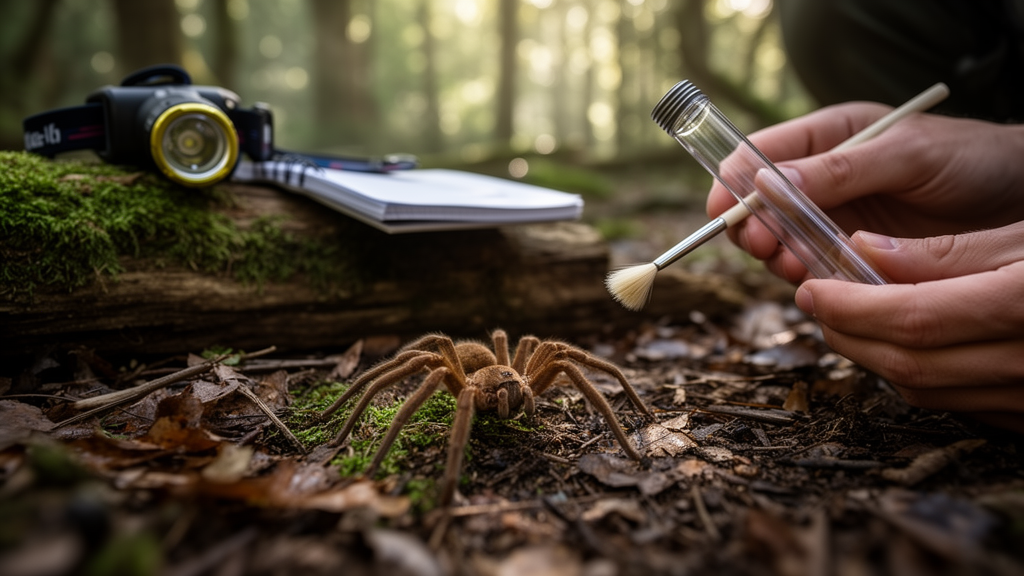
Researchers have identified significant additions to the known spider fauna of Georgia, a country situated at the crossroads of the Caucasus Ecoregion. The findings, derived from the Caucasus Barcode of Life (CaBOL) project, reveal that two species are being recorded for the first time from the entire Caucasus region, while five others are new to Georgia. This discovery underscores the ongoing biological richness of the area and highlights the effectiveness of combining traditional fieldwork with modern molecular techniques to uncover hidden biodiversity in understudied regions.
The study, published in the journal Caucasiana, analyzes specimens collected between 2006 and 2022 through various field trips and spontaneous hand-collecting efforts. The research team determined the species-level identity of 51 spider species, representing 26 genera across five families. These families include Agelenidae, Amaurobiidae, Anyphaenidae, Araneidae, and Atypidae. The integration of genetic barcoding with morphological analysis allowed for precise identification, even in cases where visual characteristics were ambiguous or variable.
Among the most notable findings is the first record of Pireneitega armeniaca and Leviellus caspicus for the entire Caucasus Ecoregion. Pireneitega armeniaca, a member of the Agelenidae family, was previously known only from northeastern Turkey. Its discovery in Kintrishi National Park in Georgia extends the known range of the species northward. Similarly, Leviellus caspicus, an orb-weaver spider, was found in Gori and Tbilisi, marking the westernmost record for this species in the region. These findings suggest that the distribution ranges of certain spider species may be broader than previously documented.
Five additional species were reported for the first time from Georgia, including Lycosoides coarctata, Aculepeira talishia, Gibbaranea gibbosa, Gibbaranea omoeda, Leviellus stroemi, and Singa semiatra. These records were obtained from diverse habitats, ranging from montane meadows and xerothermic shrublands to urban environments and protected reserves. The presence of these species in both remote areas and the capital city, Tbilisi, indicates that even well-studied urban zones can harbor previously undocumented fauna. This challenges the assumption that major cities are biologically saturated and highlights the need for continued monitoring in all habitat types.
The research team utilized DNA barcoding of the cytochrome oxidase subunit I (COI) gene to verify species identities. This molecular approach is increasingly standard in taxonomic and ecological studies, particularly through initiatives like the GGBC and CaBOL projects. By amplifying and sequencing specific DNA fragments, researchers could compare their samples against global databases such as the Barcode of Life Data Systems (BOLD). This method proved crucial in resolving taxonomic uncertainties, such as the synonymization of Lycosoides lehtineni with Lycosoides coarctata, based on morphological and genetic evidence.
Despite the success of DNA barcoding, the study also highlights its limitations. In several cases, the genetic distance between species was too small to provide a clear distinction, or the intraspecific variation was too large to allow for confident identification. For instance, the COI sequences of Aculepeira talishia and its nearest neighbor, Aculepeira ceropegia, differed by only 1.22%, making genetic identification alone insufficient. In such instances, detailed morphological examination of copulatory organs, supported by diagnostic drawings and photographs, was necessary to confirm species identity. This underscores the importance of an integrative taxonomy approach that combines multiple lines of evidence.
The collecting methods employed in this study ranged from systematic transect surveys to opportunistic hand-collecting. While large-scale projects like CaBOL have introduced more standardized sampling techniques, the results demonstrate that traditional methods remain highly effective. Many of the new records came from simple collections in remote and understudied regions, such as Samtskhe-Javakheti and Kakheti. This suggests that even low-effort sampling can yield significant taxonomic insights, particularly in areas with limited prior research. The study reinforces the value of citizen science and spontaneous collections in building comprehensive biodiversity inventories.
The findings contribute to a broader understanding of spider diversity in the Caucasus, a region known for its high endemism and complex biogeography. Georgia, with its varied topography and climate, supports a rich array of arachnid species, many of which are still being described or recorded for the first time. The CaBOL project, a collaboration between Georgian and German institutions, aims to build a comprehensive barcode inventory of the region’s biodiversity. By depositing DNA sequences and curated specimens in national collections, the project facilitates future research and comparative studies across the Caucasus and beyond.
This study is the first part of a series focusing on specific spider families, with subsequent parts planned to cover additional groups. The ongoing work promises to further refine the knowledge of spider distribution and genetic diversity in Georgia. As molecular tools become more accessible and collaborative networks expand, the pace of discovery in understudied regions like the Caucasus is likely to accelerate. These efforts not only enhance our understanding of local ecosystems but also contribute to global biodiversity databases, providing a foundation for conservation planning and ecological monitoring in the face of environmental change.
Subject of Research: Picking pearls from the Silk Road: Insights into the spider (Arthropoda, Araneae) diversity in Georgia from the CaBOL project. Part I
Article Title: Picking pearls from the Silk Road: Insights into the spider ( Arthropoda , Araneae ) diversity in Georgia from the CaBOL project. Part I
Article References: Seropian, A., Otto, S., & Bulbulashvili, N. (2023). Picking pearls from the Silk Road: Insights into the spider (Arthropoda, Araneae) diversity in Georgia from the CaBOL project. Part I. Caucasiana, 2, 143-159. https://doi.org/10.3897/caucasiana.2.e107049
Image Credits: AI Generated
DOI: 10.3897/caucasiana.2.e107049
Keywords: Picking, pearls, Silk, Road, Insights, spider, Arthropoda, Araneae, diversity, Georgia, CaBOL, project
Cite Scienmag News
Margaret Porter. (October 18, 2026). New Spider Species Discovered in Georgia via CaBOL Project. Scienmag. https://scienmag.com/new-spider-species-discovered-in-georgia-via-cabol-project/
Margaret Porter. "New Spider Species Discovered in Georgia via CaBOL Project." Scienmag, 18 October 2026, https://scienmag.com/new-spider-species-discovered-in-georgia-via-cabol-project/. Accessed 18 October 2026.
Margaret Porter. "New Spider Species Discovered in Georgia via CaBOL Project." Scienmag. October 18, 2026. https://scienmag.com/new-spider-species-discovered-in-georgia-via-cabol-project/


