


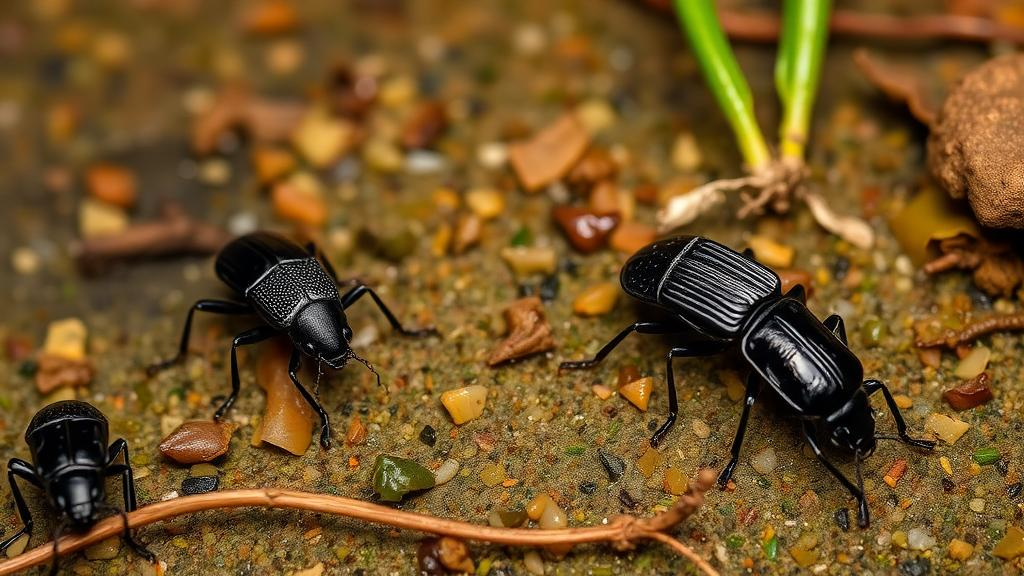
Deep in the forests and meadows of the Franco-Swiss borderland around Geneva, a quiet census of some of the least glamorous beetles in Europe has produced results that are anything but boring. A comprehensive new survey of four beetle families — the Cerophytidae, Elateridae, Eucnemidae and Throscidae — has documented 126 species in the Geneva basin, a figure that represents nearly 70 percent of the entire Swiss fauna for these groups. Among them, 44 species of saproxylic beetles, those that depend on dead or decaying wood, are of exceptional conservation value, being either rare, highly demanding in their habitat requirements, or listed on national and European red lists. The findings, published in Alpine Entomology, suggest that this small cross-border territory is a biodiversity hotspot hiding in plain sight.
The four families in question are not household names, even among entomologists. The Elateridae, commonly known as click beetles, are perhaps the most familiar, thanks to the distinctive mechanism that allows adults to flip themselves into the air when turned on their backs. But they are also notorious for being difficult to identify to species level, a reputation that has historically discouraged detailed faunal surveys. The Eucnemidae and Throscidae are smaller and even less studied, while the Cerophytidae contain just a single European species, Cerophytum elateroides, itself a saproxylic specialist of old deciduous trees. Despite their obscurity, these families play important ecological roles: many are saproxylic and serve as bioindicators for the conservation of natural woodland habitats, while a handful of phytophagous click beetle species, particularly in the genus Agriotes, are significant agricultural pests whose larvae, known as wireworms, damage cultivated crops.
The study area covers 1,223 square kilometres of the Geneva basin, a geological depression straddling the Franco-Swiss border and framed by the Jura mountains to the northwest, the Vuache to the west, the Salève to the southeast and the Voirons to the east. The basin opens onto Lake Geneva, the largest body of freshwater in Western Europe, which sits at 372 metres above sea level. The highest point in the study perimeter reaches 1,720 metres at Crêt de la Neige in the Jura. This altitudinal range of nearly 1,350 metres, combined with the basin’s position at the crossroads of three major biogeographic zones — the Swiss Plateau, the Alps and the Jura — creates an extraordinary variety of habitats, from riparian woodlands and oak forests to montane conifer stands, all within a relatively small surface area.
The methodology behind the census was rigorous and multi-layered. The authors drew on targeted field surveys conducted between 2018 and 2023, a critical analysis of the published literature dating back to the 1970s, and systematic examination of museum and private collections. Digital databases from both Switzerland and France — including info fauna, Faune Genève, the Inventaire national du patrimoine naturel (INPN) and the Pôle invertébrés Auvergne-Rhône-Alpes — were mined for records from 2013 to 2023. Crucially, the authors only accepted species whose presence could be validated by at least one correctly labelled specimen in a reliable collection, or by a digital record accompanied by a photograph showing the diagnostic characters of the species. This conservative approach meant that 13 insufficiently documented Elateridae species were classified as doubtful and listed separately, while 9 further species (8 Elateridae and 1 Throscidae) that are potentially present but not yet recorded were discussed in dedicated commentaries.
The final tally comprises 1 species of Cerophytidae, 102 species of Elateridae, 14 species of Eucnemidae and 9 species of Throscidae. When compared with national totals, the results are striking: the Geneva basin hosts nearly 70 percent of the Swiss fauna for these four families and 45 percent of the continental French fauna, despite the fact that a significant proportion of French species are restricted to the Mediterranean south. Even more remarkably, more than 86 percent of the species known from Haute-Savoie, 92 percent of those from the Ain and 88 percent of those from the canton of Vaud are present within the study perimeter, even though the basin covers only a small fraction of each of these territories.
The explanation for this exceptional richness lies in a combination of biogeographic context and habitat availability. The Geneva basin acts as a gateway from the Jura and the Alps towards the Rhône valley, and its position at the junction of the Plateau, Alpine and Jura biogeographic zones means that species from all three regions can coexist. The diversity of open habitats — rivers, ponds, meadows, annual and perennial crops — and forest habitats, including oak-hornbeam woodlands, riparian forests, beech forests, fir-beech forests, spruce plantations and pine woods, adds further layers of complexity. The abundance of isolated trees is also significant: nearly 250,000 are catalogued for the canton of Geneva alone. Many rare saproxylic species are tied to old, senescent or dead trees, whether standing alone, lining avenues or at forest edges, and the basin is particularly well supplied with centuries-old oaks whose dendro-microhabitats — hollow trunks, sap runs, dead branches — support specialised beetle communities.
Among the 44 species of high patrimonial value, several stand out for their rarity and ecological specialisation. Lacon querceus, once considered very rare in both France and Switzerland, develops in the red pulvulent rot of old oaks and beeches colonised by the sulphur polypore (Laetiporus sulphureus), and recent observations suggest it is expanding in the region. Crepidophorus mutilatus, classified as critically endangered in the Auvergne-Rhône-Alpes region, is a discreet species whose larvae colonise various deciduous trees but show a marked preference for old, decaying poplars still standing in wetlands and alluvial corridors. Porthmidius austriacus, also critically endangered regionally, and Podeonius acuticornis, listed as endangered on both the European and regional red lists, are among the most threatened click beetles in the basin. Microrhagus pyrenaeus, considered one of the rarest Eucnemidae in Europe, develops in the white rot of old deciduous wood at an advanced stage of decay, preferentially oak.
Several species were recorded for the first time from specific administrative territories during the survey. Microrhagus pyrenaeus, Ampedus brunnicornis, Ampedus cardinalis, Ischnodes sanguinicollis and Cardiophorus gramineus are new for Haute-Savoie. Ampedus sinuatus is new for the Geneva basin, while Hylis simonae is new for the canton of Geneva. Most notably, Brachygonus campadellii, a species only described in 2000, is new for the canton of Geneva and for Switzerland as a whole, having been captured in interception traps placed in an alignment of old senescent oaks and in a decaying dead willow.
The patrimonial analysis drew on multiple European and national reference lists, including the list of primary forest relic species in Central Europe, the European red list of saproxylic beetles, the regional red list for Auvergne-Rhône-Alpes, the French list of saproxylic bioindicator beetles and the Swiss list of emblematic saproxylic beetles. Species linked to primary forest structures — those dependent on habitats that have existed continuously since primeval times — include Cerophytum elateroides, Ampedus brunnicornis, Ampedus elegantulus, Brachygonus dubius, Brachygonus ruficeps, Cardiophorus gramineus, Crepidophorus mutilatus, Elater ferrugineus, Ischnodes sanguinicollis, Lacon querceus, Megapenthes lugens, Podeonius acuticornis, Microrhagus pyrenaeus and Nematodes filum. The presence of so many primary forest indicators in a landscape that has been shaped by human activity for centuries underscores the importance of the basin’s remnant old-growth features, particularly its veteran oaks.
The findings carry a clear conservation message. The saproxylic beetles of high patrimonial value indicate the preponderant interest of conserving old trees — notably oaks — as well as dead wood of all diameters, in forests, agricultural landscapes and urban green spaces alike. Many of these species already benefit from conservation measures thanks to action plans for the protection of the European protected stag beetle Cerambyx cerdo in the cantons of Geneva and Vaud, and numerous other saproxylic species gain from the umbrella protection this species affords under Annex II of the Bern Convention. However, the authors warn that past forestry practices, including clear-cutting and the replacement of native species with exogenous plantations such as Douglas fir, have degraded some forest massifs, while the abandonment of traditional silvopastoralism has affected wild plant communities and the phytophagous beetles that depend on them. With climate change driving higher temperatures and intensified summer droughts, forest ecosystems will continue to evolve, and the fauna of these four beetle families will need to adapt. The authors call for a major sampling effort across all habitats — including dry grasslands, marshes, peat bogs and riverbanks — to document the relationships between species and environments of interest, and to work with authorities to limit biodiversity erosion. The results will feed into a future regional atlas and red list, providing a foundation for the conservation of this unexpectedly rich corner of Europe.
Subject of Research: Liste commentée des Cerophytidae, Elateridae, Eucnemidae et Throscidae du bassin genevois (Coleoptera)
Article Title: Liste commentée des Cerophytidae , Elateridae , Eucnemidae et Throscidae du bassin genevois ( Coleoptera )
Article References: Blanc, M., Breitenmoser, S., & Rochet, C. (2024). Liste commentée des Cerophytidae, Elateridae, Eucnemidae et Throscidae du bassin genevois (Coleoptera). Alpine Entomology, 8, 51-64. https://doi.org/10.3897/alpento.8.116799
Image Credits: AI Generated
Keywords: Liste, comment, Cerophytidae, Elateridae, Eucnemidae, Throscidae, bassin, genevois, Coleoptera, scientific research
Cite Scienmag News
Margaret Porter. (October 17, 2026). Click beetles reveal hidden biodiversity in the Geneva basin. Scienmag. https://scienmag.com/click-beetles-reveal-hidden-biodiversity-in-the-geneva-basin/
Margaret Porter. "Click beetles reveal hidden biodiversity in the Geneva basin." Scienmag, 17 October 2026, https://scienmag.com/click-beetles-reveal-hidden-biodiversity-in-the-geneva-basin/. Accessed 17 October 2026.
Margaret Porter. "Click beetles reveal hidden biodiversity in the Geneva basin." Scienmag. October 17, 2026. https://scienmag.com/click-beetles-reveal-hidden-biodiversity-in-the-geneva-basin/


