


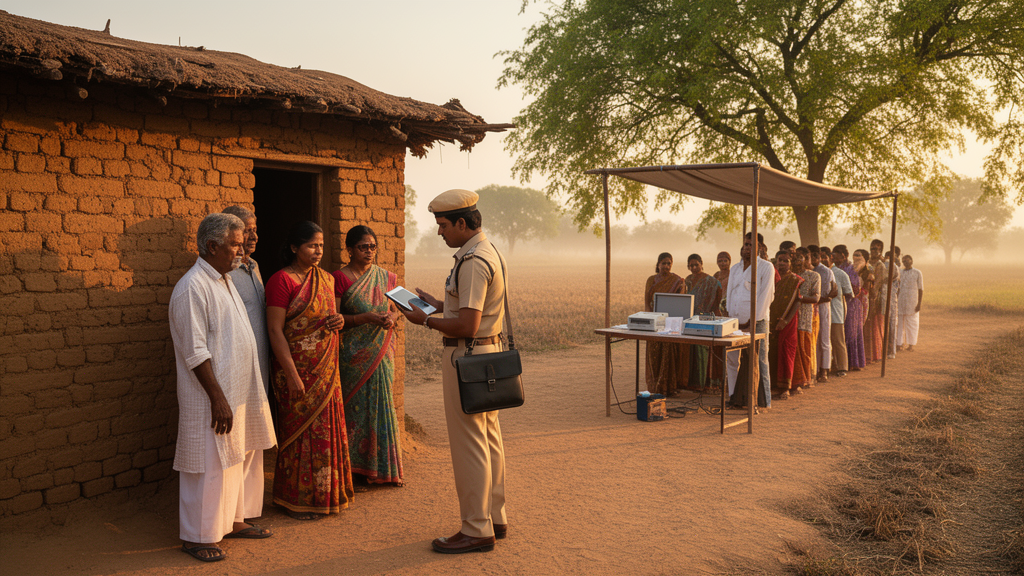
Tuberculosis remains one of the most stubborn infectious disease challenges on the planet, and nowhere is that more evident than in India, which carries roughly a quarter of the world’s TB cases. A new community-based cross-sectional study published in PLOS One has now delivered one of the most detailed snapshots to date of how the disease and its associated vulnerability factors are distributed across rural India. Drawing on face-to-face interviews with 82,636 individuals spread across six districts, the research team led by P K Anand and colleagues has produced a dataset that could reshape how the country’s National Tuberculosis Elimination Programme, or NTEP, goes about hunting for hidden cases.
The headline figure from the survey is a self-reported tuberculosis prevalence of approximately 150 per 100,000 population, a figure expressed in the study as 150 per lakh, the South Asian unit of one hundred thousand. While that number sits within the broad range of official estimates for the country, what makes the study valuable is not simply the prevalence estimate itself but the parallel measurement of six well-established vulnerability factors that make individuals more likely to progress from latent infection to active disease. These are HIV infection, current smoking, silicosis, occupational exposure to silica dust, diabetes mellitus, and a persistent cough lasting more than two weeks, the classic warning symptom that should trigger diagnostic evaluation.
The rationale for mapping these factors together stems from a growing recognition in TB control strategy that comorbidities and occupational exposures in otherwise uninfected individuals create pockets of heightened susceptibility. HIV infection dramatically increases the risk that latent Mycobacterium tuberculosis infection will activate, because the virus depletes the CD4-positive T cells that normally keep the bacillus in check. Diabetes mellitus, which has tripled in prevalence across India in recent decades, impairs immune function in ways that roughly double or triple TB risk. Smoking damages the mucociliary clearance mechanisms of the airways, while silica dust exposure and established silicosis disrupt macrophage function in the lungs, the very cells responsible for engulfing and destroying tubercle bacilli. Each of these conditions, on its own, marks a population that could benefit from more intensive screening.
To build the dataset, the researchers designed a multi-stage random sampling framework that aimed to capture a genuinely representative slice of rural life. In each of the six districts, two administrative blocks were selected at random, and within each block, villages were again chosen randomly. Rather than sampling individual households within those villages, the team employed a universal sampling technique, meaning every household in the selected villages was approached for participation. This choice matters methodologically, because universal sampling within clusters avoids the selection biases that can creep in when enumerators choose which homes to visit, and it maximizes coverage of populations that are often missed by facility-based surveillance, such as people who never seek care or who cannot easily travel to a clinic.
Data collection relied on a pre-tested semi-structured questionnaire administered through face-to-face interviews at every eligible household. Pre-testing the instrument is a standard but crucial step, since it allows researchers to identify ambiguous wording, translation problems, or questions that respondents consistently misunderstand before the full survey begins. The interviews captured demographic details alongside self-reported TB status and the selected vulnerability factors. Descriptive statistical analysis was then performed, with results expressed as frequencies and percentages. The final sample comprised 52 percent males and 47 percent females, with 77 percent of the population aged 15 years or older, an age distribution that aligns with the typical demographic structure of rural India and ensures that adult prevalence patterns are well represented.
The measured prevalence of the vulnerability factors reveals a layered risk landscape. HIV-reactive individuals made up 0.9 percent of the surveyed population, current smokers accounted for 5 percent, silicosis was reported at 1.2 percent, occupational exposure to silica dust at 1.1 percent, diabetes mellitus at 1.4 percent, and a cough lasting more than two weeks at 4 percent. Each of these percentages, multiplied across a rural population of hundreds of millions nationally, translates into enormous numbers of people. The 4 percent reporting persistent cough is particularly significant for programmatic purposes, because cough of more than two weeks is the cardinal symptom that NTEP screening algorithms use as a trigger for sputum testing and, increasingly, molecular diagnostics such as the GeneXpert platform.
It is worth pausing on the relationship between these factors and the biology of TB progression. An estimated quarter of the world’s population carries latent TB infection, in which the bacteria sit dormant within granulomas in the lungs, held in check by the immune system. Progression to active disease occurs in roughly 5 to 10 percent of latently infected individuals over a lifetime, but that risk is not evenly distributed. In a person living with HIV, the annual risk of developing active TB can be more than tenfold higher than in an immunocompetent person. In someone with untreated diabetes, the risk is estimated at two to three times baseline. In silicosis, the granuloma-forming macrophages that normally wall off the infection are progressively destroyed by silica particles, creating an environment where tubercle bacilli can flourish, and TB risk in silicotics has been reported to be several times that of the general population.
The implications for active case finding are the study’s central contribution. Passive case finding, in which patients are diagnosed only after they present themselves to a health facility, has long been known to miss a substantial fraction of TB cases, particularly in rural and underserved areas where access barriers, stigma, and low health literacy suppress care-seeking. Active case finding, by contrast, sends screening into communities, identifying infectious individuals earlier in their disease course, interrupting transmission chains, and reducing the duration for which untreated patients spread the bacillus through coughing. The NTEP has embraced targeted active case finding, but targeting requires maps. Knowing which villages and which demographic or occupational groups carry elevated vulnerability allows program managers to concentrate expensive screening resources where they will yield the most diagnosed cases rather than distributing them uniformly.
The study’s multipronged approach, simultaneously measuring six vulnerability factors in a single massive cohort, is what distinguishes it from narrower prevalence surveys. Many earlier studies in India have examined one comorbidity at a time, for instance diabetes prevalence among TB patients or smoking rates in a single district. By capturing the full profile in one coordinated effort, the authors provide a denominator-based picture: for every vulnerability factor, program planners can now estimate how many people in comparable rural settings carry that risk marker. The very large sample size, exceeding eighty thousand individuals, gives the descriptive estimates considerable stability, which is essential when those estimates are used to project resource needs for screening campaigns, diagnostic capacity, and drug supplies.
Certain limitations are inherent to the design and deserve honest acknowledgment. The study relies on self-reported TB status and self-reported conditions, which means some cases may be undercounted if respondents were unaware of their infection or reluctant to disclose it, while clinical confirmation such as sputum microscopy or molecular testing was not performed as part of the survey itself. Self-reported diabetes likewise may miss undiagnosed cases, a substantial concern in India where a large share of people with diabetes are believed to be unaware of their condition. Despite these caveats, the scale and design of the survey make it a valuable strategic asset. As India pursues its goal of TB elimination, studies of this kind demonstrate that the path forward runs through granular, community-level surveillance of both the disease and the conditions that fuel it, turning the abstract arithmetic of a national epidemic into an actionable map of who needs screening, where, and why.
Subject of Research: Self-reported tuberculosis prevalence and associated vulnerability factors in rural populations across six districts of India
Article Title: Self-reported prevalence of tuberculosis and selected associated vulnerability factors among rural populations in six districts of India: A community-based cross-sectional study
Article References: Anand, P. K., Singh, M., Banerjee, P., Sahay, S., Bangar, S., Ghosh, B. R., Chalga, M. S., Pappu, A., Das, V., Gupta, S., Kumar, A., & Pandey, D. (2026). Self-reported prevalence of tuberculosis and selected associated vulnerability factors among rural populations in six districts of India: A community-based cross-sectional study. PLOS One, 21(10), e0360758. https://doi.org/10.1371/journal.pone.0360758
Image Credits: AI Generated
DOI: 10.1371/journal.pone.0360758
Keywords: tuberculosis, India, prevalence, HIV, diabetes mellitus, silicosis, smoking, silica dust exposure, active case finding, National Tuberculosis Elimination Programme, cross-sectional study, rural health
Cite Scienmag News
Phoebe Ingram. (October 17, 2026). Huge Rural Survey in India Maps Tuberculosis Burden and Vulnerable Groups Across Six Districts. Scienmag. https://scienmag.com/huge-rural-survey-in-india-maps-tuberculosis-burden-and-vulnerable-groups-across-six-districts/
Phoebe Ingram. "Huge Rural Survey in India Maps Tuberculosis Burden and Vulnerable Groups Across Six Districts." Scienmag, 17 October 2026, https://scienmag.com/huge-rural-survey-in-india-maps-tuberculosis-burden-and-vulnerable-groups-across-six-districts/. Accessed 17 October 2026.
Phoebe Ingram. "Huge Rural Survey in India Maps Tuberculosis Burden and Vulnerable Groups Across Six Districts." Scienmag. October 17, 2026. https://scienmag.com/huge-rural-survey-in-india-maps-tuberculosis-burden-and-vulnerable-groups-across-six-districts/


