


What if the shape of your emotional life could be partly read from the way your body performs on a fitness test? A new study from China suggests exactly that, finding that college students fall into distinct psychological groups based on their mental toughness and emotion regulation skills, and that two specific physical fitness measures, lung capacity and sit-and-reach flexibility, differ significantly across those groups. The research, published in BMC Psychology by a team from the School of Physical Education at the University of Jinan, offers a technically detailed portrait of how bodily fitness and psychological resilience intertwine in young adults, and it points toward a future where exercise prescriptions could be tailored to a student’s emotional profile rather than handed out as a one-size-fits-all routine.
The study focused on first-year college students in Shandong Province, a large and demographically diverse population at a life stage when mental health vulnerabilities often surface. Moving away from home, facing academic pressure, and navigating new social worlds make the transition to college a well-documented risk period for psychological distress. Previous research has repeatedly shown that physical activity can alleviate mental health problems in adolescents, but comparatively little work has asked which specific components of physical fitness matter most for emotional well-being. That gap is what the University of Jinan team set out to close, and their answer challenges the assumption that all fitness abilities contribute equally to psychological strength.
Methodologically, the researchers took a two-track approach. On the physical side, they used performance data obtained through China’s National Student Physical Fitness Standard, the country’s official measurement framework for student health, as the yardstick for each student’s physical fitness level. This standard captures a battery of abilities, including body mass index, lung capacity, sit-and-reach flexibility, and other performance scores that together map the functional capacities of the body. On the psychological side, the team selected mature, validated scales to measure mental toughness, often described as psychological resilience, and emotion regulation, the self-efficacy students feel in managing their own emotional states. Questionnaires were distributed using group random sampling, a design intended to produce a sample representative of the broader first-year population rather than a convenience cluster of volunteers.
The analytical centerpiece of the study was cluster analysis, a statistical technique that groups individuals based on the similarity of their scores across multiple dimensions. Rather than treating all students as a single homogeneous mass, the researchers let the data reveal natural subgroups. The result was striking: college students sorted into three distinct categories of psychological emotional regulation capability. The team labeled these groups the Emotionally Volatile, the Exceptional Emotional Regulators, and the Steady Emotional Balancers. Each label describes a recognizable psychological archetype. The Emotionally Volatile group shows lower and less stable regulation capacity, the Exceptional Emotional Regulators sit at the high end with strong resilience and confident emotional management, and the Steady Emotional Balancers occupy a middle ground with consistent but moderate regulation skills.
This kind of group heterogeneity matters because it changes what the data can tell us. If the relationship between physical fitness and emotional regulation were identical for everyone, a single average correlation would suffice. But the cluster approach reveals that students are not interchangeable, and that the psychological landscape of a college campus is composed of qualitatively different emotional types. The researchers then asked whether these psychological groups also differed in their physical fitness profiles, applying chi-square tests to examine the association between cluster membership and fitness scores. The statistical threshold was clear: with a p-value below 0.05, the differences were unlikely to be products of random chance.
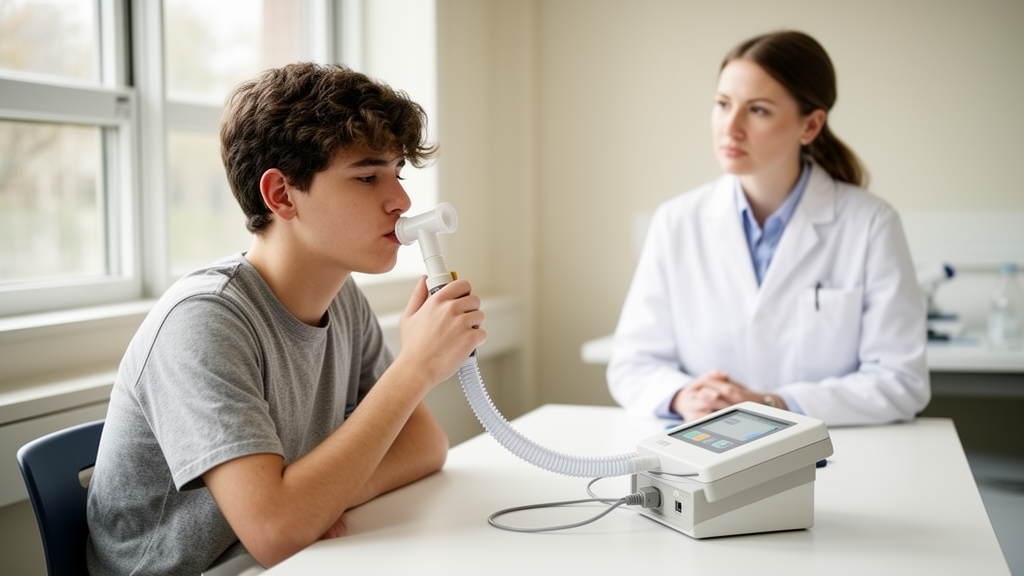
Two fitness measures stood out. Lung capacity, a direct index of respiratory function that reflects the efficiency of the cardiovascular and pulmonary systems, differed significantly among the three psychological categories. So did sit-and-reach flexibility, a measure of the extensibility of the lower back and hamstring muscles that serves as a proxy for overall musculoskeletal suppleness. The fact that these two abilities, rather than every component of the fitness battery, carried the significant signal is the study’s most technically interesting finding. It suggests that the psychological groups are not simply separated by general fitness or by body composition, but by specific functional capacities, one aerobic and one flexibility-based, that track with how well students regulate their emotions.
Why might lung capacity and flexibility connect to emotional regulation? The authors frame their conclusions cautiously, but the broader literature offers plausible mechanisms. Aerobic capacity is closely tied to regular physical activity, which is known to modulate stress physiology, influence mood-regulating neurochemical systems, and build the kind of physiological resilience that parallels psychological resilience. Flexibility, meanwhile, is often developed through stretching, yoga, and similar practices that combine slow controlled movement with attention to breathing and bodily awareness, activities frequently associated with reduced anxiety and improved self-regulation. The study does not claim that one causes the other, and the cross-sectional design cannot establish directionality, but the significant group differences provide a statistical foundation for designing targeted interventions and testing them experimentally.
The practical implications are where the research becomes genuinely actionable. The team recommends providing intervention and support as early as possible, ideally during the first year of college when students’ emotional regulation patterns are still forming and when the transition stress of university life is at its peak. More provocatively, they argue that physical activity programs should be set up in targeted and personalized forms according to students’ different psychological emotional types. A student in the Emotionally Volatile group might benefit from a different exercise prescription than a Steady Emotional Balancer, and the study’s cluster framework gives universities a data-driven way to sort students into intervention streams rather than guessing. This is the logic of precision health applied to campus recreation: measure, classify, and match the activity to the profile.
The study was supported by the National Social Science Fund of China under grant number 21BTY004, and it adhered strictly to the principles of the Helsinki Declaration, receiving ethical approval from the Science and Technology Office of the University of Jinan. Participants confirmed informed consent online, and the authors declare no competing interests. The research was published as an open access article, meaning the full cluster analysis, fitness comparisons, and scale validation details are freely available to any educator, coach, or researcher who wants to replicate or extend the approach in their own population.
For a science magazine audience, the takeaway is a compelling reframing of an old idea. We have long known that exercise is good for the mind, but this study adds technical texture to that claim: the mind-body connection is heterogeneous, structured into distinct psychological groups, and visible in specific fitness signatures like respiratory capacity and flexibility. As universities worldwide grapple with rising student mental health demands, the message from Shandong is that the fitness test sheet sitting in a campus database may already contain clues about which students are struggling to regulate their emotions, and that the smartest response is not more exercise in general, but the right exercise for the right emotional type, delivered early enough to make a difference.
Subject of Research: Psychology
Article Title: Group heterogeneity in the relationship of college students’ physical fitness levels on mental toughness and emotion regulation
Article References: Ma, W., Yang, Q., Li, X., Li, D., Qi, S., Ji, W., & Ma, C. (2026). Group heterogeneity in the relationship of college students’ physical fitness levels on mental toughness and emotion regulation. BMC Psychology. https://doi.org/10.1186/s40359-026-05525-y
Image Credits: AI Generated
DOI: 10.1186/s40359-026-05525-y
Keywords: college students, physical fitness, mental toughness, emotion regulation, cluster analysis, lung capacity, flexibility, psychological resilience, BMC Psychology, mental health, Group, heterogeneity
Cite Scienmag News
Glenn Wilkins. (October 17, 2026). Lung Capacity and Flexibility May Reveal Which College Students Regulate Emotions Best. Scienmag. https://scienmag.com/lung-capacity-and-flexibility-may-reveal-which-college-students-regulate-emotions-best/
Glenn Wilkins. "Lung Capacity and Flexibility May Reveal Which College Students Regulate Emotions Best." Scienmag, 17 October 2026, https://scienmag.com/lung-capacity-and-flexibility-may-reveal-which-college-students-regulate-emotions-best/. Accessed 17 October 2026.
Glenn Wilkins. "Lung Capacity and Flexibility May Reveal Which College Students Regulate Emotions Best." Scienmag. October 17, 2026. https://scienmag.com/lung-capacity-and-flexibility-may-reveal-which-college-students-regulate-emotions-best/


