


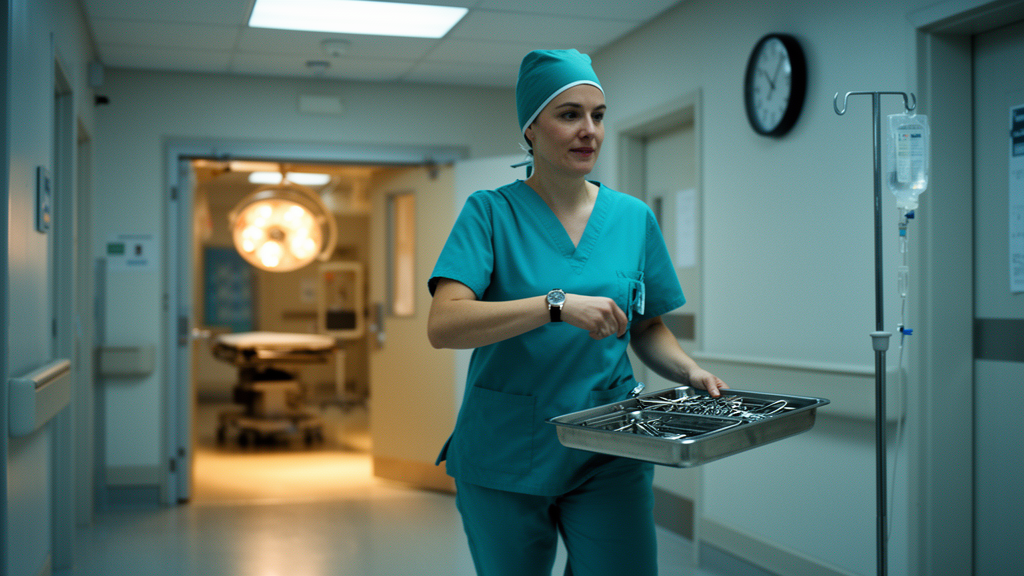
Deep inside the operating rooms and post-anesthesia care units of South Korea’s tertiary hospitals, a quiet crisis is unfolding one minute at a time. Perioperative nurses—the specialists who prepare patients for surgery, manage instruments during operations, and monitor recovery from anesthesia—report feeling chronically pressed for time, a pressure that never fully resolves even after the busiest shifts end. A new grounded theory study published in BMC Nursing offers one of the most detailed explanations yet of how these nurses experience, endure, and manage that relentless time pressure, and why it matters far beyond their own wellbeing: the researchers link unresolved pressure to reduced quality of care and threats to patient safety.
The study, led by MinJung Lee of Chung-Ang University Gwangmyeong Hospital together with InSil Jang, Haeyoung Lee, and Won Lee of Chung-Ang University, used grounded theory methodology—a qualitative approach in which researchers build explanatory theories directly from systematically collected interview data rather than testing pre-existing hypotheses. Between December 2022 and April 2023, the team conducted individual in-depth semi-structured interviews with twenty nurses working in operating rooms or post-anesthesia care units in tertiary general hospitals in South Korea. To enter the study, participants needed at least one year of experience and a perceived time pressure score of four or higher on a validated seven-point scale, ensuring the research captured nurses who genuinely felt the strain rather than a broad sample of general sentiment.
Grounded theory demands a specific technical discipline from researchers. Data collection and analysis proceeded concurrently using the constant comparative method, meaning each new interview was compared against previously analyzed interviews as soon as it was collected. Categories were refined, merged, or split as patterns emerged, and recruitment continued until theoretical saturation was reached—the point at which new interviews no longer generated novel categories. This iterative process allowed the researchers to move from raw descriptions of stressful shifts to an integrated explanatory model, culminating in a core category that captures the essence of the perioperative experience: fulfilling tasks while chronically enduring time pressure.
The core phenomenon the researchers identified was chronically feeling time pressure, and its origins proved to be layered. Four contributing conditions emerged from the data. The first combined professional responsibility with personal traits, reflecting how nurses’ sense of duty toward patients interacts with their individual dispositions. The second was the inherent demands of perioperative nursing work itself, a specialty in which surgical schedules, anesthesia recovery, and instrument turnover impose continuous, externally driven deadlines. The third condition was a hierarchical and blame-oriented perioperative work culture, in which steep professional rankings and a tendency to assign fault shape everyday interactions. The fourth was revenue-driven organizational policies, where financial priorities within hospitals influence staffing and workflow in ways that intensify the pressure nurses feel.
Crucially, the study found that time pressure did not remain constant across all situations. It intensified in circumstances involving unfamiliar tasks, unpredictable perioperative events, and interpersonal dynamics with colleagues. An unexpected complication during surgery, an unfamiliar procedure, or a tense exchange with a senior colleague could transform manageable workload into acute strain. This situational variability is technically significant because it suggests that time pressure in perioperative settings is not simply a function of how many tasks a nurse must complete, but of how confident, supported, and socially secure the nurse feels while completing them.
How did these nurses cope? The researchers identified three distinct strategies. Proactive self-directed coping involved nurses taking initiative on their own—planning, prioritizing, and managing their work independently to stay ahead of demands. Colleague-reliant coping, by contrast, depended on interpersonal support, with nurses turning to coworkers for help, backup, or reassurance when the pressure mounted. The third strategy was the most sobering: resigned acceptance of an unchanging reality, in which nurses concluded that the pressure was simply part of the job and stopped expecting it to improve. These coping styles were not mutually exclusive; individual nurses moved among them depending on the situation and their interactions with others.
The consequences the participants described spanned a disturbing range. Psychologically, nurses carried a persistent burden that followed them home. Work-related breakdown emerged as exhaustion and disintegration of their capacity to function. Reduced nursing care quality appeared when the pressure compromised the thoroughness and attention they could devote to each patient. Most alarmingly, the researchers documented threats to patient safety, indicating that chronic time pressure in perioperative settings is not merely an occupational health issue but a clinical risk factor with direct implications for the people on the operating table.
Over time, the study revealed, nurses’ experiences evolved through recognizable stages. Some described relief after task completion, a temporary easing that arrived when required work was done but left the underlying pressure unresolved. Others described becoming an unwanted version of themselves—transforming under chronic strain into someone they did not recognize or like. Still others began considering leaving the profession altogether, a trajectory with serious implications for workforce retention in a specialty already vulnerable to attrition. These long-term consequences show that chronic time pressure operates as an ongoing process rather than a series of isolated stressful events, gradually reshaping nurses’ identities and career intentions.
What makes this study technically valuable is its integration of these categories into a coherent process model. The core category—fulfilling tasks while chronically enduring time pressure—captures how nurses continued to complete required work even while the pressure remained unresolved, and how that pressure was reinforced or eased through interactions with others. In other words, coping was never purely individual. A supportive colleague could lighten the load; a blame-oriented culture or an unsympathetic superior could compound it. The researchers found that nurses’ responses and their interpersonal exchanges existed in constant feedback with the pressure itself, meaning the work environment actively shaped whether the strain deepened or subsided over the course of a career.
The findings carry a clear message for hospital administrators, nursing managers, and health policymakers: addressing time pressure in perioperative nursing requires attention to individual coping alongside the organizational and interpersonal conditions surrounding the work. Training nurses in self-directed strategies may help, but the study suggests such interventions will fall short unless hospitals also confront the hierarchical, blame-oriented culture and the revenue-driven policies that intensify the pressure in the first place. As surgical volumes grow and nursing shortages persist worldwide, understanding why perioperative nurses feel chronically pressed for time—and what eases or reinforces that pressure—may prove essential for protecting both the nursing workforce and the patients whose lives depend on it. The study was approved by the Institutional Review Board of Chung-Ang University and conducted in accordance with the Declaration of Helsinki, with all participants providing written informed consent.
Subject of Research: Chronically pressed for time: a grounded theory of time-pressure experiences among perioperative nurses working in operating rooms and post-anesthesia care units in South Korea
Article Title: Chronically pressed for time: a grounded theory of time-pressure experiences among perioperative nurses working in operating rooms and post-anesthesia care units in South Korea
Article References: Lee, M., Jang, I., Lee, H., & Lee, W. (2026). Chronically pressed for time: a grounded theory of time-pressure experiences among perioperative nurses working in operating rooms and post-anesthesia care units in South Korea. BMC Nursing. https://doi.org/10.1186/s12912-026-05501-2
Image Credits: AI Generated
DOI: 10.1186/s12912-026-05501-2
Keywords: Chronically, pressed, time, grounded, theory, time-pressure, experiences, perioperative, nurses, working, operating, rooms
Cite Scienmag News
Ophelia Keating. (October 17, 2026). Why Perioperative Nurses Feel Chronically Pressed for Time. Scienmag. https://scienmag.com/why-perioperative-nurses-feel-chronically-pressed-for-time/
Ophelia Keating. "Why Perioperative Nurses Feel Chronically Pressed for Time." Scienmag, 17 October 2026, https://scienmag.com/why-perioperative-nurses-feel-chronically-pressed-for-time/. Accessed 17 October 2026.
Ophelia Keating. "Why Perioperative Nurses Feel Chronically Pressed for Time." Scienmag. October 17, 2026. https://scienmag.com/why-perioperative-nurses-feel-chronically-pressed-for-time/


