


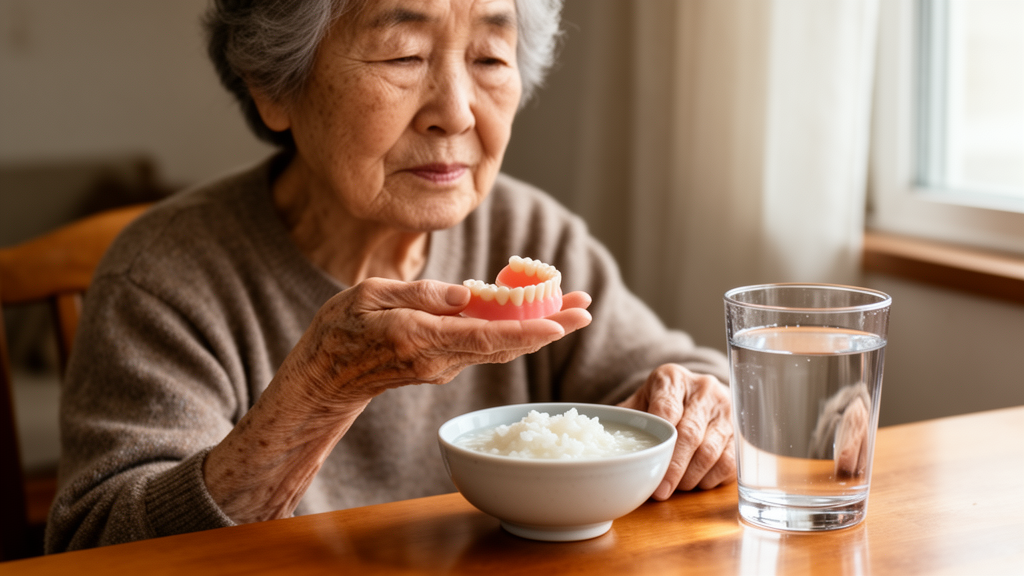
Frailty, the state of diminished physiological reserve that leaves older adults vulnerable to falls, disability, and hospitalization, has long been linked to nutrition, chronic disease, and socioeconomic status. But a new analysis of nearly 3,800 older Koreans suggests that the mouth may be one of the most revealing windows into that vulnerability. In a cross-sectional study published in PLOS One, researchers Jeong-Eun Yang and SeolHwa Moon examined data from the 2022 Korean Longitudinal Study of Aging and found that structural oral health problems, particularly complete tooth loss without denture replacement, were among the strongest correlates of frailty in both men and women aged 65 and older.
The study drew on a nationally representative sample of 3,729 community-dwelling older adults. Using the Frailty Instrument developed specifically for older Korean adults, the researchers classified participants into three categories: robust, pre-frail, and frail. The results showed that 16.0 percent of the sample was frail, 31.5 percent was pre-frail, and 52.5 percent was robust. That means nearly one in six older adults in the sample had already crossed the threshold into frailty, a condition associated with increased morbidity, disability, and healthcare utilization.
What sets this study apart from much of the previous frailty literature is its multidimensional treatment of oral health. Rather than collapsing oral health into a single self-rated measure, the researchers assessed it across three distinct domains: structural factors such as tooth loss and denture use, behavioral factors such as tooth brushing frequency and dental visits, and subjective factors such as oral pain, chewing difficulty, and tooth sensitivity. This framework allowed the team to disentangle which aspects of oral health matter most for frailty, and whether those aspects differ between sexes.
To do this, the researchers performed hierarchical logistic regression analysis in three steps, first entering general characteristics, then health-related factors, and finally oral health factors. This stepwise approach allowed them to estimate the contribution of oral health variables after accounting for demographic and systemic health determinants. The sex-stratified design was deliberate: frailty is known to manifest differently in men and women, and pooling the sexes can obscure clinically meaningful differences.
The headline finding concerned edentulism. Older adults who had lost all of their teeth and did not use dentures showed the highest odds of frailty in both sexes. Among women, the odds ratio was 3.76, with a 95 percent confidence interval of 3.72 to 3.80. Among men, the odds ratio was 2.95, with a confidence interval of 2.91 to 2.98. In practical terms, complete tooth loss without prosthetic replacement was associated with roughly a threefold to nearly fourfold increase in the odds of being frail compared with having a functional dentition. The tight confidence intervals reflect the large sample size, though as with any cross-sectional analysis, the direction of causality cannot be established from these data alone.
Structural oral health factors emerged as the most strongly associated domain for both sexes. Untreated tooth loss, difficulty chewing or swallowing, and oral pain were all significantly linked to frailty. This makes physiological sense. Chewing difficulty limits dietary variety and can push older adults toward softer, often less nutritious foods, accelerating the protein and micronutrient deficits that feed the frailty cycle. Oral pain can suppress appetite and disrupt sleep, while tooth loss without replacement compounds both problems by removing the mechanical means to process a normal diet.
Yet the study also revealed a striking sex difference in the subjective domain. Tooth sensitivity was associated with higher odds of frailty in women, with an odds ratio of 1.82 and a confidence interval of 1.80 to 1.84, but with lower odds in men, where the odds ratio was 0.85 and the confidence interval was 0.84 to 0.86. The authors suggest that subjective oral health perceptions may carry different clinical weight in each sex. In women, sensitivity may reflect genuine underlying dental pathology or a lower threshold for reporting symptoms that cluster with declining health. In men, the inverse association may indicate that men who remain engaged enough with their oral health to notice and report sensitivity are also those who maintain better overall health engagement, a phenomenon consistent with health-care utilization patterns observed in aging research.
The findings position oral health as a potentially modifiable factor in frailty prevention. Unlike age or genetics, tooth loss and denture exclusion are amenable to intervention. Restoring dentition with dentures or implants, treating oral pain, and maintaining regular dental care could, in principle, interrupt a pathway that leads from oral dysfunction to nutritional decline and ultimately to frailty. The researchers emphasize that oral health conditions, including untreated tooth loss, difficulty in chewing or swallowing, and oral pain, were significantly associated with frailty, and that oral health may be an important factor to consider in relation to frailty among community-dwelling older adults.
Several limitations temper the conclusions. The cross-sectional design captures associations at a single point in time, so it cannot determine whether poor oral health causes frailty, whether frailty leads to oral deterioration, or whether both are driven by shared upstream factors such as chronic inflammation, diabetes, or socioeconomic disadvantage. The Frailty Instrument used is population-specific, which aids validity for Korean older adults but may limit direct generalization to other countries. Self-reported oral health measures also carry the usual risk of reporting bias, and the sex difference in tooth sensitivity illustrates how subjective perceptions can behave counterintuitively across groups.
Even so, the study adds to a growing body of evidence that the mouth is not an isolated organ but a sentinel of systemic aging. With populations worldwide growing older at unprecedented speed, and with frailty projected to strain health systems for decades, identifying simple, measurable, and treatable risk markers is a public health priority. Complete tooth loss without denture use is exactly such a marker: visible, verifiable, and reversible. If future longitudinal studies confirm that restoring oral function reduces frailty incidence, dental checkups could become as central to healthy aging programs as blood pressure screening, and the humble denture could take on a role far beyond chewing.
Subject of Research: Association between multidimensional oral health and frailty in community-dwelling older adults
Article Title: Multidimensional oral health and frailty in older adults: A sex-stratified cross-sectional study
Article References: Yang, J.-E., & Moon, S. (2026). Multidimensional oral health and frailty in older adults: A sex-stratified cross-sectional study. PLOS One, 21(10), e0360682. https://doi.org/10.1371/journal.pone.0360682
Image Credits: AI Generated
DOI: 10.1371/journal.pone.0360682
Keywords: frailty, oral health, tooth loss, edentulism, older adults, Korean Longitudinal Study of Aging, dentures, chewing difficulty, oral pain, sex differences, PLOS One, gerontology
Cite Scienmag News
Beatrice Stafford. (October 17, 2026). Tooth Loss Without Dentures May Signal Frailty Risk in Older Adults, Korean Study Finds. Scienmag. https://scienmag.com/tooth-loss-without-dentures-may-signal-frailty-risk-in-older-adults-korean-study-finds/
Beatrice Stafford. "Tooth Loss Without Dentures May Signal Frailty Risk in Older Adults, Korean Study Finds." Scienmag, 17 October 2026, https://scienmag.com/tooth-loss-without-dentures-may-signal-frailty-risk-in-older-adults-korean-study-finds/. Accessed 17 October 2026.
Beatrice Stafford. "Tooth Loss Without Dentures May Signal Frailty Risk in Older Adults, Korean Study Finds." Scienmag. October 17, 2026. https://scienmag.com/tooth-loss-without-dentures-may-signal-frailty-risk-in-older-adults-korean-study-finds/


