


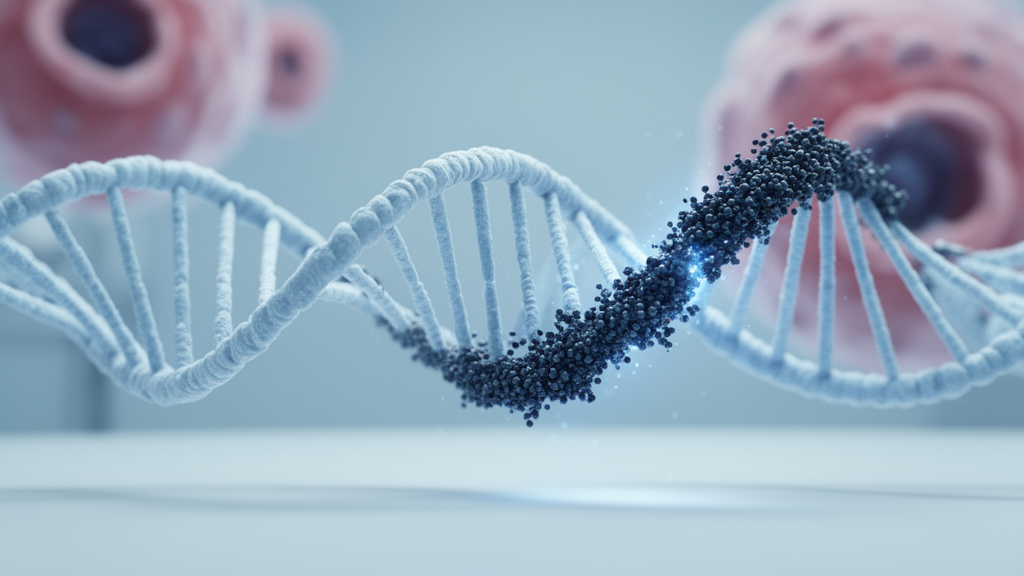
Scientists have uncovered a critical epigenetic mechanism behind oral cancer, showing that a gene called HOXA5 is switched off by DNA methylation as healthy tissue turns malignant. The finding, published in Scientific Reports, reveals for the first time how deregulation of HOX genes shapes the course of oral carcinogenesis and points to new therapeutic possibilities for a disease that remains notoriously difficult to treat.
Oral cancer, one of the most common head and neck malignancies worldwide, often develops from oral potentially malignant disorders (OPMD) that progress through increasingly abnormal stages before becoming invasive tumours. While genetic mutations have long been studied in this progression, the role of epigenetic changes — chemical modifications that silence genes without altering the DNA sequence itself — has remained less clear. The new research, led by Dhanraj Salur Basavarajappa and colleagues at Manipal Academy of Higher Education in India together with collaborators at the University of Sheffield and the University of Liverpool in the UK, focused on HOXA5, a member of the HOX family of transcription factors that govern embryonic development and tissue identity in adults.
HOXA5 had previously been characterized as a tumour suppressor in several cancers, but its regulation and role in oral cancer remained unknown. To investigate, the team combined transcriptome analysis and quantitative RT-PCR to measure HOXA5 expression with methyl-capture sequencing and bisulfite Sanger sequencing to map DNA methylation patterns across the HOXA5 promoter. They applied these techniques to a clinical cohort comprising patients with oral potentially malignant disorders, lymph node negative tumours, and lymph node positive tumours, alongside matched normal tissues and in vitro cell line models including the dysplastic DOK line and the SCC9 oral cancer cell line.
The results revealed a striking pattern. HOXA5 was upregulated and relatively hypomethylated in oral potentially malignant disorders and in the dysplastic DOK cell line, suggesting the gene is activated early in the transition toward malignancy. However, in established oral squamous cell carcinomas, HOXA5 expression did not differ significantly between lymph node negative or lymph node positive tumours and matched normal tissues, despite increased promoter methylation. In SCC9 cells, HOXA5 was downregulated and its promoter was hypermethylated, indicating that methylation-driven silencing becomes prominent in invasive cancer cells.
Statistical analysis showed weak but significant inverse correlations between HOXA5 expression and promoter methylation, supporting a role for DNA methylation in regulating the gene. The team then treated cells with DNA methyltransferase inhibitors (DNMTi) and retinoic acid (RA), either alone or in combination. Both interventions reversed HOXA5 silencing, restoring expression in the hypermethylated cancer cells. Retinoic acid, a vitamin A derivative already used in some cancer therapies, appeared to work through the retinoic acid receptor beta (RARB), which the team validated as occupying HOXA5 promoter regions using chromatin immunoprecipitation followed by quantitative PCR.
To probe the functional consequences of HOXA5 activity, the researchers used a dual-luciferase reporter assay to identify the HOXA5-EPD2 promoter region as showing the highest promoter activity. They then forced HOXA5 overexpression in oral cancer cells and ran a battery of functional assays. The results were dramatic: HOXA5 overexpression reduced proliferation, migration, and invasion — the three hallmarks of aggressive cancer behaviour — while inducing S-phase cell cycle arrest and apoptosis, the programmed death of damaged cells.
Whole-transcriptome profiling of HOXA5-overexpressing cells identified differentially expressed genes and, through gene ontology and pathway enrichment analyses, revealed molecular pathways associated with cancer-related phenotypes. Protein interaction networks built using the maximal clique centrality method, combined with in silico drug sensitivity analyses drawing on the Genomics of Drug Sensitivity in Cancer (GDSC) and Cancer Therapeutics Response Portal (CTRP) databases, identified candidate drug-gene associations that now warrant further investigation in oral cancer.
The findings support a model in which DNA methylation deregulates HOX gene expression during oral carcinogenesis, with HOXA5 acting as a tumour suppressor whose silencing removes a critical brake on malignant behaviour. Because DNMT inhibitors and retinoic acid can restore HOXA5 expression, the study suggests epigenetic therapies could reactivate this tumour-suppressive pathway in patients whose tumours have silenced the gene. The work was supported by the DBT/Wellcome Trust India Alliance Fellowship awarded to Raghu Radhakrishnan, and the team acknowledges the Manipal School of Life Sciences and the Unit of Oral and Maxillofacial Pathology at the University of Sheffield for infrastructure and facilities.
Beyond its immediate implications for oral cancer, the study adds to a growing body of evidence that HOX gene deregulation — long recognized as a driver of developmental disorders — plays a central role in adult malignancies through epigenetic silencing. As methylation profiling becomes routine in cancer diagnostics, HOXA5 promoter methylation could serve as a biomarker for identifying patients likely to benefit from epigenetic therapies, offering a precision medicine approach to a disease where early detection and targeted treatment remain urgent clinical needs.
The HOX family of transcription factors occupies a special place in developmental biology. Arranged in clusters on the genome and expressed in a spatially ordered pattern along the body axis, HOX genes assign positional identity to embryonic tissues, and their homeobox DNA-binding domains have been conserved across hundreds of millions of years of evolution. In adult tissues, many HOX genes continue to regulate cell identity and differentiation, which helps explain why their misexpression recurs so frequently in cancer. What distinguishes the present study is its focus on the transition zone between premalignancy and frank malignancy, a stage where clinical intervention offers the greatest chance of preventing invasive disease.
The observation that HOXA5 is upregulated in oral potentially malignant disorders and in the dysplastic DOK cell line, yet silenced by promoter methylation in the SCC9 cancer cell line, fits a pattern increasingly recognized in tumour evolution. Tumour suppressor pathways are often first induced as a stress response in premalignant cells, which then face strong selective pressure to disable them. Epigenetic silencing through promoter methylation is an attractive mechanism for this because it can occur reversibly and progressively, without requiring a mutation in the coding sequence, and because methylation patterns can propagate clonally through cell division once established.
The weak but significant inverse correlation between HOXA5 expression and promoter methylation deserves careful interpretation. Correlations of this magnitude are typical in methylation studies of cancer, where expression is shaped by multiple overlapping mechanisms, including histone modifications, transcription factor availability, chromatin accessibility, and copy number changes. The concordant evidence from the DNMT inhibitor and retinoic acid experiments strengthens the causal case, since pharmacological demethylation and receptor-mediated activation both restored HOXA5 expression. The chromatin immunoprecipitation data confirming RARB occupancy at the HOXA5 promoter provide a direct molecular link between retinoid signalling and HOXA5 regulation, consistent with the known role of retinoic acid receptor beta as a tumour suppressor in head and neck carcinogenesis.
The functional assays add mechanistic weight to the tumour suppressor designation. Reduced proliferation, migration, and invasion following HOXA5 overexpression mirror findings reported for HOXA5 in breast, lung, and gastric cancers, suggesting that this gene performs a conserved tumour-suppressive function across tissue types. The induction of S-phase arrest and apoptosis indicates that HOXA5 acts on core cell cycle machinery rather than merely slowing growth indirectly. Whole-transcriptome profiling of the overexpressing cells should help clarify which downstream effectors mediate these phenotypes, and the pathway enrichment results point toward cancer-relevant processes that can now be tested experimentally.
The in silico drug sensitivity analysis represents a pragmatic translational step. By mining the Genomics of Drug Sensitivity in Cancer and Cancer Therapeutics Response Portal databases, the authors identified candidate drug-gene associations that could guide preclinical testing. Such computational screens do not establish efficacy, but they narrow a vast pharmacological space to a manageable set of hypotheses, and they are particularly valuable in oral cancer, where the repertoire of approved targeted therapies remains narrow compared with other malignancies.
Several caveats temper the clinical implications. The clinical cohort was cross-sectional, so the apparent sequence of HOXA5 activation in premalignant lesions followed by methylation-associated silencing in carcinomas remains a hypothesis rather than a demonstrated trajectory; longitudinal studies tracking individual OPMD lesions through progression would be needed to confirm it. The weak correlation between methylation and expression also suggests that methylation is one contributor among several. And while the DNMT inhibitor and retinoic acid experiments were performed in vitro, translating these findings to patients would require addressing the toxicity and limited efficacy that have historically constrained epigenetic therapy in solid tumours.
Nevertheless, the study fills an important gap in the oral cancer literature, where epigenetic analyses of specific HOX genes in well-characterized clinical cohorts remain scarce. The combination of patient tissue, cell line models, promoter mapping, functional validation, and pharmacological rescue gives the findings an unusually complete evidentiary arc. If HOXA5 promoter methylation can be validated as a biomarker in larger, prospective cohorts, it could eventually help stratify patients with oral potentially malignant disorders by their risk of progression, and identify tumours most likely to respond to demethylating or retinoid-based regimens. For a disease where betel quid chewing, tobacco use, and areca nut exposure drive much of the global burden, particularly in South Asia, an epigenetic handle on early carcinogenesis would be a meaningful addition to prevention and treatment efforts.
Subject of Research: HOXA5 silencing via DNA methylation reveals the critical role of HOX gene deregulation in oral carcinogenesis
Article Title: HOXA5 silencing via DNA methylation reveals the critical role of HOX gene deregulation in oral carcinogenesis
Article References: Basavarajappa, D. S., Alhedyan, F., Hunter, K., Colley, H., Hunt, S., Naveena Kumar, A. N., Chakrabarty, S., & Radhakrishnan, R. (2026). HOXA5 silencing via DNA methylation reveals the critical role of HOX gene deregulation in oral carcinogenesis. Scientific Reports. https://doi.org/10.1038/s41598-026-73663-9
Image Credits: AI Generated
DOI: 10.1038/s41598-026-73663-9
Keywords: HOXA5, silencing, methylation, reveals, critical, role, gene, deregulation, oral, carcinogenesis, scientific research
Cite Scienmag News
Juliet Wilcox. (October 17, 2026). HOXA5 gene silencing by DNA methylation drives oral cancer development, study reveals. Scienmag. https://scienmag.com/hoxa5-gene-silencing-by-dna-methylation-drives-oral-cancer-development-study-reveals/
Juliet Wilcox. "HOXA5 gene silencing by DNA methylation drives oral cancer development, study reveals." Scienmag, 17 October 2026, https://scienmag.com/hoxa5-gene-silencing-by-dna-methylation-drives-oral-cancer-development-study-reveals/. Accessed 17 October 2026.
Juliet Wilcox. "HOXA5 gene silencing by DNA methylation drives oral cancer development, study reveals." Scienmag. October 17, 2026. https://scienmag.com/hoxa5-gene-silencing-by-dna-methylation-drives-oral-cancer-development-study-reveals/


