


When bacteria begin appearing in unusual numbers on a hospital ward, speed matters. Every day spent waiting to determine whether the isolates are clones of a single outbreak strain is a day during which transmission routes and environmental reservoirs can go unchecked. A new study from Germany now suggests that Fourier transform infrared spectroscopy, or FTIR, could give clinical microbiology laboratories exactly that speed when the pathogen in question is Serratia, a genus that has long been neglected by this technology.
The research, published in Frontiers in Antibiotics by Tristan Lüdecke and Klaus-Peter Hunfeld of the Institute for Laboratory Medicine, Microbiology and Infection Control at Northwest Medical Center in Frankfurt am Main, evaluated the Bruker IR Biotyper as a first-line surveillance typing tool for Serratia isolates recovered from clinical materials. The team compared the FTIR results against whole genome sequencing coupled with bioinformatic analysis, the current gold standard for determining the phylogenetic relationships of clinical isolates. Their findings indicate that, although with some limitations, the infrared approach may serve as a rapid and cost-effective screening method when an outbreak is suspected.
Serratia marcescens, the type strain of the genus, is a facultative human pathogen of the order Enterobacterales that is encountered primarily as a cause of nosocomial infections, particularly in neonatal intensive care units, with sink drains identified as one of the main reservoirs. The bacterium can colonize a wide range of wet surfaces, from artificial nails to medical equipment, vials, the human gastrointestinal and respiratory tract, and materials such as lotions, antiseptics, and even quaternary ammonium-based disinfectants when handled incorrectly. Multi-year-long outbreaks as well as nationwide clonal spreading of Serratia species have been reported, underlining the significance of this facultative pathogen in healthcare settings.
According to the World Health Organization, the rate of nosocomial infections among hospitalized patients in the developed world stands at 7.6 percent, rising to 30 percent in intensive care units. Beyond the risk of increased mortality, these infections prolong hospital stays and drive up antibiotic use and healthcare costs. Although Serratia marcescens accounts for only one to two percent of nosocomial infections, an epidemiological increase in the isolation of Serratia species should prompt further epidemiological workup. The bacterium can carry beta-lactamases such as AmpC, ESBL, and carbapenemases including NDM and KPC, which can render a range of antibiotics ineffective and complicate empirical treatment.
The study was triggered by a six-week period of increased Serratia incidence between February and March 2024 among adult ventilated patients treated in a neurological intensive care unit at a collaborating clinical center. The researchers collected 28 isolates from routine clinical and environmental hygiene samples, including 24 first isolates from respiratory materials such as tracheal secretions, bronchoalveolar lavage, and pharyngeal swabs, a pair of environmental isolates, and two epidemiologically unrelated reference isolates from other institutions. All isolates displayed Serratia-typical antimicrobial susceptibility patterns, including some AmpC beta-lactamase overexpression, but no evidence of multidrug resistance.
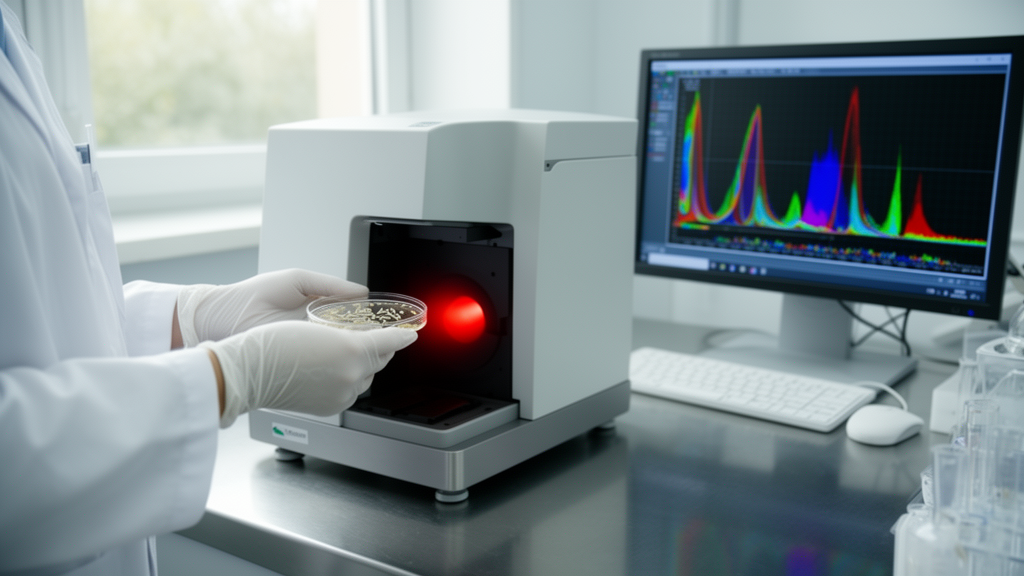
Technically, the FTIR workflow was performed with the IR Biotyper using standard manufacturer settings. Isolates were subcultured on Columbia agar with five percent sheep blood, suspended in ethanol and distilled water, and applied to silicon target plates in five technical replicates each. Spectra were acquired in a wave number range of 800 to 1300 inverse centimeters, a region that tends to show the best classification performance. The software applied baseline corrections, smoothing, normalization, second derivative calculation, and vector normalization before hierarchical cluster analysis using the UPGMA algorithm generated dendrograms from which clusters were derived.
The genomic reference work was equally rigorous. DNA was extracted, purified, and sequenced on an Illumina NovaSeq X+ platform with a 2×150 bp paired-end workflow. Core genome multilocus sequence typing was performed using a Serratia marcescens cgMLST scheme comprising 2,692 alleles, with isolates differing by twelve or fewer alleles considered closely related. Pairwise SNP distances within clusters ranged from zero to three in four of the five genomic clusters, confirming clonal relationships, while the two environmental isolates from the same hospital sink differed by 30 SNPs yet were still considered epidemiologically linked because they came from the drain and trap of the same sink.
The species-level results were striking in themselves. While routine biochemical testing and MALDI-TOF mass spectrometry reported Serratia marcescens for all or most isolates, genome-based analysis using Mash Screen, average nucleotide identity, and the type strain genome server revealed a heterogeneous collection spanning Serratia ureilytica, S. bockelmannii, S. sarumanii, S. marcescens, and Serratia nevei, along with a potentially new Serratia species now under investigation. This underscores a known weakness of MALDI-TOF, whose mass spectra are too similar among Serratia species and whose databases do not yet include all recently discovered species.
Performance-wise, the comparison produced a positive predictive value of 0.842 for correctly identifying closely related isolates and a negative predictive value of 1.0 for correctly identifying unrelated ones. FTIR achieved a sensitivity of 1.0, meaning not a single closely related isolate was deemed unrelated, while specificity stood at 0.667, with three unrelated isolates falsely assigned to a cluster. Overall accuracy was 0.88. Concordance with the genomic reference, measured using the Adjusted Rand index and the Adjusted Wallace coefficient, yielded an AR of 0.742, a WGS-to-FTIR AW of 1.0, and an FTIR-to-WGS AW of 0.590, meeting previously suggested criteria for a first-line screening test. The FTIR results also compared favorably with a recent meta-analysis reporting an overall accuracy of 78 percent for Enterobacterales.
The authors caution that their strain collection, the largest set of Serratia isolates comprehensively studied with FTIR to date, came from a single medical center under a suspected outbreak situation, which implies a higher pretest probability of relatedness than a randomly collected set. The small sample size is reflected in wide 95 percent confidence intervals, and FTIR’s reliance on phenotypic traits rather than genetic similarity means wrong clustering events can occur. Strict adherence to standardized culture conditions, incubation times, and sample preparation protocols remains essential. Future research should address larger isolate sets from different locations, single-species sub-analyses, inter-laboratory ring trials, alternative spectral windows, and AI-based raw data analysis. Nevertheless, the study builds a case that infrared fingerprinting could become a complementary analytical addition to the arsenal of clinical microbiology laboratories, enabling the early, focused implementation of infection control countermeasures when every hour counts.
Subject of Research: Microbiology and Infectious Disease
Article Title: Evaluation of Fourier transform infrared spectroscopy as a first-line surveillance typing tool for Serratia spp. isolates derived from clinical materials
Article References: Lüdecke, T., & Hunfeld, K.-P. (2026). Evaluation of Fourier transform infrared spectroscopy as a first-line surveillance typing tool for Serratia spp. isolates derived from clinical materials. Frontiers in Antibiotics, 5, Article 1781370. https://doi.org/10.3389/frabi.2026.1781370
Image Credits: AI Generated
DOI: 10.3389/frabi.2026.1781370
Keywords: FTIR spectroscopy, IR Biotyper, Serratia, whole genome sequencing, nosocomial outbreaks, strain typing, clinical microbiology, infection control, cgMLST, hospital epidemiology, MALDI-TOF, surveillance
Cite Scienmag News
Kristina Jarvis. (October 17, 2026). Infrared Fingerprinting Shows Promise as a Rapid First-Line Tool for Tracking Hospital Serratia Outbreaks. Scienmag. https://scienmag.com/infrared-fingerprinting-shows-promise-as-a-rapid-first-line-tool-for-tracking-hospital-serratia-outbreaks/
Kristina Jarvis. "Infrared Fingerprinting Shows Promise as a Rapid First-Line Tool for Tracking Hospital Serratia Outbreaks." Scienmag, 17 October 2026, https://scienmag.com/infrared-fingerprinting-shows-promise-as-a-rapid-first-line-tool-for-tracking-hospital-serratia-outbreaks/. Accessed 17 October 2026.
Kristina Jarvis. "Infrared Fingerprinting Shows Promise as a Rapid First-Line Tool for Tracking Hospital Serratia Outbreaks." Scienmag. October 17, 2026. https://scienmag.com/infrared-fingerprinting-shows-promise-as-a-rapid-first-line-tool-for-tracking-hospital-serratia-outbreaks/


