


Rabies kills an estimated 1,000 people in Madagascar every year, and nearly every one of those deaths traces back to a dog bite. Yet in Antananarivo, the island nation’s capital, the dogs themselves have long been a statistical blind spot. Public health authorities have known the disease is there; what they have lacked is a reliable picture of how many dogs live in the city, who owns them, how long they survive, and how often they bite. A new household survey, conducted door to door across the capital between 2023 and 2025, now fills in that picture with unusual precision, and its findings carry a sobering message for anyone hoping to see dog-mediated human rabies eliminated by 2030.
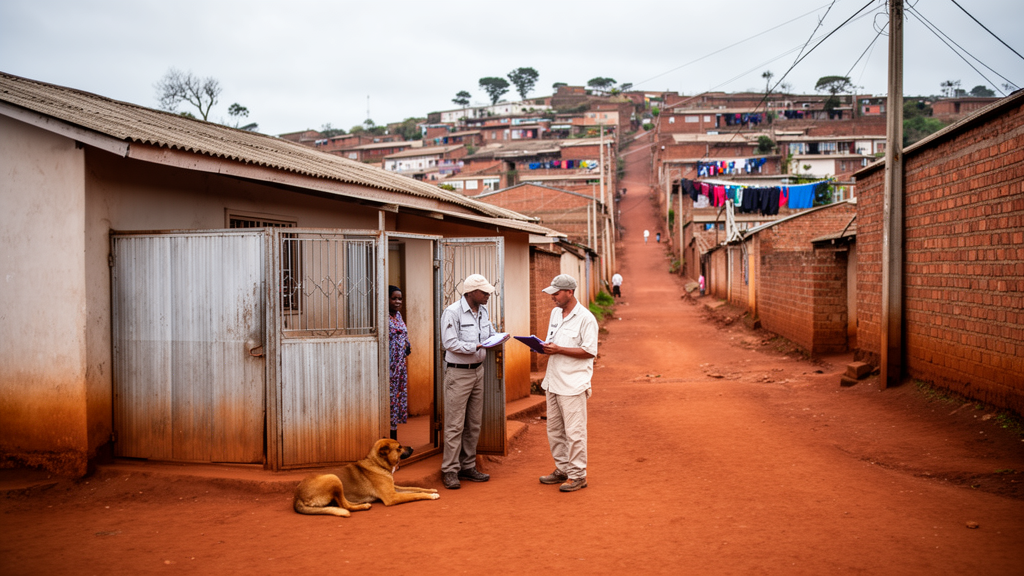
The study, published in PLOS One, surveyed 2,518 households across 21 fokontany, the small administrative neighborhoods that make up Antananarivo’s urban fabric. Teams went from door to door, recording not just whether a household kept a dog but the animal’s age, sex, vaccination history, and fate over time. The scale of the effort matters because dog population data in many rabies-endemic countries is scarce, outdated, or extrapolated from assumptions that may bear little relation to reality. Vaccination campaigns, after all, are only as effective as the coverage they achieve, and coverage targets are meaningless without a denominator to measure them against.
What the survey found was a city where dogs are common but chronically under-protected. Roughly 30.5 percent of households reported owning at least one dog, and the 1,273 dogs recorded across the sampled neighborhoods translate into an estimated dog-to-human ratio of about one dog for every nine people. That figure gives veterinarians and epidemiologists something they have not had before: a grounded estimate of the size of the owned dog population that any vaccination program in Antananarivo would need to reach. It also reveals the scale of the challenge, because the same survey found that 64.2 percent of owned dogs had never received a rabies vaccination at all.
The reasons owners gave for leaving their animals unvaccinated were as revealing as the numbers themselves. Time constraints, lack of awareness that dogs even need rabies vaccination, and financial barriers topped the list. In other words, the gap is not primarily one of refusal or hostility toward vaccination but of access, information, and cost. That distinction matters for program design. A population that is unaware or unable to afford vaccination requires a different intervention strategy than one that is actively opposed to it, and the study’s authors suggest that annual city-wide campaigns combining door-to-door delivery with fixed-point vaccination sites would be the most effective way to close the gap.
Demographically, the owned dog population of Antananarivo skews male and young. Nearly two-thirds of the dogs recorded, 63.6 percent, were male, and the median age was just three years. Survival analysis at a selected study site pointed to a median lifespan of only 4.4 years, with an annual mortality hazard of 16 percent. Those numbers describe a population that turns over rapidly. In practical terms, even if a vaccination campaign reached a large share of the dogs in a given year, a substantial fraction of the population would be replaced by unvaccinated puppies and newly acquired animals before the next campaign came around. High population turnover is one of the classic obstacles to sustaining herd immunity in free-roaming and semi-owned dog populations, and the Antananarivo data quantify just how acute that obstacle is.
Ownership itself was not randomly distributed across the city. The survey found that dog ownership was positively associated with household location, household size, and the age, education, and income of the household head. Larger, better-off, and better-educated households were more likely to keep dogs, a pattern that has implications for how vaccination outreach should be targeted. If dog ownership clusters in certain neighborhoods and demographic groups, campaigns can be designed to concentrate resources where the animals actually are, rather than spreading effort uniformly across the capital. The same determinants can also help predict where unvaccinated dogs are most likely to be found, allowing public health teams to prioritize follow-up in areas where coverage is likely to lag.
One of the study’s most consequential findings concerns who gets bitten. The researchers compared bite incidence between households that owned dogs and households that did not, and found no significant difference in risk between the two groups. That result undercuts a common intuition that dog owners, by virtue of living with the animals, bear the bulk of the bite burden. Instead, the decisive risk factor was the presence of children. Households with children under 15 years old experienced a significantly higher risk of dog bites than households without them, regardless of whether the household itself owned a dog.
This finding reframes the prevention problem. If bite risk is driven less by ownership than by the presence of children, then interventions aimed solely at dog owners will miss a large share of the population at risk. Pediatric bite prevention, whether through education about safe behavior around dogs, supervision of young children, or community-wide awareness campaigns, becomes a public health priority in its own right. The study’s authors argue that such efforts must be paired with expanded access to post-exposure prophylaxis, the series of vaccinations that can prevent rabies from taking hold after a bite but that remains difficult to access in many parts of Madagascar. A bite that goes untreated because prophylaxis is unavailable or unaffordable can convert a preventable injury into a fatal disease.
The broader context for these findings is the global goal of eliminating dog-mediated human rabies by 2030, a target endorsed by the World Health Organization and partner agencies under the framework known as Zero by 30. Madagascar is far from alone in struggling to meet it. Rabies is endemic across much of sub-Saharan Africa and South Asia, and the technical tools for elimination, mass dog vaccination and accessible post-exposure prophylaxis, have been known for decades. What has been missing in many settings is the local epidemiological groundwork: knowing how many dogs there are, where they live, how long they survive, and who is most at risk of being bitten. The Antananarivo study is a case study in how that groundwork gets done, and in how much difference it can make.
What emerges from the data is a roadmap with three interlocking components. First, sustained annual vaccination campaigns that combine door-to-door outreach with fixed-point sites, designed to overcome the time, awareness, and cost barriers that owners themselves identified. Second, a recognition that the dog population’s rapid turnover demands repeated, not one-off, coverage efforts, with each campaign aiming to reach both the animals missed the year before and the new cohort of puppies and acquisitions that have replaced them. Third, a parallel investment in pediatric bite prevention and post-exposure prophylaxis access, targeted at the households and age groups the survey identified as most at risk. None of these components is technically novel, but together, grounded in the first detailed profile of Antananarivo’s owned dog population, they offer the capital a concrete path toward a goal that has remained out of reach: a city, and eventually a country, where rabies no longer claims a thousand lives a year.
Subject of Research: Owned dog population dynamics, vaccination coverage, and dog bite risk factors relevant to rabies control in Antananarivo, Madagascar
Article Title: Owned dog population profile, dog ownership and bite risk determinants: Key steps to rabies control in Antananarivo, Madagascar
Article References: Volasoa, M. H., Andrianarivelo, S. M. J., Albrechtova, K., Raharijaona, F., Kassié, D., & Chevalier, V. (2026). Owned dog population profile, dog ownership and bite risk determinants: Key steps to rabies control in Antananarivo, Madagascar. PLOS One, 21(10), e0360417. https://doi.org/10.1371/journal.pone.0360417
Image Credits: AI Generated
DOI: 10.1371/journal.pone.0360417
Keywords: rabies, Madagascar, Antananarivo, dog vaccination, dog population, public health, post-exposure prophylaxis, dog bites, One Health, epidemiology, PLOS One, zoonotic disease
Cite Scienmag News
Kristina Jarvis. (October 16, 2026). Counting Antananarivo’s dogs: household survey maps rabies risk in Madagascar’s capital. Scienmag. https://scienmag.com/counting-antananarivos-dogs-household-survey-maps-rabies-risk-in-madagascars-capital/
Kristina Jarvis. "Counting Antananarivo’s dogs: household survey maps rabies risk in Madagascar’s capital." Scienmag, 16 October 2026, https://scienmag.com/counting-antananarivos-dogs-household-survey-maps-rabies-risk-in-madagascars-capital/. Accessed 16 October 2026.
Kristina Jarvis. "Counting Antananarivo’s dogs: household survey maps rabies risk in Madagascar’s capital." Scienmag. October 16, 2026. https://scienmag.com/counting-antananarivos-dogs-household-survey-maps-rabies-risk-in-madagascars-capital/


