


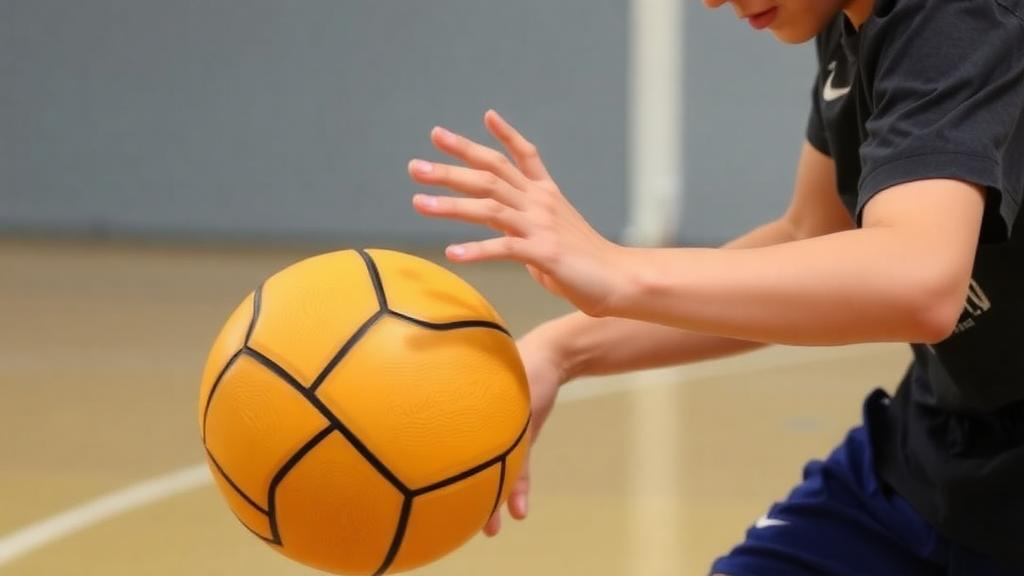
A one-year study of prepubescent boys in Tunisia has found that regular handball training is associated with significantly greater bone mineral accrual than ordinary school physical education alone, with the strongest effects appearing at weight-bearing sites such as the legs, hips, and lumbar spine. The research, published in Physiological Reports, tracked 72 boys aged roughly 10 to 12 years and used dual-energy X-ray absorptiometry, or DXA, to measure how their skeletons changed over 12 months of growth. The findings add to a growing body of evidence that childhood is a critical window during which mechanical loading can shape lifelong skeletal health.
The research team, based at Farhat Hached Hospital in Sousse and collaborating institutions, recruited boys through schools in the Sahel region of Tunisia. Half of the participants were handball players who had trained in organized clubs for at least two years before the study began, attending three 90-minute sessions per week on indoor courts. The other half were age-matched controls who participated only in standard school physical education and had not engaged in organized sport during the previous two years. All participants were predominantly prepubertal at baseline, classified as Tanner Stage I, with pubertal status verified by a pediatrician at both the start and end of the study.
The choice of handball was deliberate. The sport combines jumping, landing, sprinting, rapid changes of direction, and repeated throwing, exposing both the weight-bearing skeleton of the lower body and the arms to substantial mechanical stimuli. Previous cross-sectional studies had suggested that young handball players carry more bone mass than non-athletic peers, but longitudinal evidence in prepubescent children remained scarce. Most earlier work had focused on adolescents or adults, leaving open the question of whether handball produces distinctive skeletal adaptations before puberty, a period when bone tissue is especially responsive to mechanical loading.
At baseline and again after one year, the researchers measured bone mineral density (BMD), bone mineral content (BMC), and bone area (BA) across the whole body and at specific regions including the lumbar spine, femoral neck, total hip, legs, arms, and radius. They also recorded anthropometrics, body composition, dietary calcium intake via three-day food records, habitual physical activity, and fitness performance on the 20-meter shuttle run and jump tests. Because the two groups differed at the outset, with handball players already taller, heavier, and fitter, the follow-up comparisons were statistically adjusted for baseline bone values, height growth velocity, height, lean mass, and calcium intake.
The results showed a clear pattern. After one year, handball players had significantly higher BMD than controls at the whole body, lumbar spine, both legs, the left femoral neck, and both total hip regions. Adjusted percentage gains in BMD were also greater in the trained group, reaching 3.8 percent versus 2.2 percent at the whole body and 9.0 percent versus 6.1 percent at the lumbar spine. Notably, some differences emerged at non-weight-bearing sites as well, including the left arm, the right ultradistal radius, and the right whole radius, suggesting that the throwing and catching demands of handball stimulate the upper-limb skeleton in ways that running and jumping alone may not.
Bone mineral content, which reflects the absolute amount of mineral within the skeleton, told a similar story. Handball players showed greater adjusted BMC at the lumbar spine, left leg, both total hip regions, and the right one-third radius at follow-up, along with larger percentage gains at the whole body (13.1 versus 10.7 percent) and lumbar spine (16.9 versus 12.1 percent). Because BMD and BMC both increased beyond what could be explained by body size or growth velocity, the authors interpret the findings as evidence of genuinely enhanced mineral acquisition rather than mere differences in skeletal dimensions.
In contrast, bone area changed far less between the groups. Although bone area increased in both groups as the children grew, no significant between-group differences remained at the whole body or lumbar spine after statistical adjustment, and longitudinal mixed-effects models found no interactions that survived correction for multiple comparisons. A few nominal differences appeared at upper-limb sites, but the authors caution that these should be treated as exploratory. The pattern suggests that during this developmental window, mechanical loading influences mineral deposition more visibly than bone geometry, consistent with the mechanostat theory in which bone responds to strain first by mineralizing before measurable changes in shape emerge.
The study also examined the relationship between muscle and bone. Increases in lean mass over the year were positively associated with gains in BMD at the whole body, both femoral necks, and both total hips, even after adjusting for age, height, and calcium intake. Associations with BMC were more localized, and links with bone area were limited to the forearms. This supports the muscle-bone unit concept, in which growing muscle exerts forces that drive skeletal adaptation. However, because lean mass gains were similar between the two groups over the study period, the greater mineralization in handball players cannot be attributed simply to faster muscle development; the sport-specific loading itself appears to play a distinct role.
The authors are careful to note the limitations of their design. Allocation to handball or control was not randomized, and the handball players had already trained for roughly two years before enrollment, so baseline differences may partly reflect cumulative training effects and differences in body size and fitness. Although the statistical models accounted for baseline bone values, growth velocity, lean mass, and calcium intake, residual confounding from prior training exposure cannot be excluded. The one-year follow-up may also have been too short to reveal changes in bone geometry, and the modest sample size of 36 per group increases the risk of false-positive findings across the many skeletal sites examined.
Nevertheless, the consistent convergence of BMD and BMC findings at clinically relevant weight-bearing sites, alongside the fitness advantages and upper-limb adaptations observed in the trained boys, supports the idea that multidirectional, impact-based sports like handball are valuable tools for building peak bone mass during childhood. Because skeletal mass acquired during growth influences fracture risk and osteoporosis susceptibility decades later, the study reinforces public health messages encouraging children to engage in varied, high-impact physical activity during the prepubertal years, when the skeleton is most receptive to mechanical stimulation.
Subject of Research: Effects of handball participation on bone mineral accrual in prepubescent boys
Article Title: Handball participation and bone mineral accrual during growth: A 1‐year longitudinal controlled study in young male athletes
Article References: Missawi, K., Gasmi, M., Muscella, A., Aslan, T. V., Eken, Ö., Aldhahi, M. I., & Zouch, M. (2026). Handball participation and bone mineral accrual during growth: A 1‐year longitudinal controlled study in young male athletes. Physiological Reports, 14(19), Article e71133. https://doi.org/10.14814/phy2.71133
Image Credits: AI Generated
DOI: 10.14814/phy2.71133
Keywords: handball, bone mineral density, bone mineral content, pediatric bone health, DXA, lean mass, weight-bearing exercise, prepubertal children, osteogenic sports, longitudinal study, peak bone mass, mechanical loading
Cite Scienmag News
Ophelia Keating. (October 16, 2026). Handball Builds Stronger Bones in Preteen Boys, One-Year Study Finds. Scienmag. https://scienmag.com/handball-builds-stronger-bones-in-preteen-boys-one-year-study-finds/
Ophelia Keating. "Handball Builds Stronger Bones in Preteen Boys, One-Year Study Finds." Scienmag, 16 October 2026, https://scienmag.com/handball-builds-stronger-bones-in-preteen-boys-one-year-study-finds/. Accessed 16 October 2026.
Ophelia Keating. "Handball Builds Stronger Bones in Preteen Boys, One-Year Study Finds." Scienmag. October 16, 2026. https://scienmag.com/handball-builds-stronger-bones-in-preteen-boys-one-year-study-finds/


