


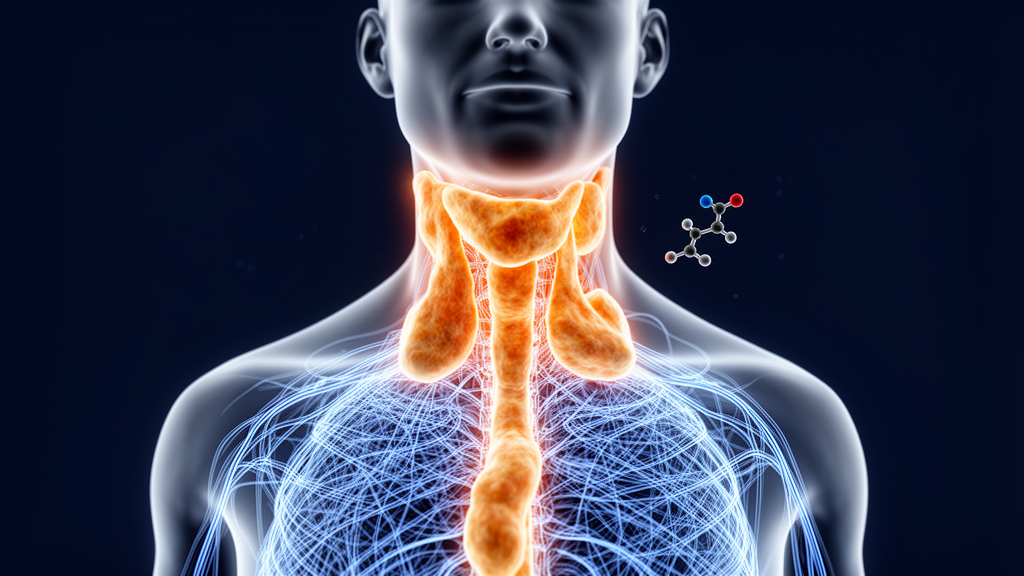
In a finding that is already sending ripples through metabolic science, researchers have used artificial intelligence to map the clinical footprint of human brown fat across more than 100,000 patients, revealing that this heat-producing tissue is linked not only to better cardiovascular health but also to lower rates of psychiatric disease, healthier fat distribution and improved liver and cardiac function. The study, published in Nature, harnesses big data and machine learning to answer a question that has frustrated the field for over a decade: what does brown fat actually do for human health, and can it be targeted with drugs?
Brown adipose tissue, or BAT, is the body’s furnace. Unlike white fat, which stores energy as triglyceride in subcutaneous and visceral depots, brown fat burns energy to produce heat through a process called thermogenesis. The key molecular player is uncoupling protein 1, or UCP1, which sits in the inner mitochondrial membrane and dissipates the proton gradient that would otherwise drive ATP synthesis, converting stored chemical energy directly into heat. In animal models, activating BAT protects against obesity and metabolic disease. But in humans, the tissue’s therapeutic relevance has remained unclear, partly because no high-throughput methods existed to quantify BAT activity at scale.
The research team, led by Nicolás Gómez-Banoy and Paul Cohen at The Rockefeller University, working with collaborators at Memorial Sloan Kettering Cancer Center, Weill Cornell Medicine and other institutions, took a reverse-translational approach. They mined a massive archive of 18F-fluorodeoxyglucose positron emission tomography–computed tomography scans performed for clinical cancer care between 2009 and 2024 at Memorial Sloan Kettering. These scans, which image glucose uptake throughout the body, occasionally reveal brown fat as areas of unexpected FDG uptake. The team built an Expanded BAT Cohort of 101,243 patients, of whom 8,897 were BAT positive and 92,346 were BAT negative. Using propensity score matching to balance the groups across age, sex, body mass index and ambient temperature at the time of the scan, they created a final matched cohort of 26,302 patients.
With this foundation in place, the researchers performed an unbiased sweep of 511 diagnostic codes drawn from the electronic health record, screening for associations with BAT presence. After univariable logistic regression identified 104 codes with significant crude associations, multivariable regression adjusting for age, sex, BMI, ambient temperature, race, ethnicity, smoking history, family history of cardiovascular disease, cancer site, cancer stage, cancer treatment and outpatient medication groups narrowed the field to 98 significant codes. Strikingly, 92 of these showed lower incidence in patients with brown fat. Over-representation analysis revealed that cardiovascular and psychiatric diagnoses were the two organ systems most strongly enriched in their association with BAT.
Among the top 20 diagnoses with lower prevalence in BAT-positive patients, type 2 diabetes led the list with an odds ratio of 0.42, followed by chronic ischaemic heart disease at 0.53. Disorders of lipoprotein metabolism and primary hypertension also appeared prominently. But the psychiatric findings were entirely new: anxiety disorders showed an odds ratio of 0.78, depressive episodes 0.68 and sleep disorders 0.77. Respiratory failure and ascites were also less prevalent. The only codes with higher prevalence in BAT-positive patients were predominantly skin diagnoses, and a trend toward higher osteoporosis prevalence did not reach statistical significance in the adjusted analysis.
To move beyond simple presence or absence, the team deployed a newly developed machine learning workflow called TriDFusion, or 3DF, built on the nnU-net segmentation architecture. The system resamples PET images to match CT dimensions, converts both to a common file format, and processes them through nnU-net to generate mask predictions where each pixel corresponds to one of six anatomical BAT depots: cervical, supraclavicular, mediastinal, paraspinal, axillary and abdominal. The tool quantified BAT metabolic activity, defined as the product of mean standardized uptake value and BAT volume in millilitres, in 8,709 patients, representing 97.9 percent of the BAT-positive group. This depot-level resolution had never been achieved at such scale before.
The results were dose-dependent and depot-specific. Higher total BAT metabolic activity was associated with stepwise reductions in type 2 diabetes, atrial fibrillation, coronary artery disease and congestive heart failure, even after controlling for age, BMI, sex and outdoor temperature. Within the supraclavicular depot, the most prevalent, increasing activity was linked to clear reductions in diabetes and coronary artery disease across all tertiles. But the axillary depot emerged as the most powerful: increasing axillary BAT activity was associated with significant reductions in all cardiometabolic diseases queried, including cerebrovascular disease, with a clear stepwise decrease in hypertension risk. The team also used the CT portion of each scan to measure subcutaneous and visceral adipose tissue area in 8,040 patients, finding that total BAT activity correlated positively with subcutaneous fat and negatively with visceral fat, with axillary BAT showing the strongest negative association with visceral adiposity.
Patients with brown fat also exhibited more favourable laboratory profiles. They had lower glucose, haemoglobin A1c, triglycerides and triglyceride-glucose index, along with higher HDL cholesterol. Paradoxically, they had higher total and LDL cholesterol, but remnant cholesterol, an independent atherosclerotic risk factor, was significantly lower. Echocardiographic data revealed lower left ventricular mass index, posterior wall thickness and relative wall thickness, along with lower pulmonary artery systolic pressure, all markers of decreased pathological cardiac remodelling. Inflammatory markers, including neutrophil counts and the neutrophil-to-lymphocyte ratio, were also reduced, and hepatic transaminases were lower with fewer patients showing elevated FIB-4 scores, a surrogate for advanced liver fibrosis risk.
The medication analysis proved equally revealing. Screening 125 individual medications, the researchers found that 39 showed significant associations with BAT status. Known inhibitors, such as beta-blockers including atenolol and propranolol, and selective serotonin reuptake inhibitors including fluoxetine, escitalopram and sertraline, showed negative associations, validating the platform. Among positive associations, angiotensin receptor blockers stood out: losartan showed an odds ratio of 1.36 and valsartan 1.52. As proof of concept, the team showed that losartan increased UCP1 expression in mature brown adipocytes, enhanced oxygen consumption, and activated PPARγ transcriptional activity independently of the angiotensin receptor 1 pathway. In mice, losartan treatment increased brown fat thermogenesis, elevated whole-body energy expenditure at room temperature and during cold exposure, and produced smaller lipid droplets in brown adipocytes, all without changes in food intake, activity or body composition.
The study’s limitations are acknowledged by the authors. The retrospective design, the cancer-centre cohort and the reliance on FDG uptake as a proxy for thermogenic capacity all warrant caution. FDG uptake may not correlate perfectly with BAT temperature, and insulin resistance can significantly influence glucose uptake in the tissue. Yet the team found that metformin, an insulin-sensitizing drug, was negatively associated with BAT presence, while olanzapine, which promotes insulin resistance, was linked positively, indicating the clinical findings cannot be explained simply by altered insulin sensitivity. Until a reliable non-invasive biomarker for brown fat is established, a large propensity-matched cohort remains the most feasible approach to comprehensively assess BAT and its clinical phenotypes in humans. The platform now opens the door to drug repurposing, genetics-based discovery and prospective validation of losartan as a brown fat activator, potentially offering a new therapeutic avenue for cardiometabolic disease.
Subject of Research: Artificial intelligence-enabled clinical phenotyping of human brown fat
Article Title: Artificial intelligence-enabled clinical phenotyping of human brown fat
Article References: Artificial intelligence-enabled clinical phenotyping of human brown fat. (n.d.). https://doi.org/10.1038/s41586-026-11162-7
Image Credits: AI Generated
DOI: 10.1038/s41586-026-11162-7
Keywords: Artificial, intelligence-enabled, clinical, phenotyping, human, brown, scientific research
Cite Scienmag News
Ophelia Keating. (October 16, 2026). AI maps human brown fat across 100,000 patients and finds losartan activates it. Scienmag. https://scienmag.com/ai-maps-human-brown-fat-across-100000-patients-and-finds-losartan-activates-it/
Ophelia Keating. "AI maps human brown fat across 100,000 patients and finds losartan activates it." Scienmag, 16 October 2026, https://scienmag.com/ai-maps-human-brown-fat-across-100000-patients-and-finds-losartan-activates-it/. Accessed 16 October 2026.
Ophelia Keating. "AI maps human brown fat across 100,000 patients and finds losartan activates it." Scienmag. October 16, 2026. https://scienmag.com/ai-maps-human-brown-fat-across-100000-patients-and-finds-losartan-activates-it/


