


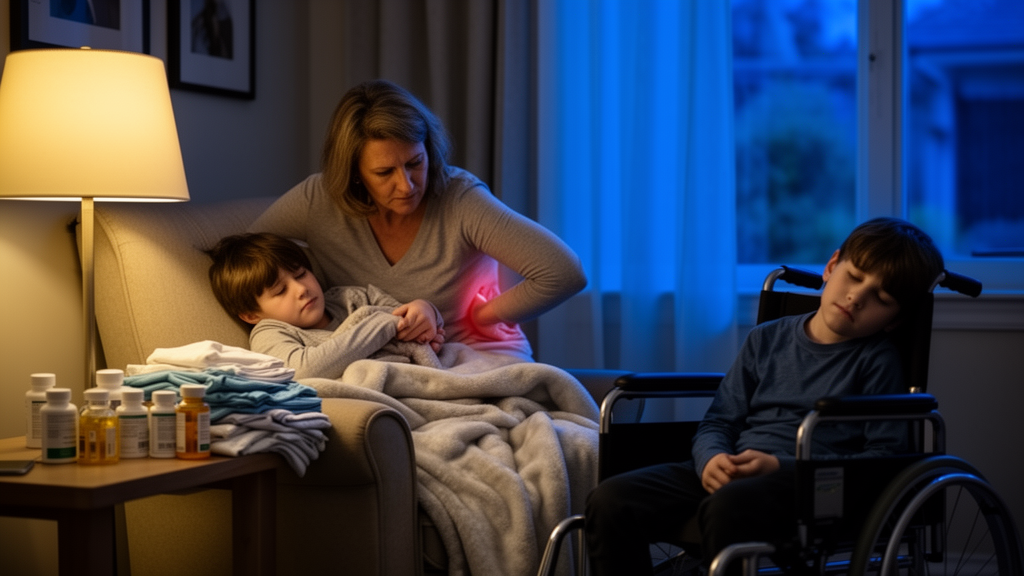
Behind every child with cerebral palsy stands someone whose own health is quietly eroding. A new study from Zunyi First People’s Hospital in China puts numbers on that hidden toll, and the picture it paints is sobering. Researchers led by Yan Luo and Yong Lin surveyed 116 pairs of children with cerebral palsy and their primary caregivers, measuring quality of life with the widely used SF-36 Health Survey and probing the forces that shape it. Their findings, published in BMC Pediatrics, show that caregivers’ quality of life sits at a low-to-moderate level, with caregiving burden rated moderate and social support rated low. In a field that rightly concentrates on the child’s rehabilitation, the study is a pointed reminder that the caregiver’s body and mind are part of the treatment equation too.
The study’s design deserves a closer look, because the way it was built shapes what its numbers can tell us. The researchers enrolled 116 pairs of children with cerebral palsy and their primary caregivers from the Pediatric Rehabilitation Department of Zunyi First People’s Hospital between February 2024 and February 2025, using convenience sampling. That means participants were recruited from families already coming through the hospital’s doors rather than drawn at random from the wider community, so the sample may overrepresent families who are engaged enough with clinical services to attend rehabilitation visits regularly. Convenience sampling is a common and practical choice in clinical research, particularly when the population of interest is defined by a specific diagnosis, but it does mean the findings should be read as a portrait of this particular hospital population rather than a precise estimate for all caregivers of children with cerebral palsy in China or elsewhere.
The instruments the team chose are well established in caregiving research. The SF-36 Health Survey is one of the most widely used generic measures of health-related quality of life, and it yields two summary dimensions: a physical health component and a mental health component. In this study, the caregivers’ physical health subscale score averaged 239.22 with a standard deviation of 68.54, while the mental health subscale score averaged 247.29 with a standard deviation of 63.06. The Zarit Burden of Care Inventory, used to gauge caregiving burden, has decades of history as a standard tool for quantifying how heavily the demands of caring for another person weigh on the caregiver, spanning emotional strain, social disruption, and financial pressure. The Social Support Rating Scale, developed for use in Chinese populations, captures the perceived availability and adequacy of support from family, friends, and broader networks. Using validated instruments like these allows results from different studies and settings to be compared, which is part of what makes the low social support scores in this cohort notable.
The statistical approach combined univariate analysis with multiple linear regression, a standard strategy for separating the independent contribution of each factor from the noise of correlated variables. This matters because many of the factors the researchers examined travel together in real life: a child with more severe motor impairment tends to need more hospitalizations, which tends to strain household finances, which in turn can erode a caregiver’s employment prospects and mental health. Multiple regression lets the analysts ask, in effect, which factors still carry weight once the others are held constant. The results show that the physical and mental sides of caregivers’ quality of life are shaped by overlapping but not identical sets of influences.
For physical health, the significant factors were the impact of the child’s motor impairment, the number of hospitalizations, family monthly income, the proportion of out-of-pocket medical expenses relative to total household income, caregiving burden, and social support. For mental health, the picture was broader: the child’s gender joined the list, along with the impact of motor impairment and number of hospitalizations, but so did characteristics of the caregiver themselves, including gender, age, employment status, and level of knowledge about the child’s condition, alongside monthly household income, the out-of-pocket expense proportion, caregiving burden, and social support. All of these associations reached statistical significance at the conventional threshold of P less than 0.05.
Reading these two lists side by side reveals something important. The physical health of caregivers is tied almost entirely to circumstances surrounding the child and the household’s economic situation, while mental health is additionally entangled with who the caregiver is as a person. That caregiver gender and age emerged as factors for mental health but not physical health fits with a substantial body of caregiving literature suggesting that psychological strain is distributed unevenly across caregivers, often falling more heavily on those with fewer personal resources or greater competing responsibilities. Employment status appearing in the mental health model but not the physical one hints at the double bind many caregivers face: the demands of caring for a child with complex needs can force reductions in paid work, and the loss of both income and professional identity can feed directly into psychological distress.
The finding that a caregiver’s level of knowledge about the child’s condition relates to mental health is particularly actionable. Knowledge is one of the few factors on this list that clinical teams can directly change. Education about cerebral palsy, what it is, how rehabilitation works, what to expect as the child grows, has long been a component of family-centered care, and this study offers quantitative support for the idea that understanding the condition is associated with better psychological outcomes for the person providing most of the daily care. It also suggests a practical entry point: when clinicians invest time in explaining the diagnosis and treatment plan, they may be supporting the caregiver’s mental health as much as the child’s rehabilitation.
The financial variables deserve particular attention in the Chinese context. The study measured both absolute family monthly income and the proportion of medical expenses paid out of pocket relative to total household income, and both appeared in the models for physical and mental health. Even in health systems with broad insurance coverage, families caring for children with chronic disabilities often face substantial unreimbursed costs, including rehabilitation sessions, assistive devices, transportation, and the implicit cost of forgone wages. The finding that the proportion of out-of-pocket spending, not just income level, independently relates to caregiver quality of life suggests that the financial texture of caregiving, how much of the household’s resources the child’s care consumes, matters as much as how much the household earns. This is a nuance with policy implications, because interventions that reduce the out-of-pocket share of disability-related expenses could reach families across the income spectrum.
The moderate caregiving burden and low social support reported in this cohort form a coherent picture when placed next to the regression results. Caregiving burden and social support both emerged as factors for both physical and mental health, making them the two most consistent psychosocial influences in the study. Social support is widely understood in health psychology as a buffer against stress, and its low level in this population, combined with its independent association with quality of life, points toward a specific gap that community services and patient organizations could help fill. Support groups, respite care, and peer networks for parents of children with cerebral palsy are established interventions in many countries, and this study adds Chinese data to the evidence that such supports correlate with caregiver wellbeing.
It is worth noting what the study’s cross-sectional design can and cannot establish. Because all measurements were taken at a single point in time, the analysis can identify associations but cannot determine direction. It is plausible that heavy caregiving burden erodes quality of life, but it is equally possible that caregivers whose health has already declined perceive their burden as heavier. Longitudinal follow-up, or intervention studies that deliberately change one factor such as social support and track the effects, would be needed to establish causation. The authors themselves call for further research evaluating comprehensive interventions, including education about cerebral palsy, psychological support, financial assistance, caregiving skills training, and social support services, to determine whether alleviating caregiving burden translates into better quality of life for caregivers and, ultimately, better rehabilitation outcomes for children.
That last link, from caregiver wellbeing to child outcomes, is where the study’s significance extends beyond the caregiver population itself. Pediatric rehabilitation is an intensive, long-term undertaking that depends heavily on the consistency and capacity of the person delivering daily care at home. A caregiver whose physical health is failing or whose mental health is strained may struggle to maintain therapy routines, attend appointments, or provide the responsive care that young children with cerebral palsy need. In this sense, the caregiver’s quality of life is not a peripheral concern but a potential determinant of the child’s trajectory. The authors frame their findings as a reference for developing clinical interventions, and the implication is that such interventions should treat the family, not just the child, as the unit of care.
The study was conducted in accordance with the Declaration of Helsinki and approved by the Ethics Committee of the First People’s Hospital of Zunyi City, with informed consent obtained from parents or legal guardians of the minor participants and separately from the primary caregivers for their own participation. It was supported by the Zunyi Science and Technology Plan Project. As an open access publication, it is available in full to clinicians, policymakers, and families who want to examine the details of the analysis. For the caregivers themselves, the study’s central message is validating: the exhaustion they feel is measurable, it is shaped by identifiable and partly modifiable factors, and it is now documented in the scientific record as a legitimate target for intervention in its own right.
Subject of Research: Quality of life and influencing factors among primary caregivers of children with cerebral palsy
Article Title: Analysis of the current quality of life and influencing factors among primary caregivers of children with cerebral palsy
Article References: Luo, Y., Jin, H., Li, Z., Zhang, J., Yang, Z., Shuai, B., Zhang, H., & Lin, Y. (2026). Analysis of the current quality of life and influencing factors among primary caregivers of children with cerebral palsy. BMC Pediatrics. https://doi.org/10.1186/s12887-026-07662-0
Image Credits: AI Generated
DOI: 10.1186/s12887-026-07662-0
Keywords: cerebral palsy, primary caregivers, quality of life, caregiving burden, social support, SF-36, pediatrics, Zarit Burden Inventory, mental health, rehabilitation, family income, China
Cite Scienmag News
Ophelia Keating. (October 16, 2026). Caring for Children With Cerebral Palsy Takes a Hidden Toll on Caregivers’ Health. Scienmag. https://scienmag.com/caring-for-children-with-cerebral-palsy-takes-a-hidden-toll-on-caregivers-health/
Ophelia Keating. "Caring for Children With Cerebral Palsy Takes a Hidden Toll on Caregivers’ Health." Scienmag, 16 October 2026, https://scienmag.com/caring-for-children-with-cerebral-palsy-takes-a-hidden-toll-on-caregivers-health/. Accessed 16 October 2026.
Ophelia Keating. "Caring for Children With Cerebral Palsy Takes a Hidden Toll on Caregivers’ Health." Scienmag. October 16, 2026. https://scienmag.com/caring-for-children-with-cerebral-palsy-takes-a-hidden-toll-on-caregivers-health/


