


…
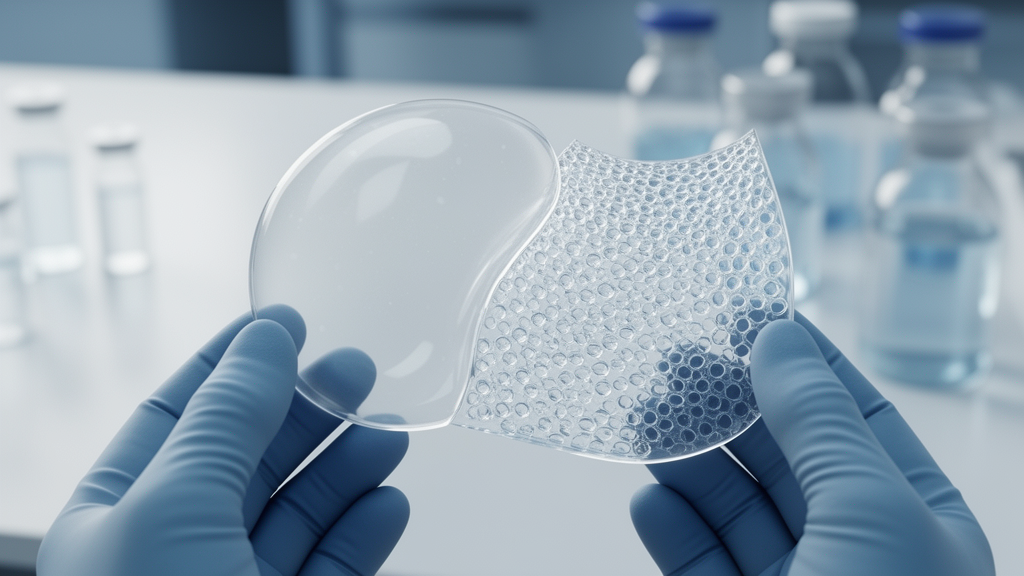
Janus biomaterials take their name from the two-faced Roman god, and the metaphor is apt: a single construct presents two chemically or physically distinct surfaces, each engineered to perform a different role. In regenerative medicine this asymmetry is not a curiosity but a design principle. Biological repair is inherently directional—wounds have an exterior exposed to air and microbes and an interior in contact with living tissue, tendons experience tension on one face and shear on another, and bone defects interface with both mineralized matrix and vascularized soft tissue. A material that presents the same face to both environments must compromise; a Janus material can be optimized for each side simultaneously, delivering moisture management and antimicrobial defense outward while promoting cell adhesion, vascularization, and matrix deposition inward.
The fabrication strategies highlighted in the review span a remarkable range of length scales, and each carries distinct advantages and constraints. Electrospinning, for example, can produce Janus nanofiber mats in which two polymer solutions are spun side by side from a dual-channel spinneret, yielding fibrous scaffolds that mimic the anisotropic architecture of extracellular matrix while carrying different drugs or surface chemistries on opposing sides. Microfluidic and electrospray approaches, by contrast, operate at the micro- and nanoscale, using laminar flow or electrically driven droplet breakup to generate particles with compartmentalized interiors or asymmetric surface patches. These particle platforms are particularly attractive for injectable therapies, where a preformed scaffold cannot be surgically placed and the material must instead assemble or function after delivery through a needle.
Hydrogels occupy a central position in this landscape because their water-rich, tissue-like mechanical environment supports cell survival and diffusive transport. Biphasic hydrogels—two covalently or physically joined gel regions with different compositions—allow one side to be stiff and osteoconductive while the other remains soft and chondroconductive, a configuration directly relevant to osteochondral defect repair where cartilage and subchondral bone must regenerate in concert. Core–shell hydrogels add a temporal dimension: the shell can act as a diffusion barrier that delays release of growth factors encapsulated in the core, producing sequential delivery profiles that mirror the natural cascade of healing, in which inflammatory signals precede proliferative and remodeling phases. Getting this sequence wrong—releasing pro-osteogenic factors before angiogenic ones, for instance—can stall regeneration, which is why spatiotemporal control is repeatedly emphasized as the defining advantage of asymmetric designs.
Self-assembled thin films represent a complementary strategy in which asymmetry emerges from the bottom up. Layer-by-layer deposition, block copolymer segregation, and phase separation at interfaces can produce films whose two faces differ in charge, wettability, or peptide presentation without any microfabrication step. This is valuable for membrane-type devices—barrier membranes used in guided bone regeneration, for example—where one face must prevent fibrous tissue ingress while the other must invite osteoblast attachment. The review’s treatment of these platforms underscores a recurring theme: the same asymmetry principle can be implemented through top-down engineering, bottom-up self-assembly, or hybrid approaches, and the choice among them is dictated less by elegance than by practical constraints of the target tissue, the required feature size, and the intended clinical workflow.
Three-dimensional and four-dimensional bioprinting extend the design space further. Multi-material printing nozzles can deposit distinct bioinks in registered patterns, creating gradients and interfaces that would be difficult or impossible to achieve by casting. The fourth dimension—time—refers to printed constructs that change shape or properties after fabrication in response to stimuli such as temperature, hydration, or light. A printed Janus scaffold that curls or folds to conform to an irregular defect geometry, or that stiffens progressively as tissue matures, illustrates how asymmetry and programmability can be combined. These capabilities remain largely at the laboratory stage, but they point toward constructs whose architecture is not fixed at implantation but evolves with the healing process.
The functional repertoire of Janus systems is broad. Controlled and sequential drug delivery is perhaps the most extensively demonstrated: by loading different agents into different compartments, or by engineering differential diffusion paths through each face, designers can release an antibiotic early and a growth factor later, or present a chemotactic gradient that recruits cells from one side while repelling them from the other. Antimicrobial and anti-adhesive functionality is especially important in wound care and implant-associated infections, where bacterial colonization of the exterior surface can compromise the entire construct. Amphiphilic Janus particles, with one hydrophobic and one hydrophilic face, can also interface with biofilms and lipid membranes in ways that isotropic particles cannot, and this interfacial activity is being explored for disrupting bacterial aggregates.
Exudate management deserves particular attention in the wound-healing context. Chronic wounds such as diabetic ulcers and venous leg ulcers produce excess fluid rich in proteases and inflammatory mediators that degrade growth factors and impede closure. A Janus dressing can be engineered so that the wound-facing layer absorbs and sequesters exudate or delivers anti-protease agents, while the outer layer permits controlled vapor exchange and blocks external contaminants. This bidirectional traffic control—letting the right molecules move in each direction—is a task that symmetric dressings perform poorly, and it exemplifies how structural asymmetry translates directly into clinical function.
Cell guidance is another domain where asymmetry proves decisive. Tendon and ligament repair requires aligned collagenous tissue; scaffolds presenting oriented topography or immobilized ligands on one face can direct tenocyte or fibroblast alignment and migration while the opposite face integrates with bone in a bone-tendon junction repair scenario. The review’s coverage of periodontal regeneration follows similar logic: the gingival side of a membrane must favor soft-tissue closure and resist bacterial penetration, while the bone-facing side must support osteogenic differentiation. These are not hypothetical advantages—studies of Janus membranes in guided bone regeneration have reported improved osteogenesis relative to conventional symmetric membranes, though the review is careful to note that systematic head-to-head comparisons remain scarce.
Remote responsiveness adds a further layer of control. Magnetic Janus particles, for instance, combine a magnetic segment with a functional segment, allowing external fields to orient, transport, or heat the particle. Near-infrared-responsive components can trigger drug release on demand. Such capabilities matter in contexts where timing is critical—burst release of an antimicrobial at the first sign of infection, or activation of a pro-regenerative signal only after the inflammatory phase has subsided. The ability to steer asymmetric particles with fields also opens possibilities for active transport within the body, though the review treats these applications as emerging rather than established.
Metabolic modulation of cells is a comparatively recent theme in biomaterials research and one that the review highlights as a distinctive opportunity for Janus designs. Tissue regeneration is energetically expensive, and cell fate decisions—whether a stem cell differentiates toward bone, cartilage, or fibrous tissue—are influenced by metabolic pathways such as glycolysis and oxidative phosphorylation. A Janus construct could, in principle, present metabolic modulators on one face to steer resident cell metabolism while delivering structural or trophic cues on the other. This coupling of immunometabolism and bioactive presentation is still largely conceptual, but it reflects a broader shift in the field from passive scaffolds toward materials that actively participate in regulating cellular physiology.
The application areas surveyed—wound healing, bone and periodontal regeneration, tendon and ligament repair, and postoperative reconstruction after bone tumor resection—span a wide range of mechanical and biological demands. Post-tumor reconstruction is particularly challenging because the defect is often large, the surrounding tissue may have been irradiated, and the residual bed may harbor residual disease. Janus constructs in this setting could combine an anti-recurrence surface with a regenerative surface, though the review indicates that such applications remain at an early exploratory stage. Stem cell-based tissue engineering, similarly, benefits from asymmetric designs that can co-localize cells with their preferred microenvironment while protecting them from hostile conditions elsewhere in the construct.
Against this promise, the review is candid about the obstacles. Reproducibility is a persistent concern: many Janus fabrication methods are sensitive to processing parameters, and small variations in flow rates, voltages, or polymer concentrations can shift the degree of asymmetry in ways that alter function. Stability is another issue—asymmetric features can degrade, erode, or interdiffuse over time, particularly in the aqueous, enzymatically active environment of living tissue. Biosafety assessment must account for the fact that each face presents a different chemical composition, so toxicological evaluation cannot simply extrapolate from bulk material properties. Scalability is perhaps the most significant barrier to translation: laboratory demonstrations often rely on techniques such as microfluidics or two-photon printing that are difficult to industrialize at the volumes required for commercial medical products.
The fragmentation of the field compounds these problems. Because Janus biomaterials have been developed independently within the electrospinning, microfluidics, hydrogel, and bioprinting communities, there is little standardization in how asymmetry is quantified, how performance is benchmarked, or how animal models are selected. The review argues that rational design will require systematic comparisons across Janus configurations—holding material chemistry constant while varying architecture, or vice versa—so that the field can identify which aspects of asymmetry actually drive regenerative outcomes rather than merely correlating with them. Without such comparisons, the literature risks accumulating isolated demonstrations that cannot be aggregated into design rules.
Translational potential also depends on regulatory and manufacturing considerations that the review situates within its research priorities. Combination products that integrate drugs, cells, and devices face layered regulatory pathways, and asymmetric architectures can complicate characterization because quality control must verify properties on each face independently. Sterilization methods may differentially affect the two surfaces. These practical realities suggest that the most clinically viable early products will likely be those in which asymmetry is achieved through robust, well-understood processes—such as asymmetric membranes or biphasic gels—rather than through intricate nanoscale patterning, at least initially.
Looking forward, the review outlines several priorities that follow logically from its analysis. First, standardized metrics for quantifying asymmetry—degree of surface chemical contrast, interfacial sharpness, and persistence of asymmetry over time—would enable meaningful cross-study comparison. Second, mechanistic studies linking specific asymmetric features to specific cellular and tissue responses would move the field from phenomenology toward design principles. Third, long-term in vivo studies with appropriate animal models are needed to establish whether the advantages demonstrated in vitro persist through the full healing timeline. Fourth, scalable manufacturing routes that preserve fine asymmetry at production volumes must be developed in partnership with industry. Finally, biosafety and degradation evaluation tailored to the two-faced nature of these materials should be formalized into preclinical testing frameworks. Taken together, these priorities sketch a path by which Janus biomaterials could mature from an elegant laboratory concept into a clinically meaningful platform—one in which the directionality inherent in biological repair is finally matched by the directionality of the materials used to support it.
Subject of Research: Janus biomaterials with structural asymmetry for multifunctional regenerative tissue repair
Article Title: Janus biomaterials in regenerative medicine: structural asymmetry as a platform for multifunctional tissue repair
Article References: El Ghazal, A., Abodunrin, O. D., Zouine, N., Er Raouan, S., Su Torun, S., Dani, L., Ibnsouda Koraichi, S., & Elabed, S. (2026). Janus biomaterials in regenerative medicine: structural asymmetry as a platform for multifunctional tissue repair. Frontiers in Soft Matter, 6, Article 1955040. https://doi.org/10.3389/frsfm.2026.1955040
Image Credits: AI Generated
DOI: 10.3389/frsfm.2026.1955040
Keywords: Janus biomaterials, regenerative medicine, tissue engineering, electrospun nanofibers, hydrogels, 3D bioprinting, drug delivery, wound healing, bone regeneration, antimicrobial materials, stem cells, biointerfaces
Cite Scienmag News
Matthew Wilson. (October 16, 2026). Janus Biomaterials: Two-Faced Structures That Heal Tissue From Both Sides. Scienmag. https://scienmag.com/janus-biomaterials-two-faced-structures-that-heal-tissue-from-both-sides/
Matthew Wilson. "Janus Biomaterials: Two-Faced Structures That Heal Tissue From Both Sides." Scienmag, 16 October 2026, https://scienmag.com/janus-biomaterials-two-faced-structures-that-heal-tissue-from-both-sides/. Accessed 16 October 2026.
Matthew Wilson. "Janus Biomaterials: Two-Faced Structures That Heal Tissue From Both Sides." Scienmag. October 16, 2026. https://scienmag.com/janus-biomaterials-two-faced-structures-that-heal-tissue-from-both-sides/


