


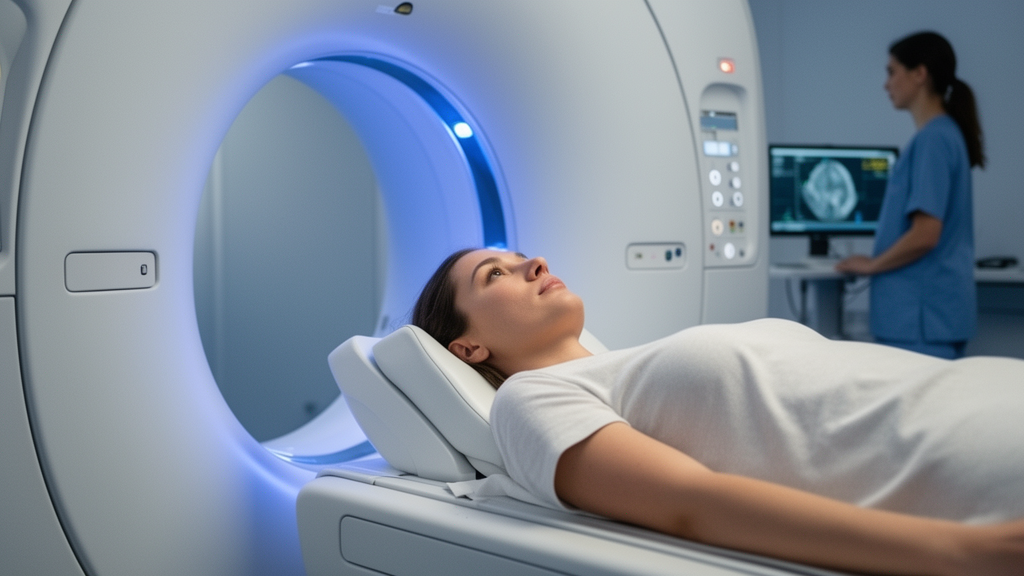
For millions of people who speak two or more languages, switching between them feels effortless. Yet beneath that fluency lies a remarkable feat of neural choreography. Both of a bilingual’s languages remain active even when only one is needed, forcing the brain to constantly monitor context, suppress interference, and select the intended words at lightning speed. A new review published in Frontiers in Language Sciences argues that one brain imaging technique, magnetoencephalography, or MEG, is uniquely positioned to reveal how this daily juggling act reshapes the brain, and that its findings could finally help settle one of the most contested debates in cognitive science.
The review, led by Xinyu Liu of the University of Reading together with colleagues, examines decades of conflicting evidence on whether bilingualism changes how the mind works. Behavioral studies have long been split: some report that bilinguals outperform monolinguals on tasks measuring attention and conflict resolution, while others, including a large population study of more than 11,000 people, find no reliable advantage. The authors argue that reaction times and accuracy scores may simply be too blunt an instrument. Neural measures, they suggest, can detect experience-related changes in the brain even when bilinguals and monolinguals perform identically on a task, capturing adaptations that have not yet surfaced in observable behavior.
MEG works by detecting the vanishingly weak magnetic fields generated when neurons fire in synchrony. Because these signals arise directly from the electrical activity of postsynaptic currents rather than from the slower blood-oxygen responses that fMRI and fNIRS measure, MEG can track brain events on a millisecond timescale. It also offers something EEG lacks: source estimation procedures can infer which cortical regions generated the recorded signals, because magnetic fields are less distorted than electrical potentials by the varying conductivity of the skull. The result is a rare combination of exquisite timing and reasonable spatial precision, allowing researchers to watch the sequence of cortical recruitment unfold in real time.
The technique’s true power, the review emphasizes, lies in its ability to analyze neural oscillations, the rhythmic fluctuations of brain activity that fall into distinct frequency bands. Theta oscillations, cycling roughly four to eight times per second, have been linked to conflict monitoring and cognitive control. Alpha activity, at eight to thirteen hertz, is associated with attentional selection and the inhibition of irrelevant information, while beta rhythms appear to maintain ongoing cognitive states. By decomposing brain signals into these bands and measuring how activity in different regions becomes synchronized, MEG can reveal not just where control happens but how rapidly coordinating networks organize themselves, something hemodynamic imaging, which evolves over seconds, fundamentally cannot resolve.
When the authors turned to task-based MEG studies of bilingual language control, a striking picture emerged: the brain implements language control differently depending on whether we are speaking or listening. In a landmark study, switching languages during production recruited dorsolateral prefrontal cortex, the same region involved in non-linguistic switching, whereas switching during comprehension engaged the anterior cingulate cortex. Subsequent work showed that experimentally imposed switches produced greater prefrontal and cingulate activity than naturally occurring switches in conversation, and that in bimodal bilinguals who use sign and speech, control-related activity was tied primarily to disengaging from an active language rather than activating an additional one.
Timing also matters. In one study of twenty unbalanced Mandarin-English bilinguals, switching into the non-dominant language triggered increased activity in left inferior frontal cortex right after the language cue, interpreted as interference resolution during preparation, while naming in that language later elicited greater right inferior frontal activity, possibly reflecting inhibition of competing lexical items during production. Remarkably, a follow-up study showed that when participants were allowed to choose their language freely and name items consistently, behavioral switching costs shrank and the right frontal switching response disappeared altogether. The neural price of language control, in other words, depends heavily on whether the switch is imposed from outside or chosen from within.
Direct MEG evidence on bilingualism and domain-general executive functions, however, remains startlingly thin. The review identifies essentially a single published study comparing neurologically healthy bilingual and monolingual groups on a non-verbal control task: participants performed a Simon task while whole-head MEG was recorded. Cantonese-English bilinguals responded fastest overall, but crucially, the French-English bilingual group behaved identically to monolinguals in speed. Yet their brains told a different story. Faster responses in both bilingual groups were associated with greater activity across temporal, cingulate, and frontal regions, mostly in the left hemisphere, while monolinguals’ speed depended mainly on a single left middle frontal area. Two groups performing the same, building the same result from different neural machinery.
Resting-state MEG, which records spontaneous activity while participants simply lie still, extends this story beyond moments of task performance into the brain’s intrinsic organization. In one study of thirty-eight educated older adults, lifelong bilinguals showed stronger phase-based connectivity across five clusters of parietal and occipital connections, and the strength of each cluster correlated with the volume of the caudate nucleus, a subcortical structure implicated in language control. More recently, researchers recorded resting-state activity from twenty highly proficient Spanish-Basque bilinguals and twenty monolinguals and fed frequency-specific network measures into a machine-learning classifier. It distinguished the groups with 84.8 percent accuracy, driven mostly by beta and delta band network strength, which was lower in bilinguals and linked to higher second-language proficiency, a pattern the authors interpreted as more selective, efficient network organization.
These findings resonate with theoretical models of bilingual neuroplasticity. The Bilingual Anterior-to-Posterior and Subcortical Shift model proposes that as bilingual experience accumulates, the brain relies less on frontal control regions and increasingly recruits posterior and subcortical systems, a redistribution that resting-state MEG is well suited to test. The Unified Bilingual Experience Trajectories model goes further, proposing that neural adaptation varies with the duration, intensity, diversity, and switching demands of a person’s language use. Because MEG can regress both task-evoked dynamics and intrinsic connectivity against detailed profiles of bilingual experience, the review argues it could put these experience-dependent predictions to direct, quantitative test.
The authors are candid about the field’s growing pains. The MEG literature on bilingualism remains small, with modest samples, heterogeneous tasks, and inconsistent choices of source-estimation methods, connectivity measures, and statistical corrections that hamper comparison across studies. Larger samples, transparent reporting, and independent replication are needed, along with studies spanning childhood to old age, since most existing work has examined only young adults. Emerging wearable optically pumped magnetometer systems, which use quantum sensors that adapt to different head sizes and tolerate movement, could broaden access, though cost and magnetic shielding remain barriers. And MEG has a blind spot: it is primarily sensitive to cortex, poorly detecting the deep basal ganglia and thalamic structures central to theories of language selection. Combining MEG with MRI and behavioral measures may ultimately be required. Still, the review makes a compelling case that seeing the bilingual brain in motion, millisecond by millisecond, is the clearest path yet to understanding what speaking two languages really does to the mind.
Subject of Research: Neural dynamics of language control and executive functions in the bilingual brain measured with magnetoencephalography
Article Title: Mapping the functional dynamics of language control and executive functions in the bilingual brain with magnetoencephalography
Article References: Mapping the functional dynamics of language control and executive functions in the bilingual brain with magnetoencephalography. (n.d.). https://doi.org/10.3389/flang.2026.1974917
Image Credits: AI Generated
DOI: 10.3389/flang.2026.1974917
Keywords: bilingualism, magnetoencephalography, language control, executive functions, neural oscillations, functional connectivity, cognitive control, resting-state MEG, language switching, neuroplasticity, prefrontal cortex, brain networks
Cite Scienmag News
Cassandra Pierce. (October 15, 2026). Brain scanner reveals hidden differences in how bilingual minds control language. Scienmag. https://scienmag.com/brain-scanner-reveals-hidden-differences-in-how-bilingual-minds-control-language/
Cassandra Pierce. "Brain scanner reveals hidden differences in how bilingual minds control language." Scienmag, 15 October 2026, https://scienmag.com/brain-scanner-reveals-hidden-differences-in-how-bilingual-minds-control-language/. Accessed 15 October 2026.
Cassandra Pierce. "Brain scanner reveals hidden differences in how bilingual minds control language." Scienmag. October 15, 2026. https://scienmag.com/brain-scanner-reveals-hidden-differences-in-how-bilingual-minds-control-language/


