


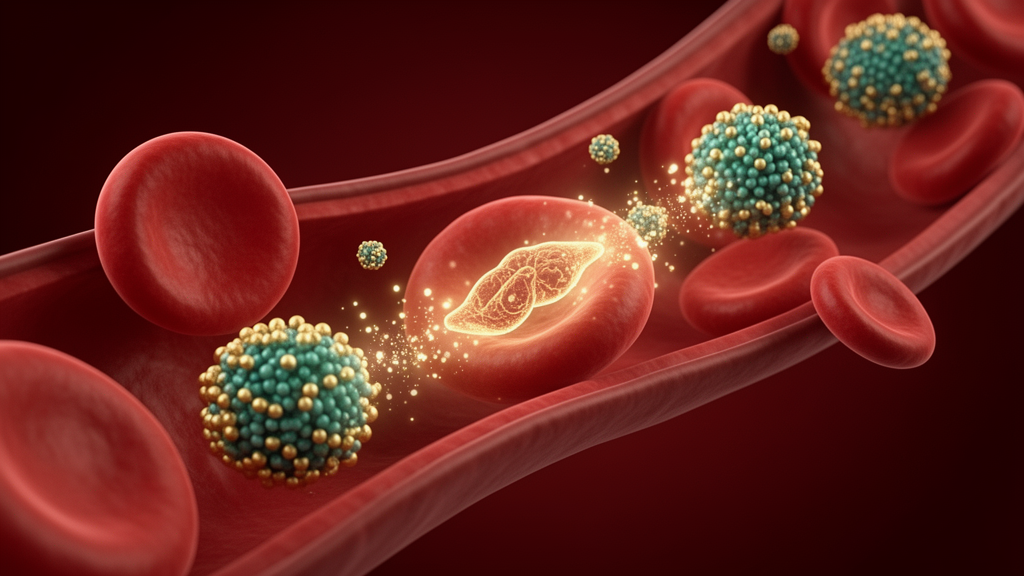
Malaria remains one of the most devastating infectious diseases on the planet. According to 2025 World Health Organization statistics cited in a new review, roughly 282 million cases and 610,000 deaths were recorded across 80 countries, with 95 percent of fatalities occurring in Africa and three quarters of those among children under five years old. Despite decades of progress in chemotherapy, mosquito control, and vaccines, the dream of global elimination keeps slipping away, largely because Plasmodium falciparum has evolved multidrug resistance and Anopheles mosquitoes have grown tolerant to the insecticides meant to kill them. Artemisinin-based combination therapies, the first-line treatment derived from the sweet wormwood plant Artemisia annua, are now showing partial resistance in parts of Africa and Southeast Asia, mirroring earlier failures with quinine-era drugs. A comprehensive review published in Frontiers in Malaria by Suresh Thangudu, Ganesh Gollavelli, and colleagues argues that the next leap forward may come not from a single new molecule, but from engineered materials thousands of times smaller than a red blood cell.
The concept at the heart of the review is theranostics, the fusion of therapy and diagnostics into a single nanoscale platform. Nanomaterials offer an unusual combination of properties: enormous surface-to-volume ratios, tunable surface chemistry, distinctive optical and magnetic behaviors, and the ability to be functionalized with drugs, antigens, or targeting ligands. The authors survey six major material families—metal nanoparticles, metal oxides, carbon-based structures, polymers, lipids, and hybrid composites—and find that each brings a different capability to the malaria fight. Gold nanoparticles, for example, exploit a phenomenon called localized surface plasmon resonance, in which collective oscillations of conduction electrons produce intense color changes when the particles encounter their molecular targets. That property has been turned into a remarkably simple diagnostic: researchers functionalized gold nanoparticles with oligonucleotides specific to the Plasmodium vivax MSP10 gene and used them to detect parasite DNA in urine, producing a visible color shift without any laboratory instrumentation. The assay achieved 84 percent sensitivity and 97 percent specificity, and because it uses urine rather than blood, it avoids the risks and discomfort of venipuncture in field settings.
Gold nanoparticles are also proving useful as drug carriers and vaccine vehicles. Ultra-small glucose-coated gold nanoclusters of roughly two nanometers selectively target cysteine-rich proteins expressed by P. falciparum across all intraerythrocytic stages, from ring forms to schizonts. When the antibiotic ciprofloxacin was conjugated to these clusters, its solubility, cellular uptake, and antiparasitic efficacy all improved compared with the free drug, while hemolytic toxicity toward red blood cells remained negligible. Separately, nanoparticles synthesized using extracts of the medicinal plant Senna auriculata showed potent activity against P. falciparum with an inhibitory concentration around 20 micrograms per milliliter and a selectivity index exceeding 400 micrograms per milliliter against normal human cells, suggesting that phytochemical-mediated synthesis can deliver both efficacy and biocompatibility. On the vaccination front, conjugating the transmission-blocking antigen Pfs25 to gold nanoparticles of varying shapes and sizes produced strong antibody responses in mice, outperforming soluble antigen formulations by promoting better uptake and processing by antigen-presenting cells.
Silver nanoparticles occupy a different niche: broad-spectrum biocidal action against both the parasite and its mosquito vector at comparatively low production cost. Their mechanism is multipronged. Released silver ions bind to parasite and larval cell membranes, disrupting integrity and letting essential metabolites leak out. Simultaneously, exposure raises intracellular reactive oxygen species by depleting antioxidant defenses such as glutathione, triggering apoptosis-like cell death involving caspase-3 and calpain activation and shifts in the Bax/Bcl-2 ratio. Silver ions also bind thiol and phosphate groups in proteins and nucleic acids, inactivating enzymes and fragmenting parasite DNA, with identified targets including the P. falciparum enzymes M18 aspartyl aminopeptidase and Pf12p. The potency can be striking: green-synthesized particles from Terminalia bellirica leaf extract inhibited P. falciparum 3D7 at an IC50 of 94.70 nanograms per milliliter, while Artemisia abrotanum-derived particles halted parasite maturation at the ring stage with an IC50 of just 0.05 micrograms per milliliter. The review’s authors, however, issue a pointed caution: several widely cited reports of silver nanoparticle larvicidal activity against Anopheles stephensi have been formally retracted, underscoring the need for independent validation before efficacy claims are accepted.
Iron oxide nanoparticles, principally magnetite and maghemite, may be the most clinically mature of the metal platforms, since some formulations are already approved as MRI contrast agents and iron replacement therapies. Their superparamagnetism allows external magnetic fields to steer drug-loaded particles toward infection sites without residual magnetization, and it enables a diagnostically elegant trick: the malaria parasite converts toxic heme from hemoglobin digestion into crystalline hemozoin, which is paramagnetic. Infected erythrocytes can therefore be pulled out of blood by high-gradient magnetic separation, a label-free enrichment method that sharpens detection when parasitemia falls below 50 to 100 parasites per microliter. Iron oxide platforms also potentiate artemisinin chemistry. In acidic conditions the particles release ferrous ions that catalyze cleavage of the drug’s endoperoxide bridge through Fenton-like reactions, generating parasite-killing radicals. One multifunctional system, heparin-coated magnetic hollow mesoporous ferrite nanoparticles loaded with artemisinin, accumulated selectively around infected red blood cells through interactions with paramagnetic hemozoin, sustained drug release, and simultaneously blocked merozoite invasion of healthy cells via multivalent binding, sharply lowering the effective dose of both drug and heparin.
Zinc oxide nanoparticles add a third metal-oxide option with the advantage of Generally Recognized as Safe status from the US Food and Drug Administration. Their wide bandgap drives photocatalytic generation of reactive oxygen species, while slow zinc ion release interferes with metabolic enzymes and appears to hinder hemozoin formation, causing toxic free heme to accumulate inside parasitized cells. Green-synthesized particles from plants such as Lagenaria siceraria and Rhazya stricta outperformed raw plant extracts against P. falciparum, and related formulations showed strong larvicidal effects against mosquito larvae by degrading midgut microvilli and disrupting epithelial integrity. A recent acorn-fruit-derived synthesis, confirmed by UV-Vis spectroscopy, FTIR, XRD, and electron microscopy, achieved larvicidal LC50 values of 13.6 parts per million against Culex quinquefasciatus, hinting at eco-friendly vector control tools that could ease the mounting crisis of insecticide resistance.
Carbon-based nanomaterials contribute extraordinary electronic and optical properties. Graphene oxide nanosheets physically adsorb merozoites and deplete nutrients from culture media, inhibiting P. falciparum invasion and delaying development from ring to trophozoite stages, while dry graphene layers have been shown to act as mechanical and molecular barriers that prevent mosquitoes from sensing skin chemicals and biting. In diagnostics, a graphene-enhanced surface plasmon resonance biosensor boosted malaria DNA detection sensitivity roughly 100-fold over conventional optical platforms, and carbon nanotube-based sensors have pushed limits further still. A flexible multi-walled carbon nanotube–zinc oxide nanofiber chemiresistive biosensor detected the malaria biomarker histidine-rich protein II across a range from 10 femtograms to 10 nanograms per milliliter, while carbon nanofiber immunosensors reached detection limits of 0.01 nanograms per milliliter with response times near one minute. Carbon dots, fluorescent quasi-spherical particles under ten nanometers, pair with DNA aptamers to detect parasite glutamate dehydrogenase down to 0.48 nanomolar, and nitrogen-doped variants selectively enter infected erythrocytes through malaria-induced permeability pathways, enabling high-contrast live-cell imaging with minimal uptake by healthy cells.
Polymeric and lipid nanocarriers tackle a persistent pharmacological problem: many antimalarials are poorly soluble, rapidly metabolized, and toxic at high doses. Biodegradable matrices made of PLGA, polylactic acid, chitosan, or gelatin protect cargo, extend circulation time, and release drugs gradually. Ingenious designs go beyond simple delivery. Single-chain polymer nanoparticles selectively attacked the ookinete stage of P. berghei inside the mosquito midgut, blocking transmission, while methoxybenzenesulfonate-functionalized biopolymer nanoparticles prevented cytoadherence of infected red blood cells, reducing the microvascular sequestration and inflammation that make severe malaria lethal. A quinine-loaded chitosan-polycaprolactone core-shell system cut the IC50 in chloroquine-resistant strains from 130 to 33 nanograms per milliliter, and microarray patches delivering primaquine and chloroquine transdermally boosted chloroquine exposure 4.4-fold by bypassing first-pass hepatic metabolism. On the lipid side, liposomes encapsulating the insoluble drug decoquinate achieved better than 95 percent entrapment efficiency and complete parasitemia clearance in mice, while nanostructured lipid carriers, which blend solid and liquid lipids into an amorphous matrix, improved oral bioavailability of artemether-lumefantrine nearly fourfold over conventional formulations.
The review is candid about the distance between laboratory promise and bedside reality. The same reactivity that kills parasites can damage mammalian cells at higher concentrations; silver and zinc oxide particles carry dose-dependent cytotoxic and ecotoxic risks, especially for aquatic organisms; nanoparticles aggregate in biological fluids and degrade in tropical heat and humidity; and the protein corona that forms in plasma can mask targeting ligands and accelerate clearance. Manufacturing consistency, scalable synthesis, standardized characterization, and regulatory frameworks are all lacking, and most evidence remains confined to in vitro experiments and mouse models. The authors see artificial intelligence as a force multiplier, with convolutional neural networks already improving microscopy-based diagnosis and machine learning poised to optimize formulation design and personalize therapy. Their prescription for the field is hybridization: multifunctional, stimuli-responsive nanocomposites that merge the sensing power of gold and carbon materials, the magnetic control of iron oxide, and the delivery finesse of lipids and polymers, all validated in clinically relevant models. If that integration succeeds, the humble nanoparticle could become the platform on which malaria’s diagnosis, treatment, and prevention finally converge.
Subject of Research: Nanotheranostic nanomaterials for malaria diagnosis, drug delivery, vaccination, and vector control
Article Title: Advanced nanomaterials for malaria theranostics
Article References: Thangudu, S., Nuthalapati, K., Patra, C., Kamble, G., Korupalli, C., & Gollavelli, G. (2026). Advanced nanomaterials for malaria theranostics. Frontiers in Malaria, 4, Article 1925644. https://doi.org/10.3389/fmala.2026.1925644
Image Credits: AI Generated
DOI: 10.3389/fmala.2026.1925644
Keywords: malaria, nanotechnology, theranostics, gold nanoparticles, silver nanoparticles, iron oxide nanoparticles, zinc oxide, graphene, carbon dots, liposomes, drug delivery, artificial intelligence
Cite Scienmag News
Ophelia Keating. (October 15, 2026). Nanoparticles Bring Diagnosis and Treatment of Malaria Together in One Platform. Scienmag. https://scienmag.com/nanoparticles-bring-diagnosis-and-treatment-of-malaria-together-in-one-platform/
Ophelia Keating. "Nanoparticles Bring Diagnosis and Treatment of Malaria Together in One Platform." Scienmag, 15 October 2026, https://scienmag.com/nanoparticles-bring-diagnosis-and-treatment-of-malaria-together-in-one-platform/. Accessed 15 October 2026.
Ophelia Keating. "Nanoparticles Bring Diagnosis and Treatment of Malaria Together in One Platform." Scienmag. October 15, 2026. https://scienmag.com/nanoparticles-bring-diagnosis-and-treatment-of-malaria-together-in-one-platform/


