


When a 1,035-kilometre railway cuts through dengue-endemic territory linking Kunming in southwest China with Vientiane in Laos, the mosquitoes, infected travelers, and disease risks move just as freely as the freight and passengers. The China–Laos Railway, a flagship corridor of China’s Belt and Road Initiative, was built to accelerate trade and connectivity, but it also created what public health researchers call a shared epidemiological space, a zone in which pathogens ignore national borders and health protection depends on coordination among institutions that were never designed to cooperate. A commentary published on 28 September 2026 in Public Health Reviews examines how this coordination actually happens, arguing that the most important diplomatic work along the railway was not conducted in ministerial meeting rooms but in station waiting halls, hospital laboratories, and flooded villages of northern Laos.
The authors, led by Emily Ying Yang Chan of the Collaborating Centre for Oxford University and the Chinese University of Hong Kong for Disaster and Medical Humanitarian Response and the Jockey Club School of Public Health and Primary Care at the Chinese University of Hong Kong, together with Dong Dong and Chun-ying Leung, draw a sharp conceptual distinction between two layers of health diplomacy. Global health diplomacy, the better-known term, refers to the negotiation of health interests through foreign policy, international relations, and global governance. It explains how states sign agreements, mobilize resources, and fold health objectives into strategic agendas such as the Health Silk Road, the component of the Belt and Road Initiative that seeks to strengthen health cooperation and healthcare infrastructure worldwide. Public health diplomacy, by contrast, is the lens the authors apply to the practical, often unglamorous negotiations through which public health capacity and resilience are actually built on the ground by sub-state and non-state actors working in hospitals, communities, transport systems, and emergencies.
The case at the center of the analysis is the work of GX Foundation, a Hong Kong-based humanitarian organization established in 2018 that delivers international medical and humanitarian assistance through partnerships emphasizing what the authors call people-to-people connectivity. Since 2020, GX has worked under Lao national and provincial health authorities, together with the Laos–China Railway Company, railway personnel, and local stakeholders, to embed dengue prevention directly into railway operations using a Health Emergency and Disaster Risk Management approach. The initiative illustrates public health diplomacy as the cross-border mobilization of non-state and sub-state actors: the formal China–Laos engagement provided legitimacy and channels of communication, but it left open precisely how prevention would operate at any individual station along the corridor.
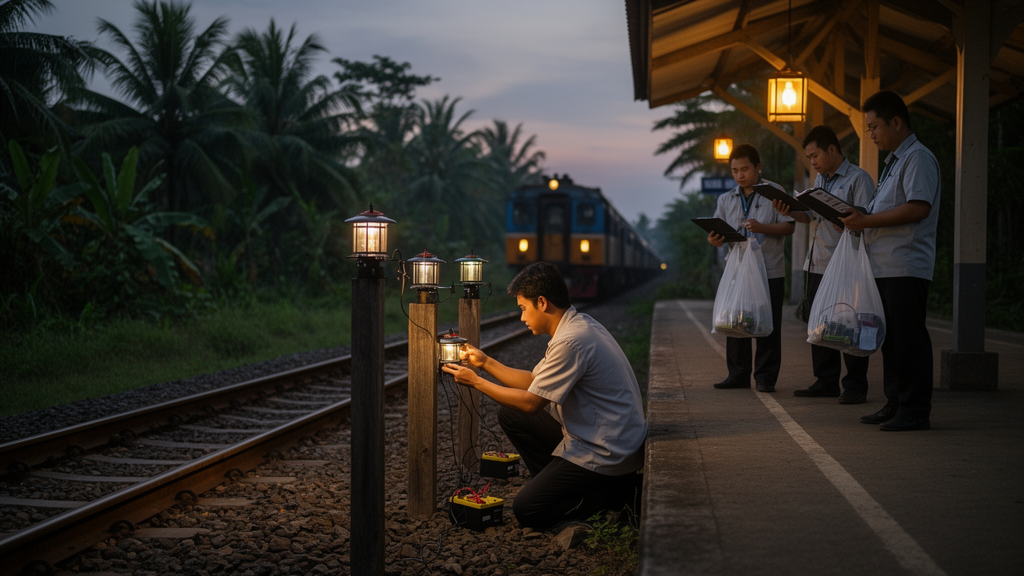
That implementation gap is where the real diplomacy occurred, and the commentary is emphatic that filling it required negotiation rather than simple equipment delivery. Someone had to determine where mosquito-killing lamps should be installed, who would maintain them, how railway staff would participate, and how prevention messages would reach a population of commuters and long-distance travelers. The railway company contributed infrastructural access, operational knowledge, and logistics; Chinese and Lao personnel adapted interventions to the specific layouts of stations and their patterns of mosquito exposure; and passengers and communities engaged through risk communication and preventive activities. Site selection followed passenger volume, existing coverage, and exposure to cross-border movements, while measures were adjusted to station layouts, staff routines, and the availability of electricity. Monitoring even revealed a counterintuitive detail about health messaging: posters worked well for railway staff who encountered them repeatedly, but far less effectively for transient passengers who passed through once.
The scale of the program, documented in a 2026 special report on managing dengue risk along the Laos–China railway, is considerable. By July 2024, 871 mosquito-killing lamps had been deployed across all 29 stations along the corridor, 511 on the Chinese side and 360 in Laos, positioned in waiting halls, ticketing areas, washrooms, platforms, offices, and staff accommodation. Monitoring at six locations, combined with 60 interviews and 1,243 survey responses from railway staff, informed ongoing maintenance and adaptation of the interventions. High satisfaction scores and demonstrated preventive behaviors indicated that participation went well beyond passive equipment coverage. Over the following 12 months, no dengue infections were reported among railway staff, an observational finding the authors are careful to qualify as incapable of establishing causation. Still, strong acceptance of the program contributed to a two-year renewal of the partnership in 2025.
The most striking result of this routine cooperation, according to the commentary, emerged in September 2024, when Typhoon Yagi triggered severe flooding in Luang Namtha province in northern Laos. GX’s capacity to respond quickly did not arise from a linear expansion of its dengue-control activities but from the existing, overlapping relationships of health cooperation that had been built along the railway. Assessments conducted by GX and local health partners identified an elevated risk of post-flood dengue transmission, while the flooding also damaged the laboratory facilities of Namtha District Hospital, weakening the region’s ability to diagnose cases and refer patients. Under the oversight of provincial and national health authorities, GX launched a four-month effort, Project X, supplying vector-control materials and laboratory equipment to restore diagnostic and disease-control capacity.
Project X is the authors’ clearest demonstration of what they term diplomatic infrastructure, the latent emergency-response capacity embedded in relationships formed through ordinary, preventive cooperation. Rather than creating an emergency partnership from scratch, the operation mobilized existing networks: authorities set priorities and retained oversight; hospital personnel identified the specific support needed to resume testing and referrals; and GX drew on Chinese and Lao networks to mobilize supplies, diagnostic equipment, and implementation support. Local health workers and communities extended surveillance and prevention beyond the hospital itself, expanding diagnostic coverage from approximately 20 villages to 78 during the intervention. Health facilities identified clinical needs while local partners contributed contextual knowledge, and the railway corridor itself served as a delivery route for assistance, meaning that the resilience of the physical infrastructure and the resilience of the human networks surrounding it reinforced each other.
From these two cases, the authors derive three implications for the field. First, implementation should be recognized as a distinct diplomatic site in its own right, because negotiation does not end when an agreement is signed; it continues as commitments are interpreted, adapted, and operationalized, and sometimes resisted, by the actors who must carry them out. Second, non-state actors such as humanitarian foundations function as boundary-spanning intermediaries among health authorities, infrastructure operators, diplomatic institutions, and communities, and their value lies not only in delivering resources but in translating priorities across institutional cultures and building local ownership of health problems. Third, evaluation frameworks should extend beyond immediate outputs like equipment counts to encompass relationships, trust, and coordination capacities, which are the assets that determine whether a system can respond when a crisis arrives.
The commentary is equally clear about what public health diplomacy is not. It should not be conflated with mere communication or routine program coordination; it becomes necessary precisely when actors must reconcile different interests, mandates, kinds of expertise, and control over scarce resources, and when the negotiations touch on infrastructure access, responsibility for maintenance, adaptation of interventions, and the integration of local knowledge. The authors caution that NGO–enterprise partnerships of this kind work best when roles are transparent, financing supports continuity rather than one-off projects, and activities strengthen rather than bypass public institutions, with equitable involvement of local authorities and communities in decisions promoting both ownership and responsiveness. Conceptually distinct but practically complementary, global health diplomacy and public health diplomacy form a single arc: the Health Silk Road conjoins health objectives with national strategy and international relations at the highest level, while the experience along the China–Laos Railway shows how those ambitions become practice through shared problem-solving, one station, one laboratory, and one flooded village at a time. Understood this way, public health diplomacy is not a softer supplement to statecraft but an ethical, accountable form of it, one whose ultimate measure is whether the people living and moving along the world’s newest corridors are measurably safer from the diseases that travel with them.
Subject of Research: Public health diplomacy and dengue prevention along the China–Laos Railway under the Health Silk Road
Article Title: Keeping it simple: public health diplomacy along the China–Laos railway
Article References: Chan, E. Y. Y., Dong, D., & Leung, C.-Y. (2026). Keeping it simple: public health diplomacy along the China–Laos railway. Public Health Reviews, 47, Article 1610119. https://doi.org/10.3389/phrs.2026.1610119
Image Credits: AI Generated
DOI: 10.3389/phrs.2026.1610119
Keywords: public health diplomacy, global health diplomacy, China–Laos Railway, Belt and Road Initiative, Health Silk Road, dengue fever, vector control, GX Foundation, disaster risk management, Typhoon Yagi, Laos, humanitarian response
Cite Scienmag News
Ophelia Keating. (October 15, 2026). Mosquito Lamps on a Railway: How Health Diplomacy Gets Done on the Ground. Scienmag. https://scienmag.com/mosquito-lamps-on-a-railway-how-health-diplomacy-gets-done-on-the-ground/
Ophelia Keating. "Mosquito Lamps on a Railway: How Health Diplomacy Gets Done on the Ground." Scienmag, 15 October 2026, https://scienmag.com/mosquito-lamps-on-a-railway-how-health-diplomacy-gets-done-on-the-ground/. Accessed 15 October 2026.
Ophelia Keating. "Mosquito Lamps on a Railway: How Health Diplomacy Gets Done on the Ground." Scienmag. October 15, 2026. https://scienmag.com/mosquito-lamps-on-a-railway-how-health-diplomacy-gets-done-on-the-ground/


