


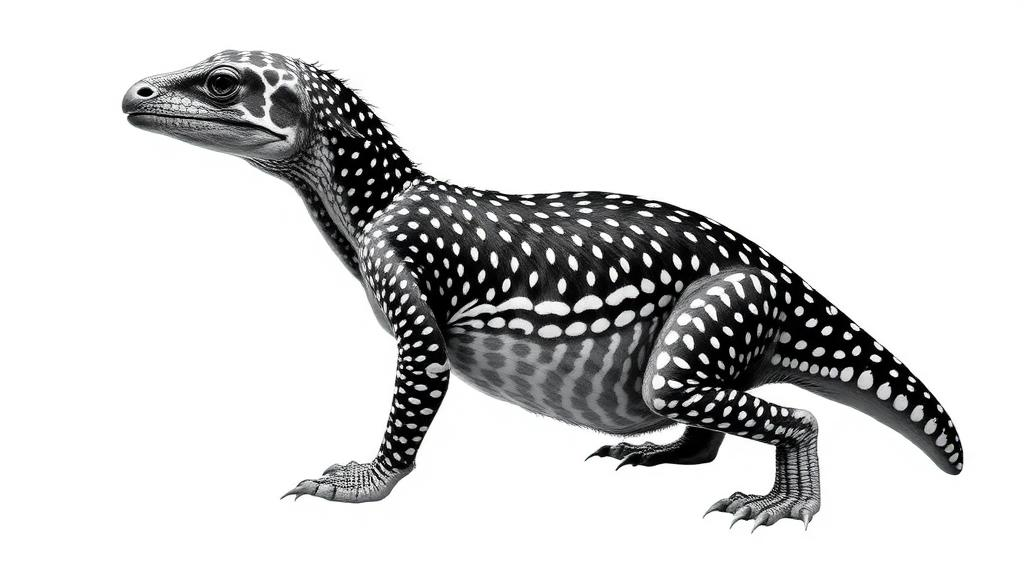
Veterinarians in Portugal have documented one of the rarest cancers ever seen in a tegu lizard: an oviductal adenocarcinoma, a malignant tumor of the reproductive tract, in an adult female Argentine black and white tegu (Salvator merianae). The case, reported by a team at the Wildlife Rehabilitation Centre of the Veterinary Teaching Hospital at the University of Trás-os-Montes e Alto Douro together with Zoo da Maia, is described in Frontiers in Amphibian and Reptile Science. It is believed to be the first published account of the clinical, imaging, surgical, gross pathological, and histopathological findings of this tumor type in the species, expanding a literature that remains remarkably thin for one of the most popular large lizards in captivity.
The tegu, estimated to be roughly 18 years old and weighing 2.8 kilograms, arrived from a zoological collection with a history that will sound familiar to anyone who has watched a reptile hide an illness: more than six months of progressive distension of the coelomic cavity, the lizard equivalent of the abdomen, paired with anorexia. Because reptiles can accommodate large internal masses without obvious discomfort, such tumors often remain clinically silent until they reach advanced stages. On physical examination the animal was in poor body condition, mildly dehydrated, and had pale mucous membranes. Palpation revealed a firm, oval mass in the cranial medial coelomic region, adjacent to the liver, measuring approximately five centimeters in diameter. Blood work showed a microhematocrit of 25.7 percent, slightly below the reported reference interval for the species, and a blood smear revealed increased erythrocyte polychromasia, supporting a mild regenerative anemia. Serum biochemistry values were within normal limits.
Diagnostic imaging began without sedation. Radiographs in lateral and dorsoventral projections, obtained at 44 kV and 4 mAs, showed marked diffuse coelomic distension caused by a large homogeneous soft-tissue opacity occupying most of the mid and caudal coelomic cavity, displacing the gastrointestinal structures and obscuring normal anatomy. Ultrasonography using a LOGIQ P9 Vet system with a 6S transducer at 5 MHz revealed a heterogeneous, mixed echogenic structure with small hypoechoic to anechoic areas suggestive of fluid within a soft-tissue matrix, along with free fluid in the mid-caudal coelomic cavity. Approximately 40 milliliters of dark red fluid was drained, and a repeat radiograph immediately afterward demonstrated reduced distension and improved visualization. Cytology of that fluid showed predominantly erythrocytes with a small number of inflammatory cells, while aspiration of a cystic component of the mass yielded about 20 milliliters of greenish fluid that was acellular with lipid droplets. Neither sample was diagnostic, a limitation frequently encountered in reptile oncology because of low cellular exfoliation in body cavity effusions.
Computed tomography then provided the most detailed map of the lesion. Scans were acquired with a Revolution ACT 16-slice scanner at 120 kVp and 70 mA, with a rotation time of 1.2 seconds and a spiral pitch factor of 0.5625, reconstructed at a slice thickness of 1.25 millimeters. Pre-contrast images were followed by intravenous iohexol at 300 milligrams of iodine per milliliter, 3 milliliters per kilogram, delivered through the ventral tail vein, with post-contrast acquisitions taken immediately and at 2.5 and 5 minutes. CT identified two well-defined cystic lesions: the larger occupied the left side of the coelomic cavity, extended to the left body wall, and contained an intralesional soft-tissue component, while a smaller cyst containing homogeneous fluid sat on the right. The mass effect displaced the viscera ventrally and pushed the gas-filled colon rightward. Notably, comparison of pre- and delayed post-contrast images showed no appreciable enhancement of the cyst walls or the soft-tissue component, even though adjacent organs enhanced normally. During CT staging, the lungs, liver, kidneys, and other visible organs were systematically evaluated, and no lesions suggestive of metastasis were identified.
Exploratory coeliotomy followed. Premedication with midazolam and morphine was induced 20 minutes later with intravenous propofol and maintained with 2 percent isoflurane in oxygen after endotracheal intubation. Positioned in dorsal recumbency, the tegu underwent a paraventral coeliotomy of about five centimeters under aseptic conditions. The cystic mass was carefully exteriorized and found to be anatomically associated with the reproductive tract, and an ovariosalpingectomy was performed. Interestingly, the two cystic lesions seen separately on CT proved to be distinct cystic components of the same reproductive-tract lesion, removed en bloc. Representative samples from both cystic components and the solid nodular regions were submitted for histopathology.
Gross examination revealed a mass of approximately 15 by 5 centimeters with a smooth to mildly nodular external surface and heterogeneous coloration. On sectioning, the tissue was thin and fragile, releasing about 30 milliliters of dark red fluid, and the cut surface showed a partially cavitated structure with multiple cystic spaces. An organized blood clot within the cavity pointed to chronic hemorrhage, and multifocal regions of necrosis and hemorrhage were suspected from the variable coloration and texture. Multiple round, firm, white to yellow-white nodules ranging from 0.5 to 2.0 centimeters in diameter were embedded in the wall of the mass. The tissue was fixed in 10 percent neutral buffered formalin, processed into four paraffin blocks, sectioned at 3 micrometers, and stained with hematoxylin and eosin, yielding six histological sections for examination.
Under the microscope, the mass proved to be an unencapsulated, infiltrative epithelial neoplasm that extensively replaced the oviductal wall and extended through its full thickness. Neoplastic cells were arranged in variably sized tubules and acini, nests, cords, and papillary projections supported by a delicate fibrovascular stroma. Individual cells were polygonal with moderate eosinophilic cytoplasm, and their round to elongate nuclei had vesicular chromatin and generally one prominent nucleolus. Mitotic activity ranged from 1 to 10 mitotic figures per high-power field, assessed with a 40x objective corresponding to a field area of 0.196 square millimeters. Extensive areas of intralesional necrosis and hemorrhage were present, occasionally associated with cholesterol clefts. Critically, neoplastic cells were identified within the lumina of multiple blood vessels, consistent with multifocal vascular invasion, a histological hallmark of malignant biological potential. No recognizable residual normal oviductal epithelium was present, so direct continuity between normal epithelium and the neoplasm could not be demonstrated; nevertheless, the surgical association of the mass with the reproductive tract and its infiltrative tubular, acinar, and papillary differentiation supported an oviductal origin.
Postoperatively, the tegu received meloxicam at 0.4 milligrams per kilogram intramuscularly every 24 hours for five days and marbofloxacin at 10 milligrams per kilogram orally every 48 hours for ten days, the antimicrobial chosen for its expected bacterial spectrum and longer dosing interval, which reduced handling stress in this aggressive animal. The recovery was striking: the animal regained its appetite, gained weight, and became more active. At three months after surgery, follow-up ultrasonography of the surgical region and visible coelomic organs, including the liver, heart, kidney, and gastrointestinal tract, along with radiography of the coelomic cavity and pulmonary fields, found no detectable evidence of local recurrence or metastatic disease.
The case carries broader significance for reptile medicine. Oviductal adenocarcinoma has been reported only infrequently in reptiles, most notably in a series of five captive snakes in which the tumors showed papillary and infiltrative growth, frequently extending transmurally through the oviductal wall, with prominent hemorrhage and necrosis, findings that closely resemble the present case. In those snake cases, however, histological evidence of metastatic spread was identified, including vascular tumor emboli and metastases to visceral organs. In the tegu, vascular invasion was present histologically but no imaging-detectable metastatic disease was found during the three-month follow-up. The authors emphasize that the relatively short follow-up period and the presence of vascular invasion preclude definitive conclusions about long-term biological behavior and support a guarded prognosis. Proposed contributing factors for reproductive neoplasms in reptiles include chronic inflammation, hormonal influences, environmental conditions, and increased lifespan under captive management, where improved husbandry and veterinary care may contribute to detection of neoplastic conditions that would otherwise go unrecognized in wild populations. Immunohistochemistry was not performed, which the authors acknowledge as a limitation, though it could have provided additional support for the epithelial phenotype of the neoplasm.
For veterinarians and keepers, the message is clear. In female reptiles, progressive coelomic distension carries a long differential diagnosis, including follicular stasis, egg retention, oviductal disease, salpingitis, coelomic effusion, abscessation, granulomatous inflammation, hematoma, hepatic enlargement, gastrointestinal disease, and neoplasia. In this case, imaging and cytology were insufficient for a definitive diagnosis, and histopathology was required to confirm oviductal adenocarcinoma. Surgical excision remains the primary treatment for localized neoplasms in reptiles, and this tegu’s favorable short-term outcome, despite the large size and invasive nature of the mass, suggests that surgical intervention can meaningfully improve clinical status. Still, adenocarcinomas are considered potentially aggressive, and the authors call for longer follow-up before drawing conclusions about prognosis. The report adds to a growing body of evidence that neoplasia in reptiles may occur more frequently than previously recognized, and it underscores the value of multimodal diagnostics, from radiography and ultrasonography to computed tomography and histopathology, in unraveling the mysteries of coelomic distension in lizards.
Subject of Research: Oviductal adenocarcinoma in an Argentine black and white tegu
Article Title: Case Report: Oviductal adenocarcinoma in an Argentine black and white tegu (Salvator merianae): clinical, imaging, surgical, and histopathological findings
Article References: Garcês, A., Sargo, R., Sousa, L., Cardoso, C., Monteiro, L., Silva, D., Alvura, N., Prada, J., & Silva, F. (2026). Case Report: Oviductal adenocarcinoma in an Argentine black and white tegu (Salvator merianae): clinical, imaging, surgical, and histopathological findings. Frontiers in Amphibian and Reptile Science, 4, Article 1961795. https://doi.org/10.3389/famrs.2026.1961795
Image Credits: AI Generated
DOI: 10.3389/famrs.2026.1961795
Keywords: Salvator merianae, tegu lizard, oviductal adenocarcinoma, reptile oncology, reproductive tract neoplasia, coelomic distension, computed tomography, ovariosalpingectomy, histopathology, vascular invasion, Case, Report
Cite Scienmag News
Nathaniel Bowman. (October 15, 2026). Rare cancer of the reproductive tract documented in an Argentine black and white tegu. Scienmag. https://scienmag.com/rare-cancer-of-the-reproductive-tract-documented-in-an-argentine-black-and-white-tegu/
Nathaniel Bowman. "Rare cancer of the reproductive tract documented in an Argentine black and white tegu." Scienmag, 15 October 2026, https://scienmag.com/rare-cancer-of-the-reproductive-tract-documented-in-an-argentine-black-and-white-tegu/. Accessed 15 October 2026.
Nathaniel Bowman. "Rare cancer of the reproductive tract documented in an Argentine black and white tegu." Scienmag. October 15, 2026. https://scienmag.com/rare-cancer-of-the-reproductive-tract-documented-in-an-argentine-black-and-white-tegu/


