


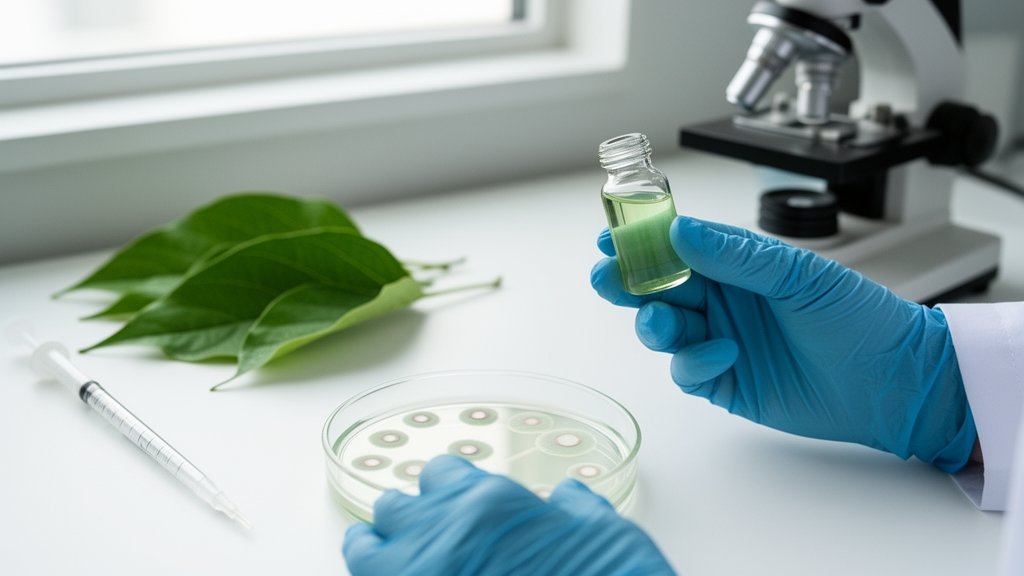
Deep in the Adolpho Ducke Forest Reserve near Manaus, Brazil, a little-studied Amazonian shrub is quietly offering a possible answer to one of modern medicine’s most urgent problems. Researchers at the Federal University of Amazonas have extracted the essential oil from the leaves of Piper brachypetiolatum, a species of the Piperaceae family, and found that it not only inhibits two of the most clinically important resistant bacteria on Earth, Staphylococcus aureus and Escherichia coli, but can also restore the killing power of antibiotics to which those bacteria had already become resistant. The findings, published in Frontiers in Natural Products, arrive at a moment when the World Health Organization ranks antimicrobial resistance among the gravest threats to public health, and they suggest that the chemical arsenal of the Amazon rainforest may hold compounds capable of turning the tide against drug-defiant pathogens.
The research team, led by João Victor Calixto O. Santos and Rita C. S. Nunomura, collected leaves of P. brachypetiolatum from the reserve and subjected them to hydrodistillation in a classic Clevenger apparatus for four hours, using 294 grams of dried leaves and three liters of distilled water. The process yielded an essential oil at 0.85 percent by weight, a modest but workable extraction rate. What emerged from the distillation flask was a complex volatile mixture dominated by sesquiterpenes, a class of fifteen-carbon terpenoid molecules built from three isoprene units and known for their diverse biological activities. Gas chromatography coupled to mass spectrometry and gas chromatography with flame ionization detection revealed eleven identifiable compounds, with the oxygenated sesquiterpenes (E)-nerolidol at 24.51 percent and hinesol at 23.55 percent standing out as the two most abundant constituents.
The chemical profile is significant because both (E)-nerolidol and hinesol belong to the oxygenated sesquiterpene class, a group of molecules whose polar hydroxyl or epoxide groups allow them to interact with biological membranes more readily than their purely hydrocarbon counterparts. Previous studies have identified (E)-nerolidol as a key mediator of antibacterial action, and research by De Moura and colleagues showed that this sesquiterpene alcohol exhibits antibacterial activity against antibiotic-resistant strains, along with antioxidant and antibiofilm properties. The presence of β-caryophyllene, caryophyllene oxide, and bisabolene in the oil adds further layers of potential bioactivity, as these compounds have been linked to antimicrobial, anti-inflammatory, and even antineoplastic effects in studies of copaiba oil. The essential oil also contained smaller amounts of butyl acetate, limonene, bornyl acetate, copaene, muurolene, curcumene, and β-selinene, rounding out a profile in which sesquiterpenes constituted roughly 45 percent and oxygenated sesquiterpenes roughly 36 percent of the total volatile fraction.
To test the oil’s antimicrobial credentials, the researchers turned to two bacterial strains from the CBAM Amazônia collection that had already demonstrated resistance to multiple antibiotics. The Staphylococcus aureus strain, designated CBAM 324, showed resistance to erythromycin, azithromycin, and gentamicin, along with intermediate susceptibility to clindamycin. The Escherichia coli strain, CBAM 02, was resistant to aztreonam, a β-lactam antibiotic that works by binding to penicillin-binding proteins and blocking peptidoglycan synthesis in the bacterial cell wall. These resistance profiles were confirmed through standardized agar disk diffusion testing following Clinical and Laboratory Standards Institute guidelines, in which bacterial suspensions are spread onto Mueller-Hinton agar and antibiotic-impregnated disks are placed on the surface before incubation at 35 degrees Celsius for 24 hours.
When the essential oil itself was tested using a well diffusion assay, in which 50 microliters of a 2 milligram per milliliter stock solution were added to wells cut into the agar, the results were striking. Against the resistant S. aureus strain, the oil produced a mean inhibition zone of 17 millimeters, and against the resistant E. coli strain, it generated a mean zone of 13 millimeters. Both values fall within the range that CLSI-based classifications consider indicative of sensitivity for essential oils. The minimum inhibitory concentration, determined by broth microdilution in 96-well plates with serial dilutions ranging from 2,000 down to 62.5 micrograms per milliliter, was 2 milligrams per milliliter for both organisms. While this MIC is relatively high compared with conventional antibiotics, the researchers note that essential oils are complex mixtures of secondary metabolites whose biological activity often results from the combined action of multiple components acting simultaneously on different cellular targets, a phenomenon known as multitarget or synergistic effect.
The most dramatic results emerged from the modulatory activity assays, in which the essential oil was combined with the very antibiotics to which the strains were resistant. When 50 microliters of the oil solution were added to disks containing aztreonam at 30 micrograms and the combination was tested against the resistant E. coli strain, the inhibition zone ballooned to 30 millimeters, more than doubling the activity that either agent could achieve alone. Similarly, when the oil was paired with gentamicin at 10 micrograms against the resistant S. aureus strain, the inhibition zone reached 19 millimeters, a clear synergistic effect. These findings suggest that the essential oil somehow potentiates the action of the antibiotics, possibly by compromising bacterial membrane permeability and integrity through the action of β-caryophyllene and other membrane-active components, thereby interfering with resistance mechanisms such as efflux pumps and allowing the drugs to reach their intracellular targets more effectively.
Not every combination produced a happy outcome, however. When the essential oil was paired with erythromycin at 15 micrograms or azithromycin at 15 micrograms against the resistant S. aureus strain, the inhibition zones measured zero millimeters, indicating that these macrolide antibiotics actually suppressed the antimicrobial activity that the oil had demonstrated on its own. The researchers interpret this as an antagonistic interaction, one in which the presence of the macrolides somehow interferes with the oil’s ability to inhibit bacterial growth. This finding is a sobering reminder that naturally derived compounds can modulate conventional antimicrobials in either direction, and that the therapeutic promise of any combination must be evaluated case by case rather than assumed.
The implications of the synergistic findings are considerable. If an essential oil can restore the activity of an antibiotic to which a bacterium has become resistant, the therapeutic consequences include the possibility of using reduced dosages of existing drugs, minimizing their adverse effects, and delaying the further development of bacterial resistance. The mechanism behind the synergy remains to be fully elucidated, but the researchers propose that β-caryophyllene may act by altering cell membrane permeability and integrity, thereby increasing bacterial susceptibility to antimicrobials and enhancing their activity. Studies of other essential oils containing this compound have shown similar antibiotic-potentiating effects, supporting the idea that membrane-disrupting terpenoids can serve as resistance-reversal agents when paired with conventional drugs.
What makes the study particularly notable is that P. brachypetiolatum remains a chemically and biologically underexplored species, with literature on its properties still scarce. Previous work had already shown that its essential oil, dominated by (E)-nerolidol, possesses larvicidal potential against Aedes aegypti mosquitoes without causing toxic effects on non-target organisms, suggesting environmental safety. The current findings extend the biotechnological portfolio of this Amazonian shrub into the antibacterial arena, reinforcing the broader pattern that species of the genus Piper, including P. nigrum, P. aduncum, P. marginatum, P. hispidinervum, and P. tuberculatum, are rich sources of volatile oils with antimicrobial activity against diverse pathogenic microorganisms. The Amazon region, home to an extraordinary diversity of aromatic plants, continues to reveal species whose volatile chemistry may prove invaluable in the fight against drug-resistant infections.
The researchers caution that further studies are needed to clarify the mechanism of action of the essential oil and to evaluate its activity against additional resistant strains. They also emphasize that the antagonistic interaction with macrolides demonstrates that combinations of natural products and conventional antibiotics must be carefully assessed before any clinical application. Nevertheless, the demonstration that a single Amazonian leaf oil can both directly inhibit resistant bacteria and synergistically potentiate the action of aztreonam and gentamicin represents a promising step toward new therapeutic strategies against two of the most clinically important pathogens in the world. As antimicrobial resistance continues to erode the effectiveness of the antibiotic arsenal, the volatile chemistry of the rainforest may offer compounds that help preserve the drugs humanity still has, turning the deep green canopy of the Amazon into an unexpected ally in the battle against drug-defiant microbes.
Subject of Research: Antimicrobial and modulating action of the essential oil from the leaves of Piper brachypetiolatum Yunck (Piperaceae) against Staphylococcus aureus and Escherichia coli
Article Title: Antimicrobial and modulating action of the essential oil from the leaves of Piper brachypetiolatum Yunck (Piperaceae) against Staphylococcus aureus and Escherichia coli
Article References: Santos, J. V. C. O., Leocádio, B. R. C., de Oliveira, A. C., Ramos, H. G., Nunomura, S. M., de Souza, A. Q., & C. S. Nunomura, R. (2026). Antimicrobial and modulating action of the essential oil from the leaves of Piper brachypetiolatum Yunck (Piperaceae) against Staphylococcus aureus and Escherichia coli. Frontiers in Natural Products, 5, Article 1915329. https://doi.org/10.3389/fntpr.2026.1915329
Image Credits: AI Generated
DOI: 10.3389/fntpr.2026.1915329
Keywords: Antimicrobial, modulating, action, essential, leaves, Piper, brachypetiolatum, Yunck, Piperaceae, against, Staphylococcus, aureus
Cite Scienmag News
Naomi Webster. (October 15, 2026). Amazonian leaf oil shows surprising power against antibiotic-resistant bacteria. Scienmag. https://scienmag.com/amazonian-leaf-oil-shows-surprising-power-against-antibiotic-resistant-bacteria/
Naomi Webster. "Amazonian leaf oil shows surprising power against antibiotic-resistant bacteria." Scienmag, 15 October 2026, https://scienmag.com/amazonian-leaf-oil-shows-surprising-power-against-antibiotic-resistant-bacteria/. Accessed 15 October 2026.
Naomi Webster. "Amazonian leaf oil shows surprising power against antibiotic-resistant bacteria." Scienmag. October 15, 2026. https://scienmag.com/amazonian-leaf-oil-shows-surprising-power-against-antibiotic-resistant-bacteria/


