


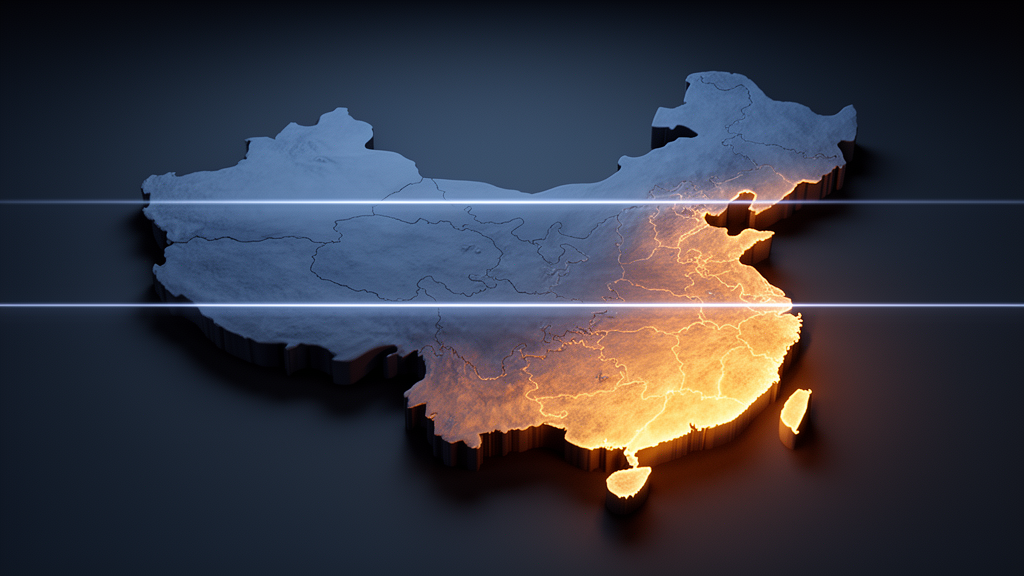
When a pandemic, an earthquake, or a chemical spill overwhelms a region’s health system, the difference between a managed emergency and a catastrophe often comes down to a quality that researchers call public health resilience: the capacity of a health system to absorb shocks, keep functioning, and recover quickly. A new study published in BMC Health Services Research offers one of the most detailed quantitative portraits yet of how that resilience is distributed across China’s 31 provincial-level regions, and the picture it paints is strikingly uneven. Led by Jian’an Han and Chichen Zhang of Southern Medical University in Guangzhou, the research team built a dual-dimensional assessment framework that measures not only what each province’s health system can do, but also the economic and environmental constraints under which it must operate. The results reveal a pronounced east-strong, west-weak gradient, two sharp nonlinear thresholds in how economic capacity translates into resilience, and a transmission pathway in which nearly half of the effect of economic development on resilience flows through the allocation of health resources.
The study’s central methodological innovation lies in refusing to treat resilience as a purely internal property of health systems. Most previous assessments, the authors note, have focused on system capacities alone, drawing on frameworks such as the World Health Organization’s health system building blocks or the Global Health Security Index. But a province’s ability to prevent outbreaks, protect its population, and respond to emergencies is inevitably shaped by how much fiscal room it has and by the environmental pressures it faces, from pollution loads to resource depletion. The team therefore combined a prevention-protection-emergency capability chain with economic and environmental dual constraints, constructing standardized and synthesized indicators from official provincial statistics for 2020 through 2022, including the China Statistical Yearbook, the China Health Statistical Yearbook, and the China Environmental Statistical Yearbook. Because the analysis relied exclusively on publicly available, aggregated data with no human participants, the study was exempt from ethics review under Chinese national guidelines.
To weigh the many indicators fairly, the researchers applied the CRITIC method, short for Criteria Importance Through Intercriteria Correlation, which assigns weights based on both the contrast intensity of each indicator and its correlations with the others, reducing the subjectivity that plagues expert-driven weighting schemes. The resulting provincial public health resilience indices were then subjected to a battery of spatial and econometric techniques. Spatial autocorrelation analysis tested whether neighboring provinces tend to resemble one another, panel regression with fixed effects isolated the drivers of resilience over time, Bootstrap mediation tests quantified the indirect pathway from economic level through resource allocation to resilience, and pressure-response threshold modeling searched for nonlinear breakpoints in the relationship between environmental pressure and system performance. Model selection between competing specifications was guided by standard information criteria, including the Akaike Information Criterion and the Bayesian Information Criterion, with ordinary least squares regression serving as the baseline.
The spatial diagnosis confirmed what qualitative observers of Chinese regional development have long suspected, but with new precision: public health resilience in China exhibits a distinct east-strong, west-weak pattern. Coastal eastern provinces, buoyed by dense hospital infrastructure, abundant health professionals, and deep fiscal resources, cluster at the top of the resilience distribution, while western provinces lag substantially behind. Spatial autocorrelation analysis showed that this is not a random scatter of strong and weak regions but a structured geography, in which high-resilience provinces tend to border other high-resilience provinces and low-resilience provinces cluster together. That clustering matters for policy, because it means weaknesses are not isolated problems to be patched one province at a time; they form contiguous zones where a regional shock could cascade across administrative boundaries, and where coordinated, cross-provincial investment strategies are likely to outperform piecemeal interventions.
Perhaps the most technically consequential finding concerns thresholds. The pressure-response threshold modeling identified two critical values, 32.42 and 34.87, beyond which the resilience response pattern undergoes two structural shifts, and both breakpoints were statistically robust under Bootstrap testing with p values below 0.01. In practical terms, these values divide China’s provinces into three regimes: low-capability, medium-capability, and high-capability. Below the first threshold, additional economic capacity appears to yield a qualitatively different resilience response than it does above it, and the same holds at the second boundary. This kind of nonlinearity carries a direct policy implication that linear models would miss: the marginal value of a given investment in health infrastructure or fiscal transfer depends on which side of the threshold a province currently sits. A uniform national policy that treats all provinces identically will therefore be systematically mistuned, overinvesting in some regimes and underinvesting in others.
The mediation analysis added a second layer of mechanistic insight by confirming the transmission pathway of economic level to resource allocation to resilience index. The indirect effect operating through resource allocation accounted for 45 percent of the total effect of economic development on resilience, with a Bootstrap 95 percent confidence interval for the indirect effect ranging from 0.18 to 0.34. In other words, roughly half of the reason richer provinces are more resilient is that their wealth buys better-distributed health resources, including facilities, staffing, and equipment. The remaining share reflects direct channels, such as fiscal capacity for emergency spending and the broader institutional and logistical advantages that accompany economic development. For policymakers in poorer provinces, this decomposition is sobering but also actionable: it suggests that targeted resource allocation, even in the absence of rapid economic growth, could capture a substantial fraction of the resilience gains that would otherwise require broad economic development.
Building on these quantitative results, the team constructed a capacity-economy matrix that cross-classifies provinces by their resilience capability and their economic level, and the matrix yielded four distinct types of regional imbalance. Some provinces pair strong economies with weak measured resilience, suggesting inefficiencies in how resources are converted into system capacity; others combine modest economies with comparatively strong resilience, indicating efficient governance; still others are doubly disadvantaged or doubly advantaged. Each quadrant, the authors argue, calls for a differentiated governance strategy. High-economy, low-capability provinces may need institutional reform and better conversion of fiscal strength into health system performance, while low-economy, low-capability provinces require external transfers and national-level investment. The framework thus functions as a diagnostic instrument, pinpointing not just where the weaknesses are but what kind of weakness each region exhibits.
The study’s timing is significant. The 2020 to 2022 panel window spans the core years of the COVID-19 pandemic in China, a period when provincial health systems were stress-tested in real time and when differences in preparedness, surge capacity, and recovery speed became vividly apparent. The pandemic exposed, on a global scale, the gap between nominal health system strength and actual crisis performance, and it accelerated scholarly interest in resilience as a measurable, improvable property rather than an abstract aspiration. By grounding resilience measurement in a reproducible indicator framework and open provincial statistics, the study offers a template that other large, regionally unequal countries, from Brazil to India to Indonesia, could adapt to their own administrative geographies.
The authors are careful to frame their contribution as a tool rather than a verdict. The dual-dimensional framework and the associated quantitative diagnostic methods, they write, can precisely identify regional weaknesses and provide evidence for balanced regional development and precision governance, and China’s experience offers governance references for other countries facing the challenge of balancing health system capacity development with economic and environmental constraints. The research was supported by the National Natural Science Foundation of China and several Guangdong provincial funds, and it is published open access under a Creative Commons license, making the full methods and data sources available for scrutiny and replication.
For the broader field of health services research, the study’s message is that resilience is a system property with a measurable geography, a quantifiable economic pathway, and hard nonlinear boundaries that policy must respect. The east-west gradient in China is not destiny: the identification of a 45 percent resource-allocation mediation share implies that deliberate redistribution of health resources can move provinces across resilience regimes, and the threshold analysis tells planners where those moves will produce structural rather than incremental change. As climate pressures, aging populations, and the persistent threat of emerging infectious diseases raise the frequency of health crises worldwide, the ability to diagnose resilience spatially, and to govern it differently in different places, may become as fundamental to public health as vaccination campaigns or hospital construction. This study demonstrates that the necessary measurement science has matured to the point where such diagnosis is no longer aspirational but operational.
Subject of Research: Spatial assessment of provincial public health resilience in China under economic and environmental dual constraints
Article Title: Spatial diagnosis and differentiated governance of provincial public health resilience in china from a dual-constraint perspective
Article References: Spatial diagnosis and differentiated governance of provincial public health resilience in china from a dual-constraint perspective. (n.d.). https://doi.org/10.1186/s12913-026-15580-1
Image Credits: AI Generated
DOI: 10.1186/s12913-026-15580-1
Keywords: public health resilience, China, spatial analysis, health governance, threshold effects, resource allocation, panel regression, mediation analysis, regional inequality, health services research, CRITIC weighting, precision governance
Cite Scienmag News
Phoebe Ingram. (October 15, 2026). China’s Public Health Resilience Maps Reveal a Stark East-West Divide and Two Critical Thresholds. Scienmag. https://scienmag.com/chinas-public-health-resilience-maps-reveal-a-stark-east-west-divide-and-two-critical-thresholds/
Phoebe Ingram. "China’s Public Health Resilience Maps Reveal a Stark East-West Divide and Two Critical Thresholds." Scienmag, 15 October 2026, https://scienmag.com/chinas-public-health-resilience-maps-reveal-a-stark-east-west-divide-and-two-critical-thresholds/. Accessed 15 October 2026.
Phoebe Ingram. "China’s Public Health Resilience Maps Reveal a Stark East-West Divide and Two Critical Thresholds." Scienmag. October 15, 2026. https://scienmag.com/chinas-public-health-resilience-maps-reveal-a-stark-east-west-divide-and-two-critical-thresholds/


