


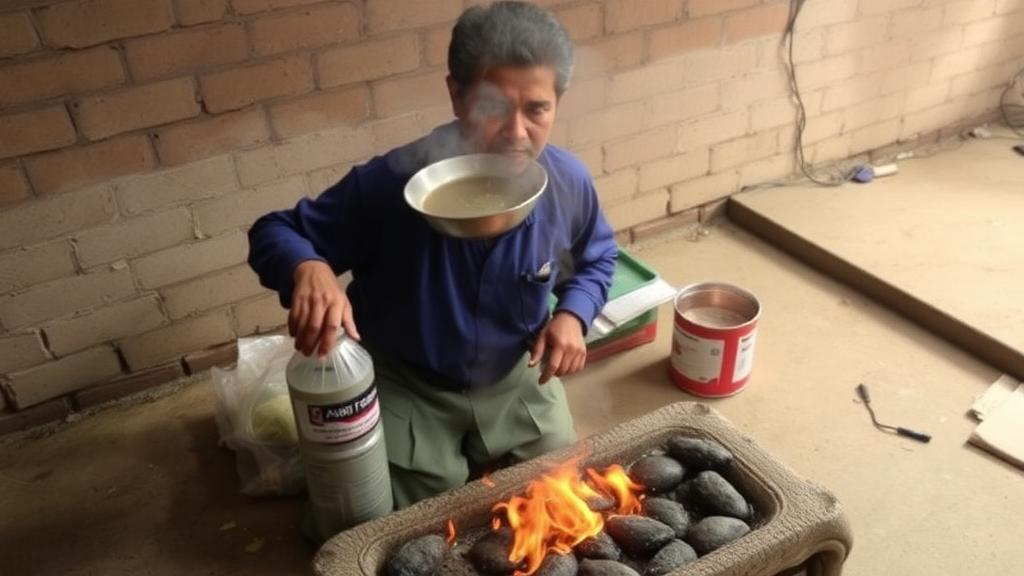
Across the hills and plains of Nepal, the kitchen remains one of the most dangerous rooms in the house. Roughly 24,000 people die in the country every year from illnesses linked to indoor air pollution, a toll driven largely by the smoke from burning firewood, agricultural residue, and dung on traditional stoves. A new study published in Discover Sustainability examines why, after more than two decades of policy commitments, subsidies, and donor programs, so many Nepali households still cook with biomass, and what it would take to finally complete the transition to clean cooking. The research, led by Sunil Prasad Lohani of Kathmandu University together with collaborators at the University of Eastern Finland, Tribhuvan University, and Duke University, offers one of the most systematic diagnoses yet of the structural forces shaping energy use in Nepali kitchens.
The team combined two well-established analytical frameworks, PESTEL and SWOT, to map the political, economic, social, technological, environmental, and legal dimensions of the clean cooking transition, alongside its internal strengths, weaknesses, opportunities, and threats. Their evidence base was deliberately multi-layered. The researchers analyzed national policy documents stretching back to the Constitution of Nepal and the Renewable Energy Subsidy Policy, conducted a structured household survey of 200 respondents, and carried out focus group discussions in four districts chosen to capture the country’s striking geographic and cultural diversity: Chitwan and Sarlahi in the Terai lowlands, and Kavrepalanchowk and Rasuwa in the middle hills closer to the Himalaya.
The headline numbers tell a story of real but incomplete progress. Between 2000 and 2022, the share of Nepali households relying on biomass as their primary cooking fuel fell from 87.3 percent to 59.8 percent. Over the same period, liquefied petroleum gas, or LPG, climbed from just 5 percent of households to 38.6 percent. On the surface, that looks like a decisive shift toward a cleaner fuel. But the study’s deeper analysis reveals something uncomfortable: this transition was driven mainly by urbanization and rising incomes rather than by targeted policy intervention. In other words, Nepal’s clean cooking gains have largely been a byproduct of economic development, not the result of deliberate state engineering, which means the households left behind are precisely those that development has not yet reached.
That pattern has profound equity implications. Inflation and persistent rural-urban disparities have restricted equitable access to cleaner fuels, with LPG concentrated in cities and along road corridors while remote hill and mountain communities continue to gather fuelwood. The household survey and focus groups surfaced the everyday mechanics of this exclusion: upfront costs for stoves, cylinders, and connections remain prohibitive for poor families; supply chains thin out dramatically beyond district headquarters; and decisions about household energy spending are often shaped by gendered dynamics, with women doing the cooking but men controlling much of the cash. Cultural preferences for the taste of food cooked over wood fires, and the social familiarity of traditional hearths, add further friction that no subsidy alone can dissolve.
The political dimension of the analysis is where the study becomes most pointed. Nepal possesses, on paper, an unusually strong architecture of commitment. The Constitution itself enshrines the right to a clean environment and access to energy, and the Renewable Energy Subsidy Policy, along with successive periodic development plans, has repeatedly promised universal clean cooking. Donor-funded programs have poured resources into improved stoves and biogas plants for decades. Yet the researchers find that these instruments have reduced upfront costs without ensuring sustained use. Stoves fall into disrepair because maintenance systems are inadequate; subsidy delivery is inconsistent; and frequent changes of government, chronic political instability, and weak local governance mean that programs lose momentum, funding, and institutional memory before they can consolidate behavioral change.
Technological and infrastructural constraints compound the governance problem. Electric cooking, often touted as the long-term destination for countries with abundant hydropower, is undermined in practice by an unreliable electricity supply, particularly in rural areas where outages and voltage fluctuations make induction or electric pressure cookers impractical as sole cooking solutions. Nepal’s electricity grid is overwhelmingly powered by hydroelectric plants, which gives the country a genuine decarbonization opportunity as generation capacity expands, but the study emphasizes that clean electricity potential remains a strength on paper until reliability and last-mile distribution improve. Meanwhile, improved biomass stoves, the workhorse of many donor programs, occupy an awkward middle ground: cleaner than open fires but not truly clean, and sometimes crowding out the full transition they were meant to catalyze.
The environmental stakes of continued biomass dependence are substantial. Firewood harvesting contributes to deforestation and forest degradation in a country whose forests are central to both carbon commitments and rural livelihoods. Burning biomass in inefficient stoves releases black carbon and other climate-forcing pollutants as well as the particulate matter that damages lungs and hearts indoors. The study frames these emissions and health burdens as tightly coupled: the same smoke that kills roughly 24,000 Nepalis annually also undermines climate goals. Fragmented and weakly enforced regulations make matters worse, with overlapping mandates among ministries and levels of government diffusing accountability for what is, in effect, a multi-sector problem spanning health, energy, forestry, and gender.
The SWOT component of the analysis distills the strategic picture. On the strengths side, the researchers place Nepal’s clean electricity potential from hydropower and the sustained engagement of international donors, which keeps resources and attention flowing to the sector. Opportunities include falling technology costs, growing awareness of indoor air pollution risks, and the possibility of locally adapted cooking technologies suited to different agro-ecological zones. Against these stand serious weaknesses, including affordability gaps, inadequate after-sales and maintenance networks, and aid dependency that leaves programs vulnerable when donor priorities shift. The threats are stark: political instability, inflation eroding household purchasing power, and the risk that subsidies continue to subsidize equipment purchases without changing long-term cooking behavior.
What emerges from the PESTEL analysis is a portrait of a transition that is simultaneously happening and stalling. Awareness of indoor air pollution has genuinely risen, the authors note, even as cultural preferences and financial barriers continue to constrain adoption. This is an important nuance. Information campaigns have worked; people increasingly know that smoke from the hearth is dangerous. But knowledge has not translated into sustained clean fuel use because the structural conditions, reliable supply, affordable pricing, functioning maintenance chains, and accountable institutions, have not followed. The study’s central argument is that Nepal’s clean cooking problem is not primarily a problem of awareness or technology availability, but of governance and political economy.
The authors conclude that an inclusive and sustainable clean cooking transition in Nepal requires stronger governance, technologies adapted to local contexts, and sustained investment rather than episodic project funding. Achieving this, they argue, would advance multiple Sustainable Development Goals simultaneously: SDG 3 on health, SDG 5 on gender equality, SDG 7 on affordable and clean energy, SDG 10 on reduced inequalities, and SDG 13 on climate action. Few interventions touch so many targets at once. For the millions of Nepali households still cooking over smoky fires, the difference between policy on paper and policy in practice is measured in breaths taken, forests left standing, and lives not cut short. The study’s message to policymakers is blunt: the frameworks exist, the commitments exist, and the technology exists. What has been missing is the institutional staying power to make clean cooking stick.
Subject of Research: Structural barriers and opportunities for the clean cooking transition in Nepal, analyzed with PESTEL and SWOT frameworks
Article Title: Structural barriers and opportunities for clean cooking transition in Nepal using PESTEL and SWOT analyses
Article References: Structural barriers and opportunities for clean cooking transition in Nepal using PESTEL and SWOT analyses. (n.d.). https://doi.org/10.1007/s43621-026-04927-7
Image Credits: AI Generated
DOI: 10.1007/s43621-026-04927-7
Keywords: clean cooking, Nepal, energy access, indoor air pollution, biomass, LPG, PESTEL analysis, SWOT analysis, energy policy, governance, sustainable development goals, hydropower
Cite Scienmag News
Faith Mcneil. (October 14, 2026). Why Nepal’s Clean Cooking Revolution Is Stalling Despite Two Decades of Progress. Scienmag. https://scienmag.com/why-nepals-clean-cooking-revolution-is-stalling-despite-two-decades-of-progress/
Faith Mcneil. "Why Nepal’s Clean Cooking Revolution Is Stalling Despite Two Decades of Progress." Scienmag, 14 October 2026, https://scienmag.com/why-nepals-clean-cooking-revolution-is-stalling-despite-two-decades-of-progress/. Accessed 14 October 2026.
Faith Mcneil. "Why Nepal’s Clean Cooking Revolution Is Stalling Despite Two Decades of Progress." Scienmag. October 14, 2026. https://scienmag.com/why-nepals-clean-cooking-revolution-is-stalling-despite-two-decades-of-progress/


