


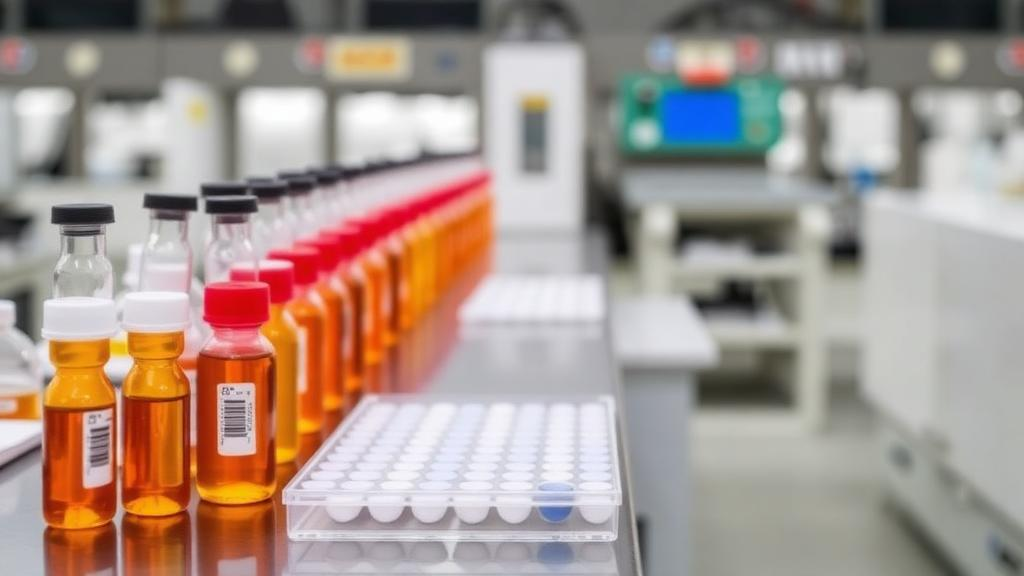
A new special issue of the Journal of Pharmaceutical Investigation is set to gather some of the most consequential work in modern drug formulation science, and the stakes could hardly be higher. Titled Translational Advances in Pharmaceutical Dosage Form Development Based on Particle Engineering and Formulation Science, the issue is scheduled for publication in January 2027, with a submission deadline of June 30, 2026. It will be curated by three guest editors from leading South Korean institutions: Sung-Joo Hwang of Yonsei University, Min-Soo Kim of Pusan National University, and Heejun Park of Duksung Women’s University. Their collective call for papers signals a deliberate effort to bridge a stubborn gap in the pharmaceutical world, the distance between elegant laboratory science and manufacturable, regulator-ready medicine.
The central problem the special issue confronts is one of the oldest in pharmacology: many promising drug molecules simply refuse to dissolve. It is estimated that a large fraction of newly discovered active pharmaceutical ingredients fall into the Biopharmaceutics Classification System classes II and IV, meaning they dissolve poorly or very poorly in the aqueous environment of the gastrointestinal tract. A molecule may bind its biological target with exquisite potency in a test tube, yet deliver almost nothing to the bloodstream if it cannot dissolve in time and in the right place. Particle engineering attacks this bottleneck at its physical roots, reshaping crystals, particles, and powders so that dissolution, stability, and manufacturability are engineered simultaneously rather than negotiated one against another.
The techniques on the table are as varied as they are sophisticated. Micronization and nanonization reduce particle size to increase the surface area available for dissolution, with nanocrystal suspensions pushing particle dimensions down to a few hundred nanometers where the Noyes-Whitney equation works in the formulator’s favor. Amorphous solid dispersion takes a different route, trapping a drug in a glassy, high-energy matrix that sidesteps the thermodynamic stability of the crystalline lattice entirely, at the cost of needing rigorous stabilization strategies against recrystallization during a product’s shelf life. Co-crystal engineering, lipid-based systems, and hot-melt extrusion each offer their own trade-offs between solubility gain, physical stability, and processing feasibility. The special issue explicitly invites work on particle engineering approaches for solubility, stability, and bioavailability enhancement, the triangle of properties that defines whether a formulation survives the journey from discovery to patient.
One of the recurring tragedies of pharmaceutical development is the formulation that performs brilliantly in a small-scale laboratory experiment but collapses when asked to run on a commercial manufacturing line at thousands of liters per batch. Spray drying a nanosuspension may work at ten milliliters; scaling it to ten thousand liters introduces heat and mass transfer regimes that can alter particle morphology, residual moisture, and ultimately dissolution behavior. This is why translational formulation science and scale-up of drug products features prominently among the topics the editors are soliciting. The field increasingly demands that researchers think in terms of process windows rather than single optimal recipes, documenting how a formulation behaves across the range of conditions a production facility will actually encounter.
The tools making this possible are themselves a story. Process Analytical Technology, or PAT, brings real-time sensors directly into the manufacturing environment, using techniques such as near-infrared spectroscopy, Raman spectroscopy, and focused beam reflectance measurement to track particle size distribution, blend uniformity, and moisture content as a batch progresses. Combined with the Quality by Design philosophy, which asks manufacturers to understand and control the relationships between raw material attributes, process parameters, and final product quality rather than merely testing quality in at the end, these approaches are reshaping how regulatory agencies view drug manufacturing. A formulation developed under QbD principles comes with a documented design space, a map of proven acceptable ranges within which quality is assured, and PAT provides the instrumentation to demonstrate that a batch stays inside that map. The special issue’s explicit inclusion of QbD and PAT applications in pharmaceutical formulation and manufacturing reflects how thoroughly these frameworks have moved from regulatory aspiration to daily laboratory and plant practice.
Solid-state characterization occupies another pillar of the solicited topics, and it is easy to underestimate how much depends on it. A single drug molecule can crystallize in multiple polymorphic forms, each with a different packing arrangement, melting point, solubility, and dissolution rate. The infamous case of ritonavir in the late 1990s, when a more stable and far less soluble polymorph emerged during manufacturing and forced a withdrawal of the product from the market, remains the canonical cautionary tale. Today, formulators deploy powder X-ray diffraction, differential scanning calorimetry, dynamic vapor sorption, and solid-state nuclear magnetic resonance to fingerprint every crystalline and amorphous phase in a product, and they design stability studies specifically to hunt for transformations that could quietly degrade performance over years of storage. Control of the solid state is not a finishing touch; it is the foundation on which dosage form performance rests.
The scope of dosage forms under consideration is also deliberately broad. Oral solid dosage forms remain the workhorse of the industry, but the call for papers extends to injectable, inhalable, transdermal, and other advanced delivery systems. Each route brings its own particle engineering demands. Inhaled medicines require particles engineered to aerodynamic diameters in the range of roughly one to five micrometers so they can navigate the branching architecture of the airways and deposit in the deep lung, and any change in particle surface properties can shift where the drug lands. Injectable formulations must balance concentration requirements against solubility and tolerability, often relying on particle size reduction or novel excipient systems for poorly soluble drugs intended for parenteral administration. Transdermal systems must coax molecules across the stratum corneum, the skin’s formidable barrier, through formulation design that modulates thermodynamic activity and diffusion. By inviting contributions across these routes, the editors are acknowledging that particle and formulation science is now a unifying discipline rather than a collection of route-specific tricks.
Emerging manufacturing technologies form the sixth solicited topic area, and this is where the field is arguably moving fastest. Additive manufacturing, notably three-dimensional printing of dosage forms, enables drug products with customized doses and release profiles that traditional tableting cannot achieve, and it was validated at commercial scale when the first printed pharmaceutical product reached regulatory approval. Continuous manufacturing is displacing batch processing for many product types, shortening the path from powder to finished dose while shrinking facility footprints and enabling real-time release testing. Hot-melt extrusion, electrospinning, supercritical fluid technologies, and microfluidic precipitation each give formulators new handles on particle size, morphology, and solid-state form. The challenge these technologies share is translational: demonstrating to regulators and to one’s own quality organization that a novel process delivers the same assurance of quality batch after batch, at scale, for the life of the product.
The geographic and institutional framing of the special issue is itself noteworthy. Guest editors Sung-Joo Hwang, Min-Soo Kim, and Heejun Park represent a South Korean research establishment that has become increasingly central to global pharmaceutical formulation science, with strong programs in drug delivery, nanotechnology, and manufacturing innovation. The Journal of Pharmaceutical Investigation, published by Springer, serves as a venue where academic researchers, industry formulators, and regulatory scientists can present work with genuine translational intent. By setting a submission deadline of June 30, 2026 for a January 2027 issue, the editors are building in a conventional but rigorous peer review window, the mechanism that separates verified advances from promising speculation.
For the broader research community, the call to papers functions as an agenda. It asserts that the future of medicine will be decided not only by the molecules discovered but by whether formulation science can make those molecules deliverable, stable, manufacturable, and affordable. A brilliant compound that cannot survive scale-up saves no one; a generic reformulation that improves bioavailability by a factor of two can change treatment outcomes for millions. The topics collected under this special issue, from particle engineering and solid-state control to QbD, PAT, and emerging manufacturing platforms, describe the full pipeline by which a molecule in a vial becomes a medicine on a pharmacy shelf. Researchers working anywhere along that pipeline now have a defined destination and a deadline, and the results they submit will offer a snapshot of where pharmaceutical formulation science stands as it completes its long migration from the bench to the production floor.
Subject of Research: Particle engineering and formulation science for pharmaceutical dosage form development
Article Title: Special Issue: Translational Advances in Pharmaceutical Dosage Form Development Based on Particle Engineering and Formulation Science
Article References: Special Issue: Translational Advances in Pharmaceutical Dosage Form Development Based on Particle Engineering and Formulation Science. (n.d.). Original publication
Image Credits: AI Generated
DOI: Not provided
Keywords: particle engineering, formulation science, drug delivery, bioavailability, Quality by Design, Process Analytical Technology, solid-state characterization, scale-up, pharmaceutical manufacturing, nanocrystals, amorphous solid dispersion, special issue
Cite Scienmag News
Denise Maddox. (October 14, 2026). Pharmaceutical Formulation Science Moves From Lab Bench to Production Line in Landmark Special Issue. Scienmag. https://scienmag.com/pharmaceutical-formulation-science-moves-from-lab-bench-to-production-line-in-landmark-special-issue/
Denise Maddox. "Pharmaceutical Formulation Science Moves From Lab Bench to Production Line in Landmark Special Issue." Scienmag, 14 October 2026, https://scienmag.com/pharmaceutical-formulation-science-moves-from-lab-bench-to-production-line-in-landmark-special-issue/. Accessed 14 October 2026.
Denise Maddox. "Pharmaceutical Formulation Science Moves From Lab Bench to Production Line in Landmark Special Issue." Scienmag. October 14, 2026. https://scienmag.com/pharmaceutical-formulation-science-moves-from-lab-bench-to-production-line-in-landmark-special-issue/


