


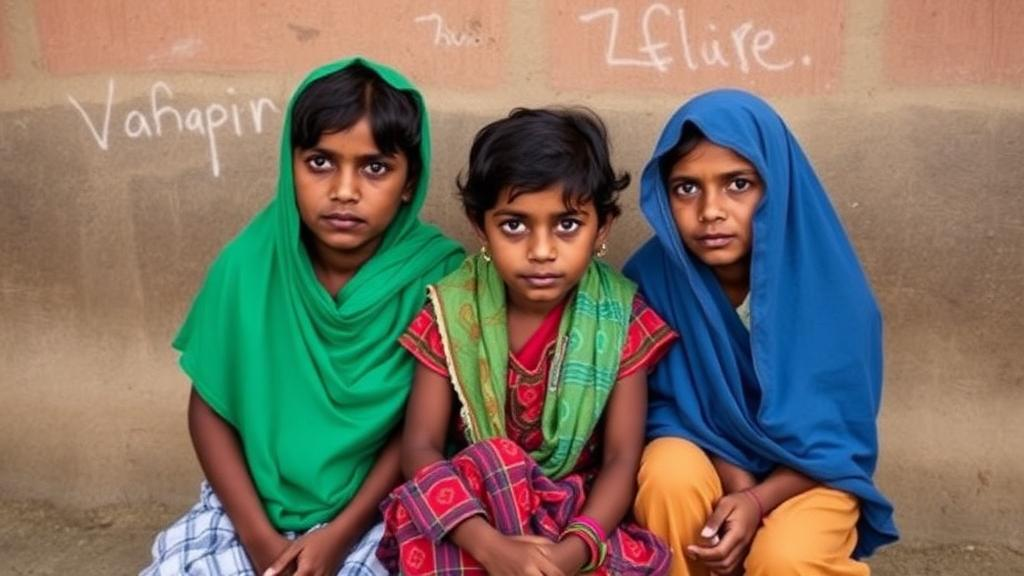
For millions of adolescent girls living in India’s tribal communities, menstruation is far more than a biological milestone. It is a monthly negotiation with scarcity, stigma, and silence, played out in homes without private toilets, schools without water, and societies where menstrual blood is treated as a source of ritual pollution. A new systematic review published in PLOS One has pulled together more than a decade of research on this overlooked population, and the picture it paints is stark: tribal adolescent girls in India face compounding barriers to menstrual health that drive infections, psychological distress, and lost schooling, and that have persisted largely unaddressed despite growing national attention to menstrual hygiene management.
The review, led by Rohit Raj, Jarina Begum, Syed Irfan Ali, Manasee Panda, and Vani Lakshmi R, followed the PRISMA 2020 reporting guidelines, the international standard for ensuring that systematic reviews are conducted and documented transparently. The team searched three major databases, PubMed, Scopus, and Google Scholar, for quantitative, qualitative, and mixed-methods studies published between January 2015 and March 2026. From an initial pool of 197 identified records, 28 studies met the inclusion criteria and focused specifically on menstrual health among tribal adolescent girls in India. Each study was independently screened, extracted, and appraised by multiple reviewers using the Joanna Briggs Institute tools, a validated suite of checklists for judging methodological quality across different study designs. Because the included studies varied widely in methods, settings, and outcome measures, the authors adopted a narrative synthesis rather than a statistical meta-analysis, weaving the findings together thematically instead of pooling numbers that could not be meaningfully combined.
The methodological verdict on the underlying evidence was broadly reassuring. The quality appraisal indicated overall moderate to high rigour, with most of the 28 studies demonstrating acceptable quality, even though the authors noted limitations related to study design and reporting. That matters, because systematic reviews are only as strong as the studies they synthesise. In this case, the consistency of the findings across heterogeneous designs and regions strengthens the central conclusion: the menstrual health challenges facing tribal adolescent girls are not isolated anecdotes but a patterned, structural problem rooted in socioeconomic status, education, cultural norms, and infrastructure.
At the most tangible level, the review identified three interlocking deficits. The first is access to sanitary products. Many girls in tribal communities cannot obtain or afford commercial pads, and where subsidised schemes exist, supply chains and awareness often fail to reach the most remote hamlets. The second is inadequate water, sanitation, and hygiene infrastructure, commonly abbreviated as WASH. Without private, functional toilets with reliable water supply, girls cannot change and dispose of menstrual materials safely or discreetly, whether at home or at school. The third is poor awareness: limited menstrual health literacy among girls themselves, and often among their families and teachers, means that menstruation is frequently experienced without accurate information about what is normal, what is not, and how to manage it hygienically.
These material gaps interact with a second layer of barriers that are cultural rather than infrastructural. The review documents pervasive stigma and restrictive practices surrounding menstruation in tribal settings, including beliefs that render menstruating girls impure or excluded. Girls described being barred from certain spaces, activities, or foods during their periods, and the social pressure to conceal menstruation discouraged them from seeking help or even from using available products. The psychological toll of navigating these restrictions, alongside shame and fear of discovery, contributed to measurable distress. The stigma also pushed girls toward unsafe hygiene behaviours, such as using unclean cloth for extended periods or resorting to improvised materials, because safer options were unavailable, unaffordable, or too conspicuous to use discreetly.
The downstream consequences are clinically and educationally significant. The review links these barriers to adverse outcomes including reproductive tract infections, which arise when menstrual blood is absorbed by unhygienic materials or when changing and washing are impossible, and to increased school absenteeism. The mechanism behind absenteeism is straightforward: a girl who lacks a pad, a private toilet, and a supportive teacher has few options when her period begins at school, and staying home is often the least humiliating choice. Repeated monthly absences accumulate into lost learning time, and over years can contribute to dropout, with cascading effects on economic opportunity, age at marriage, and long-term health. Menstrual health, in other words, is not a narrow hygiene issue but a hinge point connecting education, gender equity, and infectious disease.
What makes tribal adolescent girls a distinct population of concern is the intersection of disadvantage they experience. India’s tribal communities, officially recognised as Scheduled Tribes, are among the country’s most marginalised groups, often living in remote, forested, or hilly regions where health services, schools, and markets are harder to reach. Adolescent girls at this intersection face the general challenges of adolescence, poverty, and rurality, plus the specific weight of menstrual taboos that may be enforced more tightly in close-knit communities, plus the near-absence of the infrastructure that urban programmes take for granted. The review’s framing of menstrual health as a critical yet neglected public health issue reflects this compounding: national menstrual hygiene schemes exist, but the evidence assembled here suggests they have not closed the gap for the girls who need them most.
The authors argue that addressing these challenges requires integrated, culturally sensitive interventions rather than single-component fixes. Distributing pads, for instance, achieves little if girls have no private place to change them, no water to wash with, and no disposal system, and if families regard the pads themselves as shameful. Conversely, building toilets without accompanying education and community engagement risks leaving facilities unused or repurposed. Effective programmes, the review implies, must work simultaneously on three fronts: education that builds menstrual health literacy among girls, boys, parents, and teachers; infrastructure that guarantees WASH facilities in homes and schools; and equitable access to affordable menstrual products through supply chains that actually reach remote tribal areas. Cultural sensitivity is not a soft add-on in this framing but a technical requirement, since interventions that ignore local beliefs are likely to be resisted or quietly abandoned.
The review also carries implications for research and policy measurement. The narrative synthesis approach, chosen because of heterogeneity, points to a gap in the evidence base: studies of menstrual health in tribal populations use inconsistent definitions, outcome measures, and sampling strategies, making it difficult to track change over time or compare regions. Standardised indicators, and more studies that include tribal girls’ own voices through qualitative methods, would give policymakers a clearer baseline and a way to evaluate whether interventions are working. The moderate-to-high quality of the existing studies is encouraging, but 28 studies across a country with more than a hundred million tribal residents is a thin evidentiary foundation for a problem of this scale.
Ultimately, the review’s central message is one of urgency grounded in evidence. Menstrual health among tribal adolescent girls in India remains a significant public health concern, shaped by socioeconomic status, education, cultural taboos, and infrastructural limitations, and associated with infections, psychological distress, and missed schooling. The findings arrive at a moment when menstrual health is gaining recognition in global health frameworks as a component of dignity, education, and rights, not merely hygiene. For the girls at the centre of this research, the practical stakes are immediate: a pad that arrives on time, a toilet with a door and water, a teacher who does not look away, and a family that does not treat a natural process as a curse. The review makes clear that these are not luxuries but the basic conditions for health and continued education, and that delivering them will require sustained, coordinated, and culturally attuned investment in the communities that have waited longest.
Subject of Research: Menstrual health challenges and barriers among tribal adolescent girls in India
Article Title: Menstrual health challenges and associated barriers among tribal adolescent girls in India: A systematic review
Article References: Raj, R., Begum, J., Ali, S. I., Panda, M., & R, V. L. (2026). Menstrual health challenges and associated barriers among tribal adolescent girls in India: A systematic review. PLOS One, 21(10), e0360401. https://doi.org/10.1371/journal.pone.0360401
Image Credits: AI Generated
DOI: 10.1371/journal.pone.0360401
Keywords: menstrual health, tribal adolescent girls, India, systematic review, WASH infrastructure, sanitary products, cultural stigma, school absenteeism, reproductive tract infections, public health, menstrual hygiene management, health equity
Cite Scienmag News
Phoebe Ingram. (October 14, 2026). Tribal Adolescent Girls in India Face a Hidden Menstrual Health Crisis, Review Finds. Scienmag. https://scienmag.com/tribal-adolescent-girls-in-india-face-a-hidden-menstrual-health-crisis-review-finds/
Phoebe Ingram. "Tribal Adolescent Girls in India Face a Hidden Menstrual Health Crisis, Review Finds." Scienmag, 14 October 2026, https://scienmag.com/tribal-adolescent-girls-in-india-face-a-hidden-menstrual-health-crisis-review-finds/. Accessed 14 October 2026.
Phoebe Ingram. "Tribal Adolescent Girls in India Face a Hidden Menstrual Health Crisis, Review Finds." Scienmag. October 14, 2026. https://scienmag.com/tribal-adolescent-girls-in-india-face-a-hidden-menstrual-health-crisis-review-finds/


