


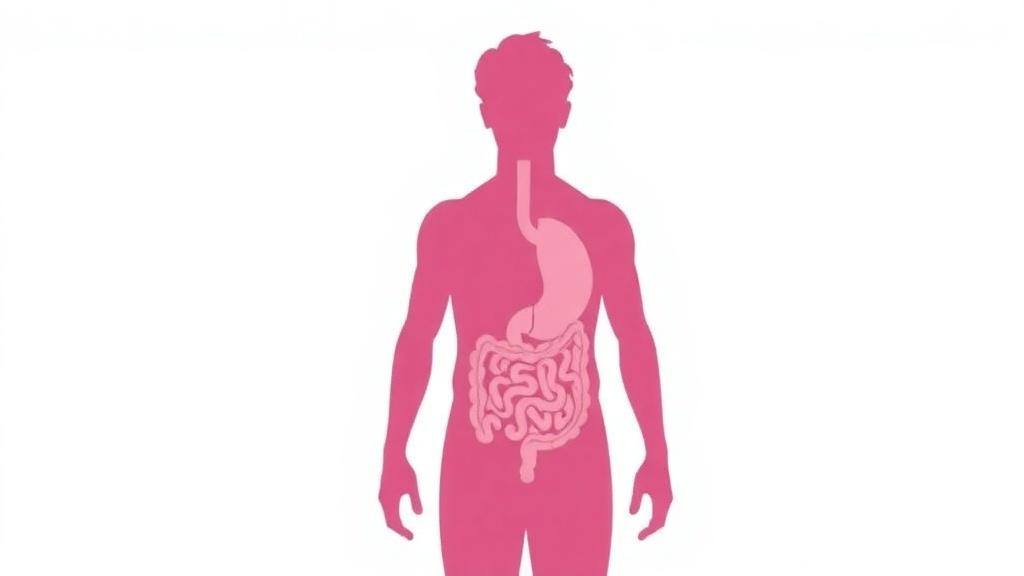
For millions of people who live with both the flushing and bumps of rosacea and the cramping, bloating unpredictability of irritable bowel syndrome, a long-standing question has hovered over the clinic: which condition appears first, and does the order matter? A new analysis of 1,421 patients diagnosed with both disorders offers one of the clearest answers yet, and the result is quietly striking. In a majority of cases, the gut came first. Roughly 55 percent of patients had irritable bowel syndrome documented before rosacea, while about 42 percent developed rosacea first, and only 3 percent received both diagnoses on the very same day. The findings, published as a short report in the Archives of Dermatological Research, add a temporal dimension to one of the most talked-about concepts in modern medicine: the gut-skin axis.
The research team, led by investigators at Northwestern University Feinberg School of Medicine including dermatologist Peter Lio, drew on data from the National Institutes of Health’s All of Us Research Program, a massive biomedical database that links participant surveys to electronic health records. Because the program collects detailed demographic information alongside longitudinal clinical data, it allowed the researchers to do something previous studies of the rosacea-gut connection rarely could: measure, patient by patient, the interval between the two diagnoses and test whether that interval differed systematically across population groups.
The statistical machinery behind the study was chosen with care. When the team examined the distribution of time differences between diagnoses, formal tests for normality and equal variance, specifically Shapiro-Wilk and Levene’s tests, indicated that the data violated the assumptions required for parametric statistics. The researchers therefore turned to non-parametric methods: Wilcoxon signed-rank tests to assess whether, within each demographic stratum, the median time difference between the IBS and rosacea diagnosis dates shifted significantly away from zero, and Kruskal-Wallis tests to compare those shifts between groups defined by race and ethnicity, education, income, gender, and age.
The headline result is a consistent directional skew. The median time difference, calculated as the IBS diagnosis date minus the rosacea diagnosis date, was negative in every demographic group the team examined, ranging from about 0.09 years to 2.03 years before the rosacea diagnosis. In plain terms, across every stratum of the population studied, the typical patient had their bowel syndrome documented before their facial flushing earned a name. Wilcoxon signed-rank tests confirmed that these within-group median shifts were statistically significant in several strata, particularly those with the largest sample sizes, where the tests have the most power to detect real asymmetry.
Yet the study’s second major finding is just as important as the first: demographics do not explain the pattern. When the researchers built a logistic regression model to predict which condition came first using race and ethnicity, education, income, gender, and age, the model achieved only 52.6 percent accuracy, barely better than a coin flip, with an area under the curve of 0.52. Kruskal-Wallis comparisons between demographic groups were uniformly non-significant, with p-values of 0.98 for race and ethnicity, 0.83 for education, 0.40 for income, 0.52 for gender, and 0.14 for age. Whatever drives the gut-before-skin sequence, it does not appear to respect the usual social and demographic fault lines.
To understand why this temporal ordering matters, it helps to zoom in on the biology that has energized the gut-skin axis field in recent years. The gut and the skin are both barrier organs, both heavily populated by immune cells, and both colonized by microbial communities that communicate with the host immune system. Reviews of the gut-skin axis have described how intestinal dysbiosis, an imbalance in gut microbial composition, can increase intestinal permeability, promote systemic inflammation, and modulate immune signaling in ways that plausibly reach the skin. In rosacea specifically, studies have documented activation of Th1 and Th17 inflammatory pathways in lesional skin, and systematic reviews have linked the condition to alterations in both cutaneous and gastrointestinal microbiomes.
The connection between rosacea and the gut is not new to dermatologists. Population-based cohort research from Denmark published in 2017 found that people with rosacea had elevated rates of several gastrointestinal disorders, including celiac disease, Crohn’s disease, ulcerative colitis, and irritable bowel syndrome. More recently, a study using the Korean National Health Insurance Service cohort examined whether rosacea might raise the risk of subsequently developing IBS, and bi-directional Mendelian randomization analyses have probed whether inflammatory bowel disease and rosacea share causal links through genetic instruments. Small intestinal bacterial overgrowth has also been reported at elevated rates in rosacea patients, and some trials have explored whether targeting the gut microbiome can calm the skin. What most of this earlier work lacked, however, was a direct measurement of onset order within the same individuals.
That is precisely the gap the new study fills, and the direction of the skew, IBS first in a majority of cases, is at least compatible with a model in which chronic gut inflammation or microbial disturbance contributes to the later emergence of cutaneous disease. Chronic gut inflammation and dysbiosis in IBS have been implicated in other inflammatory skin conditions, including atopic dermatitis, and neurohormonal-immune dysregulation along the skin-gut-brain axis has been proposed as a shared pathway in rosacea. If gut-driven systemic inflammation primes the skin’s vasculature and immune defenses, one might expect bowel symptoms to precede facial ones, on average, which is what the data show at the population level.
But the authors are careful, and rightly so, to keep the interpretation within strict limits. The dataset records the date a diagnosis was documented, not the date symptoms actually began. A patient may have endured years of abdominal pain before a clinician finally wrote down an IBS code, or may have had visible facial redness long before anyone called it rosacea. Diagnostic lag, healthcare access, and coding practices could all distort the apparent sequence. The study is also cross-sectional in design, meaning it captures a snapshot of the timing relationship rather than following patients forward in time, and it cannot establish that IBS causes rosacea or that any shared mechanism exists at all. The researchers themselves emphasize that the findings are descriptive and that prospective studies incorporating clinical and lifestyle variables are needed before any gut microbiome-mediated link can be properly evaluated.
Even with those caveats, the study offers a genuinely useful piece of the puzzle. It demonstrates, in a large and demographically diverse cohort, that the association between IBS and rosacea is not a random collision of two common conditions but a temporally structured one, with a reproducible direction that holds across race, ethnicity, education, income, gender, and age. It also delivers a humbling lesson about prediction: population-level patterns can be real and robust while remaining nearly useless for forecasting what will happen in any individual patient. For clinicians, the practical takeaway is one of heightened awareness, since a patient presenting with one of these conditions may warrant attention to the other. For researchers, the study provides a temporal scaffold on which mechanistic hypotheses about microbial signaling, immune trafficking, and neurovascular inflammation can now be tested with prospective designs. The gut-skin axis has been celebrated in headlines for years; studies like this one, modest in size but precise in method, are how the field moves from slogan to science.
Subject of Research: The temporal onset relationship between irritable bowel syndrome and rosacea within the gut-skin axis
Article Title: Temporal relationship between irritable bowel syndrome (IBS) and rosacea: an analysis of onset timing
Article References: Temporal relationship between irritable bowel syndrome (IBS) and rosacea: an analysis of onset timing. (n.d.). https://doi.org/10.1007/s00403-026-05003-w
Image Credits: AI Generated
DOI: 10.1007/s00403-026-05003-w
Keywords: irritable bowel syndrome, rosacea, gut-skin axis, gut microbiome, onset timing, All of Us Research Program, dermatology, gastroenterology, chronic inflammation, dysbiosis, cross-sectional study, electronic health records
Cite Scienmag News
Ophelia Keating. (October 13, 2026). Gut Before Skin: IBS Tends to Precede Rosacea in Landmark Timing Study. Scienmag. https://scienmag.com/gut-before-skin-ibs-tends-to-precede-rosacea-in-landmark-timing-study/
Ophelia Keating. "Gut Before Skin: IBS Tends to Precede Rosacea in Landmark Timing Study." Scienmag, 13 October 2026, https://scienmag.com/gut-before-skin-ibs-tends-to-precede-rosacea-in-landmark-timing-study/. Accessed 13 October 2026.
Ophelia Keating. "Gut Before Skin: IBS Tends to Precede Rosacea in Landmark Timing Study." Scienmag. October 13, 2026. https://scienmag.com/gut-before-skin-ibs-tends-to-precede-rosacea-in-landmark-timing-study/


