


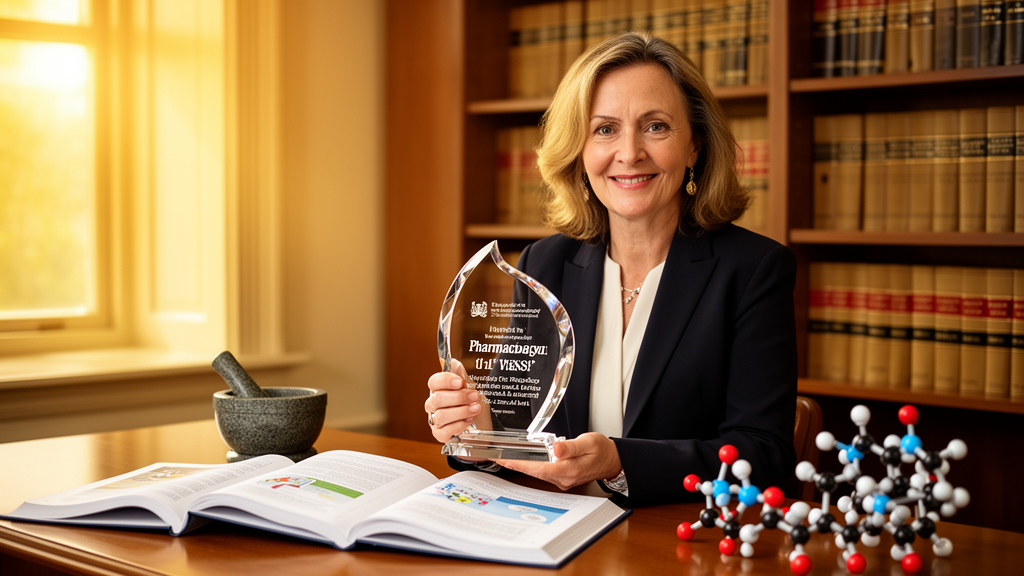
Springer Nature has announced the recipients of its 2026 Editor of Distinction Awards, an annual programme that recognises the editors whose behind-the-scenes labour keeps the scientific record accurate, fair and trustworthy. Among the journals celebrating this year is BMC Pharmacology and Toxicology, part of the BMC series of open access titles, which has named a cohort of editors whose work spans the meticulous evaluation of submissions and the cultivation of productive relationships with authors and reviewers. The awards arrive at a moment when peer review, the mechanism on which virtually all modern science publishing depends, is under intense scrutiny, making public recognition of editorial excellence both timely and symbolically significant.
The programme is structured around two principal honours: the Springer Nature Editorial Contribution Award and the Springer Nature Author Service Award. Each targets a different but complementary dimension of editorial work. The Editorial Contribution Award is given for meticulous assessment of submissions and rigorous management of the peer review process, with an explicit emphasis on safeguarding the scientific accuracy of the published record. The Author Service Award, by contrast, recognises exceptional service in improving the author experience and ensuring that peer review is efficient, constructive and fair. Together, the two categories map the full arc of a manuscript’s journey, from first submission to published article, and they signal that Springer Nature values both technical rigour and human decency in equal measure.
This year’s Editorial Contribution Award honourees at BMC Pharmacology and Toxicology include Abdelwahab Omri, Anshuman Chandra, Catherine Sherwin, Giovanni Tarantino, Hualin Cai, Imran Khan, Jeffrey Raj, Josef Yayan, Koushik Debnath, Marcelo Arbo, Md Jakaria, Zhengwei Huang and Zhenwei Yu. The list reflects the genuinely international character of contemporary pharmacology and toxicology research, with editors drawn from institutions across multiple continents and from subfields ranging from clinical pharmacology to toxicological risk assessment. Their shared distinction lies in the quality of their editorial judgement: the ability to read a submission critically, to identify the reviewers best placed to evaluate it, and to weigh conflicting expert opinions before reaching a decision that serves both the authors and the wider scientific community.
The Author Service Award, meanwhile, recognises four editors whose work has measurably improved the experience of researchers submitting to the journal: Anindya Bose, Josef Yayan, Simone Brogi and Zhenwei Yu. Two names, Josef Yayan and Zhenwei Yu, appear on both lists, a rare double recognition that suggests an editor capable of combining uncompromising scientific scrutiny with a constructive, author-friendly approach. In practice, that combination is harder to achieve than it sounds. Editors who push hardest for methodological rigour can alienate authors, while those who prioritise author satisfaction can let standards slip. The double awardees represent the balance point at which the two goals reinforce rather than undermine each other.
Why does editorial work deserve this kind of celebration? The answer lies in the architecture of scientific trust. Every published paper is, in effect, a claim that has passed through a filter of expert scrutiny, and the editor is the person who operates that filter. Reviewers provide the raw assessments, but it is the editor who selects the reviewers, interprets their often contradictory reports, identifies when a reviewer has missed the point or when an author has evaded a legitimate criticism, and ultimately decides whether a manuscript meets the journal’s threshold for publication. When that process works well, flawed studies are caught before they enter the literature, and sound studies are improved by revision. When it works badly, the consequences can ripple outward for years, as retracted papers, wasted replication efforts and misdirected clinical or regulatory decisions.
In pharmacology and toxicology, the stakes of editorial rigour are unusually high. Research in these fields feeds directly into drug development pipelines, safety assessments and regulatory submissions, where errors in the published record can translate into real-world harm. A pharmacokinetic analysis with a statistical flaw, or a toxicological study with an inadequately characterised dose response, can misinform downstream decisions about which compounds advance to clinical trials or which exposure limits are deemed safe. Editors in these disciplines therefore carry a responsibility that extends well beyond academic reputation; they act as gatekeepers for information that clinicians, regulators and patients may ultimately rely upon. The Editorial Contribution Award’s explicit language about safeguarding the scientific accuracy of the published record reflects precisely this weight.
The awards also highlight dimensions of editorial work that rarely appear in author guidelines or reviewer checklists. Springer Nature’s announcement points to editors developing networks for authors and peer reviewers, helping authors improve their papers, and advocating for their journal communities. These are relational and infrastructural contributions as much as intellectual ones. Building a reliable reviewer network is a persistent challenge for every journal: reviewers are unpaid, overcommitted and increasingly difficult to recruit, and an editor who can assemble a pool of qualified, responsive experts provides an advantage that no software platform can replicate. Similarly, an editor who takes time to explain a rejection constructively, or to guide an author through a major revision, performs a form of informal mentorship that shapes careers as surely as any supervisor.
The timing of the 2026 awards is notable against the broader backdrop of publishing reform. Debates over peer review have intensified in recent years, with proposals ranging from open review reports and published referee identities to post-publication commentary models and AI-assisted screening of submissions. Journals in the BMC series, which pioneered open access publishing in the life sciences, have often been early adopters of such transparency measures. In that context, honouring individual editors serves a rhetorical purpose as well as a celebratory one: it reminds the community that whatever the process looks like on the surface, its quality ultimately depends on the judgement, diligence and integrity of the people administering it. Awards of this kind make visible a workforce that is otherwise largely anonymous to readers.
For the recognised editors, the honour carries practical as well as symbolic value. Editorial service is typically voluntary and performed alongside full research, teaching or clinical loads, yet it is increasingly weighed in hiring, promotion and funding decisions as institutions recognise the role editors play in maintaining scholarly infrastructure. A formal distinction from a major publisher provides external validation of that service, and it also signals to the editors’ own institutions that their contributions extend beyond their laboratories or clinics. For early- and mid-career researchers in particular, an Editor of Distinction award can function as a credential that documents expertise in scientific evaluation, a skill set that is otherwise difficult to demonstrate on a curriculum vitae.
For the research community served by BMC Pharmacology and Toxicology, the announcement is ultimately a statement about standards. The thirteen Editorial Contribution Award recipients and four Author Service Award recipients named for 2026 have, in the publisher’s assessment, demonstrated the qualities that keep a journal credible: careful reading, fair treatment of authors, disciplined management of reviewers and an unwavering commitment to accuracy. As the volume of submitted manuscripts continues to grow and as pressures on the peer review system mount, the work of such editors becomes both more demanding and more essential. The 2026 Editor of Distinction Awards put names to that effort, and in doing so they offer the rest of the community a concrete picture of what excellent editorial practice looks like.
Subject of Research: Recognition of editorial excellence in peer review at BMC Pharmacology and Toxicology through the Springer Nature Editor of Distinction Awards 2026
Article Title: Springer Nature Editor of Distinction Awards 2026
Article References: Springer Nature Editor of Distinction Awards 2026. (n.d.). Original publication
Image Credits: AI Generated
DOI: Not provided
Keywords: Springer Nature, Editor of Distinction Awards, BMC Pharmacology and Toxicology, peer review, editorial excellence, scientific publishing, open access, pharmacology, toxicology, author experience, research integrity, scientific accuracy
Cite Scienmag News
Louis Brooks. (October 13, 2026). Springer Nature Honours Standout Editors Shaping Pharmacology Research in 2026. Scienmag. https://scienmag.com/springer-nature-honours-standout-editors-shaping-pharmacology-research-in-2026-4/
Louis Brooks. "Springer Nature Honours Standout Editors Shaping Pharmacology Research in 2026." Scienmag, 13 October 2026, https://scienmag.com/springer-nature-honours-standout-editors-shaping-pharmacology-research-in-2026-4/. Accessed 13 October 2026.
Louis Brooks. "Springer Nature Honours Standout Editors Shaping Pharmacology Research in 2026." Scienmag. October 13, 2026. https://scienmag.com/springer-nature-honours-standout-editors-shaping-pharmacology-research-in-2026-4/


