


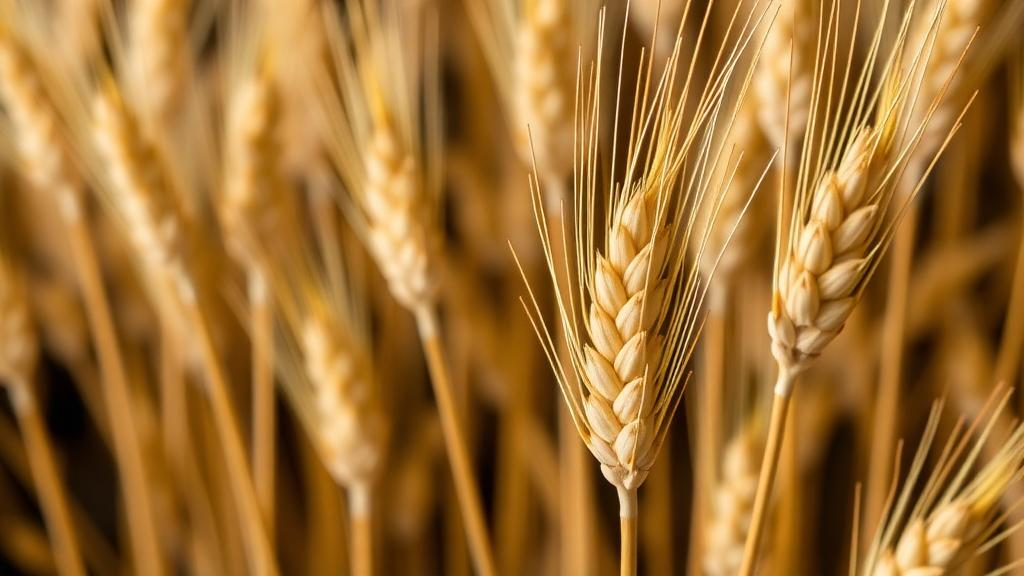
In one of the largest genetic surveys of its kind ever attempted in wheat, researchers have mapped the DNA landmarks that govern amylose content in the grain, the single most influential factor determining how wheat flour behaves in the bakery and how it nourishes the human body. The study, published in BMC Plant Biology, screened nearly fifteen hundred distinct bread wheat accessions from around the world using a high-density 35K single nucleotide polymorphism array, and it uncovered six robust genomic regions on chromosomes 1D, 3A, 3D, 4B, 5D and 6B that consistently shape this crucial trait. For breeders who have long chased grain quality largely through laborious field and lab measurements, the findings offer something transformative: a molecular address book for the genes that decide whether a wheat kernel stores its starch as slowly digested amylose or as rapidly broken-down amylopectin.
The significance of amylose content extends far beyond the laboratory. Starch is the dominant storage compound in the mature wheat kernel, and it exists as a two-component mixture: amylose, a mostly linear glucose polymer, and amylopectin, a highly branched counterpart. The ratio between them dictates nearly everything that matters to consumers and food manufacturers alike. Flours with higher amylose produce bread with a lower glycemic response, more resistant starch that survives digestion and feeds beneficial gut bacteria, and firmer textures prized in noodles and certain baked goods. Lower amylose, by contrast, yields the soft, extensible dough characteristics that dominate commercial bread production. Because wheat supplies roughly a fifth of humanity’s caloric intake, even modest shifts in this ratio, achieved through genetics rather than processing additives, could ripple through global public health in ways few crop traits can match.
Conducting genetics at this scale in wheat is notoriously difficult, and the technical architecture of the study reflects that challenge. Bread wheat is hexaploid, carrying three closely related subgenomes labeled A, B and D, which together contain roughly sixteen billion base pairs, more than five times the size of the human genome. This triplicated genetic redundancy means that a gene controlling starch synthesis on one subgenome is often mirrored by homologous copies on the others, diluting the effect of any single variant and complicating statistical detection. The research team, led by scientists at the ICAR-National Bureau of Plant Genetic Resources in New Delhi alongside collaborators at CIMMYT-Borlaug Institute for South Asia and the ICAR-Indian Agricultural Research Institute, confronted this complexity by deploying multiple genome-wide association study approaches in parallel rather than relying on a single statistical model.
Genome-wide association studies work by scanning the genomes of many individuals for genetic variants that co-occur with measurable traits more often than chance would predict. In this case, the team measured grain amylose content across their diverse panel of 1499 accessions and then tested hundreds of thousands of SNP markers for statistical association with those measurements. The multiple-model strategy is critical because association mapping in structured populations can generate false positives when family relatedness or ancestral population structure masquerades as genuine genetic linkage. By requiring that a marker-trait association survive several independent analytical frameworks, the researchers filtered their candidate list down to six marker-trait associations robust enough to withstand post-hoc statistical confirmation, three of which demonstrated particularly strong and stable genotypic effects on amylose variation.
The chromosomal locations of these associations tell an interesting evolutionary story. Notably, the signals appeared on the D and B subgenomes, at positions 1D, 3D, 4B, 5D and 6B, alongside one on 3A. The D subgenome, contributed to modern wheat by the wild goatgrass Aegilops tauschii in a hybridization event that gave rise to bread wheat itself, has often been underrepresented in quality-trait discovery, partly because reference resources for D were historically less complete. Finding strong amylose-associated loci on 1D and 3D suggests that the youngest of wheat’s three subgenomes still harbors untapped allelic diversity for end-use quality, a reservoir that global gene banks hold in abundance but that breeders have only begun to mine systematically.
Within the genomic intervals flanking these six associations, the team identified 181 annotated genes, and among them several stand out as biologically plausible architects of starch metabolism. A RING-type E3 ubiquitin ligase emerged as a leading candidate; these enzymes tag proteins for degradation and are increasingly recognized as post-translational regulators of starch biosynthesis enzymes, potentially fine-tuning the activity of the granule-bound starch synthase that directly manufactures amylose. The candidate list also included a phosphate transporter, an AP2/ERF family transcription factor capable of orchestrating the expression of downstream metabolic genes, and multiple glycosyltransferases, enzymes that chemically modify carbohydrate substrates and have well-documented roles in starch granule formation and amylopectin trimming.
Expression analysis added a crucial layer of biological credibility to these candidates. Genes that merely sit near an association signal are statistical suspects, but genes that are switched on in the right tissue at the right time are far more compelling. When the researchers examined tissue-specific expression patterns, several of the prime candidates, including the RING-type E3 ubiquitin ligase and the glycosyltransferases, showed seed-preferential expression, meaning they are most active precisely in the developing grain where starch is being laid down. In contrast, other genes within the intervals, such as those encoding RUBISCO subunits, ABC transporters and protein kinases, expressed most strongly in leaf tissue, consistent with their canonical roles in photosynthesis and stress signaling rather than grain filling. This expression-based triage effectively separates genes that plausibly influence amylose from bystanders that simply share a neighborhood.
Beyond identifying loci, the study quantified which versions of each marker, known as alleles, push amylose content upward. Favorable allele analysis pinpointed five alleles consistently associated with elevated amylose across the panel. For breeding programs, these alleles are immediately actionable. Using marker-assisted selection, breeders can test seedlings for the presence of these DNA variants within days of germination, long before any grain is harvested, and selectively cross plants carrying the favorable versions. This compresses breeding cycles dramatically compared with traditional phenotypic selection, which requires growing plants to maturity and chemically assaying their grain. In a crop with a generation time of several months and a genome too large and repetitive for easy manipulation, marker-assisted strategies built on validated associations represent the most practical route to precision quality improvement.
The broader context makes the timing of this work particularly consequential. Rising rates of type 2 diabetes and obesity have intensified demand for staple foods with lower glycemic impact, and high-amylose wheat has become a commercial target for major seed companies and public breeding programs worldwide. Resistant starch formed from high-amylose flour behaves as dietary fiber in the gut, associated in nutritional studies with improved insulin sensitivity and colorectal health. At the same time, climate volatility is pressuring wheat systems to maintain quality under heat stress, which is known to disrupt starch biosynthesis during grain filling. A refined map of amylose loci, validated across a panel capturing the breadth of global wheat diversity, gives breeders a stable genetic scaffold on which to stack quality improvements alongside yield and resilience traits.
The research team, whose work was funded by the Department of Biotechnology, Government of India, under a network project on wheat germplasm genomics for trait discovery, frames the results as a foundation rather than a finish line. The six robust loci, five favorable alleles and 181 candidate genes now on the table await functional validation, the experimental process of proving that a candidate gene genuinely causes the trait difference rather than merely traveling with it through generations of wheat ancestry. Techniques such as gene editing, mutant analysis and near-isogenic line development will be needed to close that causal loop. Yet even before such validation is complete, the study delivers what association genetics promises at its best: a statistically disciplined, biologically annotated, breeding-ready catalog of where in the vast wheat genome the levers of grain quality reside, and which direction to push them.
Subject of Research: Genome-wide association analysis of grain amylose content in hexaploid bread wheat
Article Title: Genome-wide association analysis for grain amylose content in a diverse panel of hexaploid bread wheat (Triticum aestivum L.)
Article References: Thakur, S., Shree, B., Bhaskar, Y., Jain, A., Bhardwaj, R., Sharma, D., Bhati, P. K., Singh, S. K., Kumari, J., Singh, R., Kumar, S., & Singh, A. K. (2026). Genome-wide association analysis for grain amylose content in a diverse panel of hexaploid bread wheat (Triticum aestivum L.). BMC Plant Biology. https://doi.org/10.1186/s12870-026-10125-4
Image Credits: AI Generated
DOI: 10.1186/s12870-026-10125-4
Keywords: bread wheat, amylose content, GWAS, starch metabolism, SNP array, marker-trait associations, candidate genes, resistant starch, marker-assisted breeding, hexaploid wheat, grain quality, plant genetics
Cite Scienmag News
Juliet Wilcox. (October 13, 2026). Massive Genetic Sweep Reveals DNA Switches That Control Starch Quality in Bread Wheat. Scienmag. https://scienmag.com/massive-genetic-sweep-reveals-dna-switches-that-control-starch-quality-in-bread-wheat/
Juliet Wilcox. "Massive Genetic Sweep Reveals DNA Switches That Control Starch Quality in Bread Wheat." Scienmag, 13 October 2026, https://scienmag.com/massive-genetic-sweep-reveals-dna-switches-that-control-starch-quality-in-bread-wheat/. Accessed 13 October 2026.
Juliet Wilcox. "Massive Genetic Sweep Reveals DNA Switches That Control Starch Quality in Bread Wheat." Scienmag. October 13, 2026. https://scienmag.com/massive-genetic-sweep-reveals-dna-switches-that-control-starch-quality-in-bread-wheat/


