


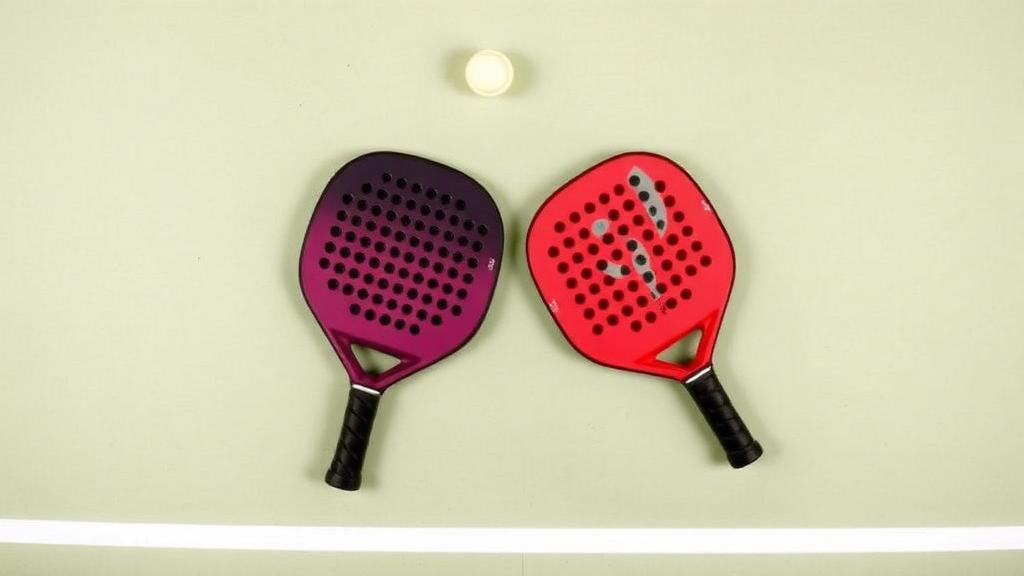
Every padel player knows the sensation. Two rackets can look almost identical, weigh nearly the same, and cost the same at the pro shop, yet the moment the ball meets the face, one feels crisp and alive while the other feels dull and dead. That elusive quality, which athletes call feel, has long been treated as folklore. Now a team of French researchers has taken it into the laboratory, or more precisely onto the court, and shown that the subjective impressions of an expert player correspond to measurable, statistically significant differences in the vibration and sound produced when a ball strikes the racket.
The study, published in the journal Sports Engineering, was led by Thomas Daney of Sorbonne Université and the Arts et Metiers Institute of Technology, together with Delphine Chadefaux, Jean-Loïc Le Carrou and Arthur Paté, spanning laboratories in Paris and Lille that specialize in acoustics, musical instrument making and human biomechanics. The group set out with a deceptively simple question: if a highly skilled player perceives two rackets as behaving differently under vibration, can physics find the fingerprint of that difference? Rather than testing rackets in isolation on a bench, the team chose to measure them in the messiest possible setting, a real padel court, with a real player hitting real forehands.
Padel, a sport played on an enclosed court with solid-faced rackets perforated with holes, has exploded in popularity across Spain, France, Latin America and beyond. Unlike stringed tennis rackets, padel rackets are composite slabs, typically of carbon or fiberglass faces bonded to a foam core, and their dynamic behavior during impact is far less documented in the scientific literature. The sport also carries a real injury burden. Epidemiological studies cited by the authors report substantial rates of elbow, wrist and shoulder complaints among both professional and amateur players, which makes understanding how impact vibrations travel from the racket into the human arm more than an academic curiosity.
The experimental design was elegantly economical. Two rackets were selected specifically because a single, highly skilled player judged them to exhibit clearly different vibratory behaviors, a perceptual judgment that served as the hypothesis to be tested. The player then performed twenty routine forehand strokes on a padel court, giving the researchers a set of repeated, ecologically valid impacts rather than the artificial strikes of a pendulum or robot rig. Accelerometers were mounted on each racket and on the player’s body, capturing the shock-induced vibration at the wrist and elbow joints and in the soft tissues of the upper limb. Simultaneously, a microphone recorded the sound radiated by each ball-racket impact, the sharp percussive crack that fills a padel court with every shot.
The technical challenge of measuring vibration in playing conditions should not be underestimated. Previous work on tennis has shown that a player’s grip itself alters the dynamic behavior of a racket, damping and shifting its modes of oscillation, and that muscle activity in the forearm can actively tune the vibrations that reach the hand. The French team built on this lineage, drawing on methods developed for tennis serves, golf shots and baseball bats, where researchers have long known that the perception of a good shot is a multisensory experience combining vibrotactile feedback through the hand with acoustic feedback through the ear. Studies in psychoacoustics have established that human listeners are exquisitely sensitive to the frequency content, loudness and decay of impact sounds, and that these cues shape judgments of equipment quality even when players cannot articulate why.
To translate raw sensor data into perceptually meaningful terms, the researchers analyzed both the vibration and the sound using classical descriptors known to have correlates in human perception. In the time domain, these included peak amplitude, the maximum excursion of the signal, and RMS level, a measure of overall energy, along with decay time, which captures how quickly the ringing of the impact dies away. In the frequency domain, the team examined the spectral content of each signal and the spectral centroid, essentially the balance point of the spectrum, which psychoacoustic research links to the perceived brightness or dullness of a sound. These are the same tools used to characterize the timbre of musical instruments, a fitting choice given that one of the contributing laboratories, the Lutheries-Acoustique-Musique team at the Institut Jean Le Rond d’Alembert, spends its days studying violins and guitars.
The results vindicated the expert player’s ear and hand. Across the twenty strokes, the analysis revealed statistically significant differences between the two rackets in several of these descriptors, in both the time and frequency domains, differences that the authors say highlight genuinely distinct vibratory behaviors. In other words, the vague impression that one racket feels different from another was anchored in objective, repeatable physical measurements taken under authentic playing conditions. The combination of racket-mounted and body-mounted sensors meant the team could trace not only how each racket rang after impact but also how those vibrations were transmitted into the wrist, elbow and soft tissues of the player’s arm, the pathway most relevant to both comfort and injury risk.
The study was not without its measurement compromises, which the authors report transparently. For one muscle location on the forearm, electromyography data proved unusable while inertial measurement data remained valid; for another location, the situation was reversed. Such is the reality of embedded sensing on a moving, sweating athlete, and the team’s willingness to work within these constraints underscores the value of their approach: laboratory rigs produce cleaner signals, but only playing conditions produce signals that actually matter to players. The statistical analysis applied multiple-comparison corrections, using procedures designed to control false discovery rates across the many descriptors tested, lending rigor to the claimed differences.
Why does this matter beyond the padel court? For manufacturers, the findings suggest a concrete route to designing rackets with targeted feel. If specific acoustic and vibratory descriptors, such as decay time or spectral centroid, reliably encode the perceptual differences that players notice, then engineers can tune foam cores, face laminates and hole patterns with those descriptors in mind, much as guitar makers tune bracing patterns for tone. For sports medicine, quantifying how different rackets channel vibration into the joints of the upper limb could inform equipment recommendations for players prone to overuse injuries, a question that has been studied extensively in tennis but barely at all in padel. And for the science of perception, the work adds another sport to the growing evidence that what athletes call feel is a genuine, measurable, multisensory construct rather than marketing mystique.
The research, funded through a doctoral grant from the French National Center for Scientific Research’s network on sports and physical activities, was approved by an ethics committee and relied on the generous commitment of a single expert player, whose twenty forehands formed the entire dataset. The authors acknowledge that broader panels of players and additional stroke types will be needed to generalize the findings, and the data are available upon reasonable request for other teams to build on. But the conceptual leap is already in place: the percussive crack of a padel rally, the buzz in a player’s wrist and the ringing in the racket’s frame are not separate phenomena but one coupled system, and by measuring that system where it lives, on the court, mid-rally, researchers have begun to give the word feel its physics. For a sport played by millions and heard in every point, that is a sound worth decoding.
Subject of Research: Vibration and acoustic analysis of ball-racket impacts in padel under playing conditions
Article Title: Vibration and sound of two padel rackets compared in playing conditions
Article References: Daney, T., Chadefaux, D., Carrou, J.-L. L., & Paté, A. (2026). Vibration and sound of two padel rackets compared in playing conditions. Sports Engineering, 29(2), Article 35. https://doi.org/10.1007/s12283-026-00565-4
Image Credits: AI Generated
DOI: 10.1007/s12283-026-00565-4
Keywords: padel, racket vibration, acoustics, ball impact, biomechanics, psychoacoustics, spectral centroid, decay time, sports engineering, injury prevention, embedded sensors, perception
Cite Scienmag News
Denise Maddox. (October 12, 2026). The Sound of Feel: Scientists Decode Why Two Padel Rackets Strike So Differently. Scienmag. https://scienmag.com/the-sound-of-feel-scientists-decode-why-two-padel-rackets-strike-so-differently/
Denise Maddox. "The Sound of Feel: Scientists Decode Why Two Padel Rackets Strike So Differently." Scienmag, 12 October 2026, https://scienmag.com/the-sound-of-feel-scientists-decode-why-two-padel-rackets-strike-so-differently/. Accessed 12 October 2026.
Denise Maddox. "The Sound of Feel: Scientists Decode Why Two Padel Rackets Strike So Differently." Scienmag. October 12, 2026. https://scienmag.com/the-sound-of-feel-scientists-decode-why-two-padel-rackets-strike-so-differently/


