


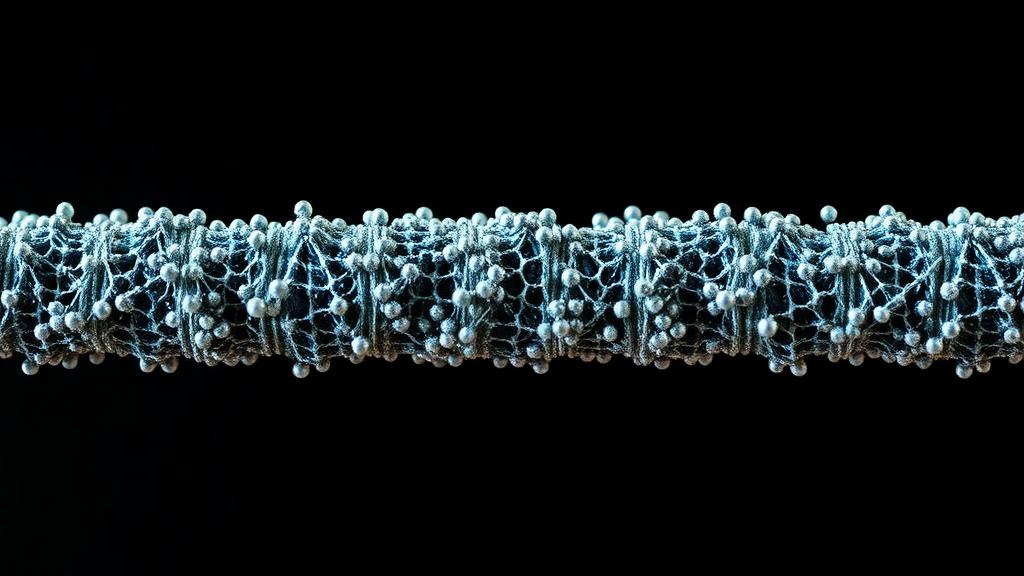
A quiet revolution is unfolding in the fight against the invisible pollutants that now permeate rivers, lakes, and groundwater around the world. A comprehensive review published in Environmental Science and Pollution Research by researchers at the Soós Ernő Research and Development Center of the University of Pannonia in Hungary examines the rapid rise of magnetite-based nanocomposite adsorbents as a leading technology for stripping contaminants of emerging concern from water. These pollutants, known in the field as CECs, include pharmaceuticals, pesticides, hormones, industrial chemicals, and personal care products that conventional treatment plants were never designed to capture. The review, led by Melkamu Birlie Genet and colleagues, synthesizes more than a decade of research and argues that magnetic nanomaterials may represent the most practical and sustainable path yet toward removing these persistent, bioactive trace pollutants from the water cycle.
The scale of the problem is staggering. Driven by industrial growth, rapid urbanization, and the widespread use of pharmaceuticals and agrochemicals, CECs have become a major challenge to global water quality and public health. Unlike bulk organic waste, these compounds are typically present at trace concentrations, yet they are biologically active even at vanishingly low doses, interfering with endocrine systems in aquatic organisms and raising concerns about antibiotic resistance. Conventional treatment technologies, from activated sludge processes to standard chlorination, exhibit poor removal efficiencies for these substances. Activated carbon adsorption, the traditional workhorse of advanced treatment, works reasonably well but suffers from costly regeneration, loss of capacity over repeated cycles, and the practical difficulty of recovering fine carbon particles from treated water. The Hungarian team’s review positions adsorption as a sustainable and cost-effective strategy, provided the adsorbent itself can be made selective, reusable, and easy to separate.
This is where magnetite, the iron oxide mineral Fe3O4, enters the picture with almost theatrical flair. At the nanoscale, magnetite particles exhibit superparamagnetism, meaning they are strongly attracted to magnetic fields but retain no permanent magnetization once the field is removed. In practical terms, this allows billions of tiny adsorbent particles to be dispersed throughout contaminated water, maximizing contact with pollutants, and then be swept out of solution in seconds using a simple low-intensity magnet. No filtration membranes to clog, no centrifuges consuming energy, no sedimentation tanks occupying land. The review notes that magnetic separation offers a transformative route toward highly selective, energy-efficient water remediation, and that Fe3O4-based nanocomposites have emerged as leading materials thanks to their high surface area, versatile surface chemistry, and rapid recovery under modest magnetic fields.
Bare magnetite nanoparticles, however, are only the beginning of the story. The true power of this technology lies in hybridization. By integrating Fe3O4 nanoparticles with carbonaceous materials such as graphene oxide, carbon nanotubes, and biochar, with natural and synthetic biopolymers such as chitosan and cellulose, with metal-organic frameworks whose crystalline pores can be engineered with atomic precision, and with abundant clay minerals such as bentonite and zeolites, researchers have created nanocomposites with substantial adsorption capacity, tunable porosity, and enhanced selectivity. Each partner material contributes something distinct: carbon surfaces offer pi-pi interactions that grip aromatic drug molecules, amines on chitosan capture anionic pollutants electrostatically, and metal-organic framework cavities provide size-selective molecular sieving. The magnetic core, meanwhile, remains the engine of recoverability. The review documents that these hybrids consistently surpass conventional adsorbents across multiple performance metrics.
The catalogue of pollutants these materials can capture reads like an inventory of modern anxiety. Studies compiled in the review describe efficient removal of antibiotics including tetracycline, ciprofloxacin, amoxicillin, and ceftriaxone; psychiatric drugs such as carbamazepine; painkillers like diclofenac, ibuprofen, and naproxen; endocrine disruptors including bisphenol A; pesticides such as atrazine, imidacloprid, glyphosate, and chlorpyrifos; and even chemotherapy agents like doxorubicin and methotrexate. The underlying chemistry is a choreography of mechanisms operating in parallel. Electrostatic attraction draws oppositely charged molecules to functionalized surfaces. Hydrogen bonding and hydrophobic partitioning contribute additional binding energy. Pore filling traps molecules within mesoporous architectures, while pi-pi stacking and complexation with surface iron sites anchor aromatic and chelating compounds. Understanding which mechanism dominates for a given pollutant-matrix pair, the authors emphasize, is essential for designing adsorbents rationally rather than by trial and error.
Synthesis routes matter enormously, and the review maps the field’s preferences. Coprecipitation dominates as the method of choice for producing magnetite nanoparticles, prized for its simplicity, low cost, and scalability, followed by solvothermal and hydrothermal routes that offer finer control over particle size and crystallinity. Thermal decomposition yields highly monodisperse particles, while green synthesis approaches using plant extracts are attracting attention for their environmental credentials. Particle size is not a trivial detail: the review highlights that magnetic properties, including coercivity, depend critically on particle dimensions, and that superparamagnetic behavior, the property that makes instant magnetic recovery possible, only emerges below a critical size threshold. Surface coatings of silica, polymers, or organic acids stabilize the nanoparticles against aggregation and oxidation, preserving both their magnetic responsiveness and their dispersibility in real water matrices loaded with natural organic matter.
Regeneration and reuse may prove to be the decisive factor in whether this technology escapes the laboratory. An adsorbent that saturates after a single use is economically and environmentally untenable, and the review devotes substantial attention to the regeneration question. Magnetic nanocomposites show excellent regeneration capacity and reusability across many reported studies, with desorption achieved through solvents, pH adjustment, thermal treatment, ultrasound, and electrochemical methods. Electrochemical regeneration in particular is gaining traction for carbon-based adsorbents, since it can destroy captured pollutants in situ without harsh chemicals. The review also explores the environmental fate of spent nanocomposites and their repurposing potential, noting that exhausted adsorbents can sometimes be converted into catalysts for advanced oxidation processes, closing the loop in a genuinely circular fashion. Still, the authors caution that long-term stability and regeneration efficiency under real operating conditions remain open challenges.
That caution extends to a sobering list of hurdles between laboratory promise and full-scale deployment. Large-scale synthesis at consistent quality, validation in complex real-world matrices where dozens of pollutants compete for binding sites alongside humic substances and dissolved salts, potential nanoparticle toxicity, and the fate of released nanomaterials in aquatic ecosystems all demand further study. Real wastewater is a far messier environment than the ultrapure synthetic solutions of academic papers, and natural organic matter can block pores and compete for surface sites, degrading performance. The review’s authors argue that addressing these questions head-on, rather than after deployment, is essential for responsible innovation. Their assessment nonetheless concludes that Fe3O4-based nanocomposites are promising as sustainable, next-generation adsorbents for advanced wastewater remediation.
What makes this review timely is the convergence of pressures on global water systems. Scarcity is forcing communities to recycle wastewater, which in turn demands removal technologies capable of handling trace organic pollutants that slip through conventional barriers. The Hungarian team, supported by the Interreg VI-A Slovenia-Hungary Programme and the National Research, Development and Innovation Office, frames magnetic nanocomposites not as a single miracle material but as a design platform: a magnetic core for recovery, a functional shell for selectivity, and a porous scaffold for capacity. If the remaining challenges of scale, stability, and safety can be resolved, the humble iron oxide particle that medieval blacksmiths knew as lodestone may become one of the most important tools of twenty-first-century water purification, quietly pulling invisible pharmaceuticals and pesticides out of the water we drink, one magnetic field pulse at a time.
Subject of Research: Fe3O4-based magnetic nanocomposite adsorbents for removing contaminants of emerging concern from water
Article Title: Advancements on Fe3O4-based nanocomposite adsorbents for the removal of contaminants of emerging concern from water: a review on mechanism, regeneration, and fate
Article References: Genet, M. B., Deme, G. D., Mekuria, A. T., Kovács, N., Maász, G., & Tombácz, E. (2026). Advancements on Fe3O4-based nanocomposite adsorbents for the removal of contaminants of emerging concern from water: a review on mechanism, regeneration, and fate. Environmental Science and Pollution Research. https://doi.org/10.1007/s11356-026-38261-2
Image Credits: AI Generated
DOI: 10.1007/s11356-026-38261-2
Keywords: magnetite, nanocomposites, water treatment, contaminants of emerging concern, adsorption, magnetic separation, pharmaceuticals, pesticides, regeneration, wastewater remediation, graphene oxide, chitosan
Cite Scienmag News
Violet Maxwell. (October 12, 2026). Magnetic Nanocomposites Emerge as Powerful New Weapons Against Water Pollutants. Scienmag. https://scienmag.com/magnetic-nanocomposites-emerge-as-powerful-new-weapons-against-water-pollutants/
Violet Maxwell. "Magnetic Nanocomposites Emerge as Powerful New Weapons Against Water Pollutants." Scienmag, 12 October 2026, https://scienmag.com/magnetic-nanocomposites-emerge-as-powerful-new-weapons-against-water-pollutants/. Accessed 12 October 2026.
Violet Maxwell. "Magnetic Nanocomposites Emerge as Powerful New Weapons Against Water Pollutants." Scienmag. October 12, 2026. https://scienmag.com/magnetic-nanocomposites-emerge-as-powerful-new-weapons-against-water-pollutants/


