


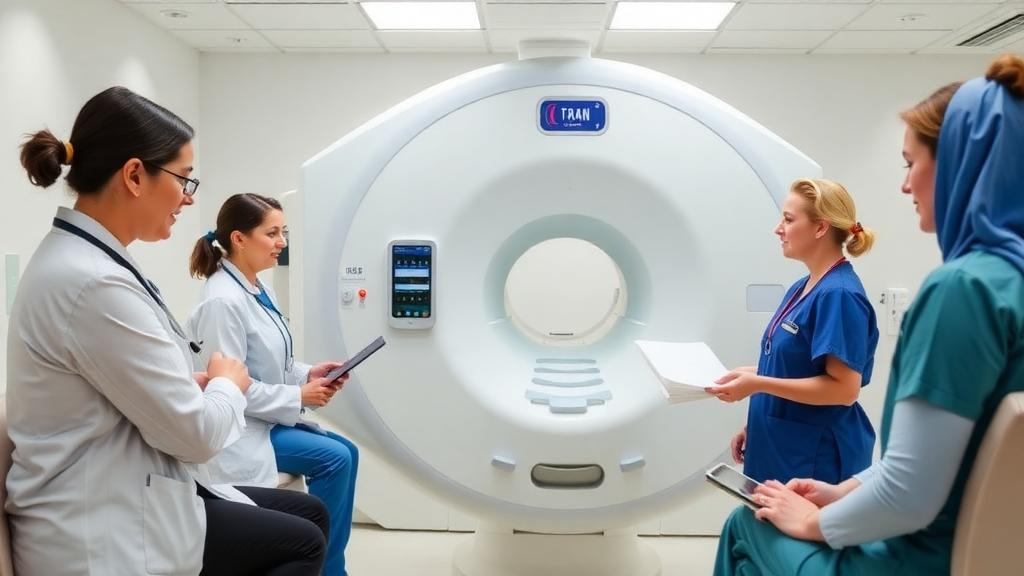
Nuclear medicine nursing is one of the most demanding specialties in modern healthcare, requiring clinicians to master radiation safety, radiopharmaceutical handling, and sophisticated imaging technologies while delivering compassionate patient care. Yet the traditional lecture-based model that has long dominated training in this field appears increasingly out of step with those demands. A new multicenter study from China, published in BMC Nursing, offers some of the strongest head-to-head evidence to date that two alternative teaching approaches—Outcome-Based Education and online-offline blended learning—can substantially outperform conventional lectures across every major measure of trainee competence.
The research, conducted between January 2023 and December 2025 across three tertiary hospitals in Sichuan and Yunnan provinces, enrolled 322 nursing trainees into a carefully structured comparative design. Of these, 109 received training built around Outcome-Based Education, often abbreviated OBE, while 108 were taught through a blended model combining online and face-to-face instruction. A third cohort of 105 trainees served as the control group, receiving traditional lecture-based teaching. All three groups completed the same standardized eight-week nuclear medicine nursing curriculum, totaling 40 class hours, which allowed the investigators to isolate the effect of the teaching model itself rather than differences in content or duration.
The study design deserves particular attention because it blends prospective and historical elements. The two intervention groups were randomly allocated to their teaching models, giving that comparison the rigor of a randomized trial. The lecture-based control group, however, was a historical non-randomized cohort, meaning its participants had completed the same training under the old model before the new programs began. The authors are transparent about this limitation, noting that the study is therefore not a full randomized controlled trial and was not registered as such. Three independent institutional review boards approved the protocol, and all participants provided written informed consent in accordance with the Declaration of Helsinki.
Outcome-Based Education is a pedagogical framework that reverses the traditional logic of curriculum design. Instead of starting with what will be taught, it begins by defining the competencies a learner must ultimately demonstrate—in this case, the professional knowledge, practical skills, and job readiness expected of a nuclear medicine nurse—and then organizes every teaching activity around achieving those defined outcomes. For a specialty where errors in radiation protection or radiopharmaceutical management can carry real clinical consequences, anchoring instruction to explicit, measurable competencies has an obvious appeal. The blended teaching model, by contrast, distributes learning across digital platforms and in-person sessions, allowing trainees to absorb theoretical material online at their own pace and reserve valuable face-to-face time for hands-on practice and discussion.
When the researchers compared outcomes after the eight-week programs, the results were strikingly consistent. Both the OBE group and the blended teaching group achieved significantly higher professional knowledge scores, higher pass rates on practical operation assessments, higher job competency scores, and higher trainee satisfaction rates than the lecture-based control group, with all comparisons reaching a statistical significance threshold of P less than 0.001. Perhaps most notably, there were no significant differences between the two intervention groups on any of these measures, suggesting that both modern approaches deliver comparable overall gains and that the specific mechanism—whether outcome-driven design or digital flexibility—matters less than moving away from passive lecturing altogether.
Beneath that headline finding, however, the study uncovered a more nuanced pattern. When the investigators broke the results down by trainee type, separating nursing interns from advanced practice nurses, the two teaching models appeared to confer different advantages. Among interns, blended teaching yielded somewhat higher professional knowledge scores, at 91.2 plus or minus 4.5 compared with 89.8 plus or minus 4.8 in the OBE group, along with a higher satisfaction rate of 97.1 percent versus 92.6 percent. Among advanced practice nurses, the direction reversed: OBE-oriented teaching showed marginally better job competency scores, at 90.3 plus or minus 3.7 versus 87.6 plus or minus 4.1, and a higher practical operation pass rate of 99.0 percent compared with 94.3 percent.
These subgroup findings come with an important statistical caveat. Formal interaction testing for the combination of teaching model and trainee type did not reach statistical significance, with a P-interaction value of 0.071. The authors are careful to frame the subgroup results as exploratory, hypothesis-generating observations rather than definitive evidence that one model suits one trainee category better than another. Still, the pattern is biologically and pedagogically plausible. Less experienced interns may benefit most from the flexibility and repetition that online modules provide as they build foundational knowledge, while seasoned advanced practice nurses—already fluent in core content—may gain more from the structured, competency-focused challenge that OBE imposes.
The stakes of this research extend well beyond academic pedagogy. Nuclear medicine departments rely on nurses who can safely administer radiopharmaceuticals, minimize radiation exposure to patients, staff, and themselves, and operate confidently alongside technologies such as single photon emission computed tomography combined with computed tomography, known as SPECT/CT. The study’s authors note that traditional lecture-based teaching has struggled to keep pace with these modern training needs, and their data provide quantitative support for that concern. If lecture-based instruction systematically produces lower knowledge scores, lower practical pass rates, and lower job competency, then hospitals relying on it may be graduating nurses who are less prepared for the realities of a radioactive clinical environment.
The multicenter design strengthens the findings considerably. By replicating the comparison across three hospitals in different provinces, the study reduces the likelihood that its results reflect the idiosyncrasies of a single institution, a particularly charismatic instructor, or a locally unusual trainee population. The standardized 40-hour curriculum across all arms further tightens the comparison. The research received no specific external funding, and the authors declare no competing interests, factors that reduce concerns about commercial influence on the conclusions. The article was published as open access on 22 September 2026, making the full dataset and methods available for scrutiny by educators and researchers worldwide.
What comes next, according to the study’s conclusions, is the harder question of individualization. Both OBE-oriented and blended teaching are now clearly superior to traditional lectures in this setting, but the tantalizing hint that different trainee groups might flourish under different models awaits confirmation in larger-scale studies before widespread adoption of tailored training strategies can be justified. If future work validates the subgroup pattern, nursing schools and hospital departments could one day assign teaching models the way clinicians assign treatments—matching the digital flexibility of blended learning to novices and the outcome-driven rigor of OBE to experienced practitioners. For a specialty where competence is measured not just in exam scores but in safe radiation practice, that prospect represents a meaningful step toward training that is as precise as the medicine itself.
Subject of Research: Comparative effectiveness of Outcome-Based Education and blended teaching versus lecture-based teaching in nuclear medicine nursing education
Article Title: Effectiveness of OBE-oriented and online-offline blended teaching versus traditional lecture-based teaching in nuclear medicine nursing education: a multicenter prospective comparative study
Article References: Zhang, W., Bai, K., Feng, C., Zeng, H., & Wang, H. (2026). Effectiveness of OBE-oriented and online-offline blended teaching versus traditional lecture-based teaching in nuclear medicine nursing education: a multicenter prospective comparative study. BMC Nursing. https://doi.org/10.1186/s12912-026-05403-3
Image Credits: AI Generated
DOI: 10.1186/s12912-026-05403-3
Keywords: nuclear medicine nursing, nursing education, Outcome-Based Education, blended teaching, lecture-based teaching, radiation protection, clinical training, multicenter study, job competency, trainee satisfaction, medical pedagogy, China
Cite Scienmag News
Ophelia Keating. (October 11, 2026). Blended and Outcome-Based Teaching Outperform Lectures in Nuclear Medicine Nursing Training. Scienmag. https://scienmag.com/blended-and-outcome-based-teaching-outperform-lectures-in-nuclear-medicine-nursing-training/
Ophelia Keating. "Blended and Outcome-Based Teaching Outperform Lectures in Nuclear Medicine Nursing Training." Scienmag, 11 October 2026, https://scienmag.com/blended-and-outcome-based-teaching-outperform-lectures-in-nuclear-medicine-nursing-training/. Accessed 11 October 2026.
Ophelia Keating. "Blended and Outcome-Based Teaching Outperform Lectures in Nuclear Medicine Nursing Training." Scienmag. October 11, 2026. https://scienmag.com/blended-and-outcome-based-teaching-outperform-lectures-in-nuclear-medicine-nursing-training/


