


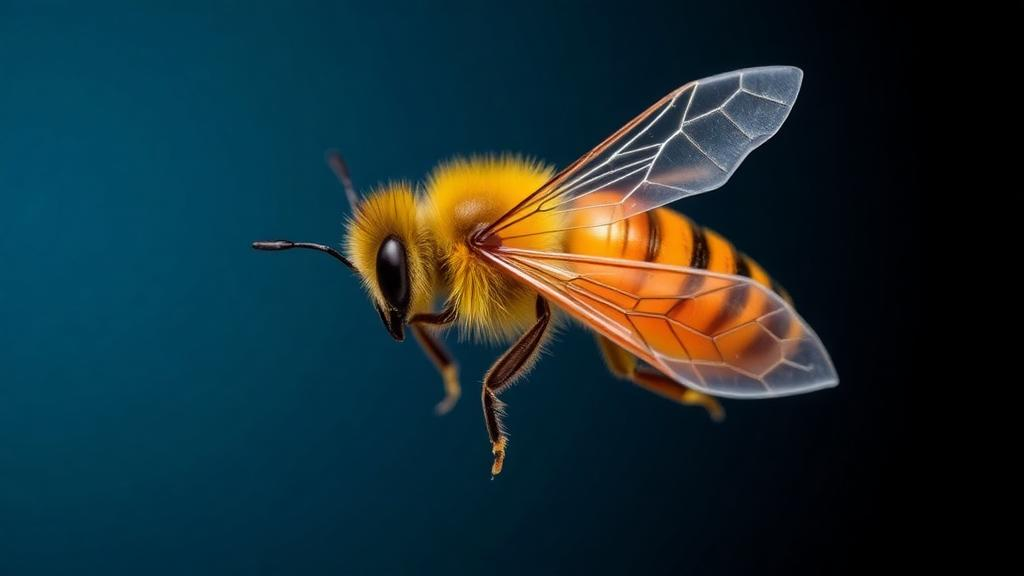
A biodegradable film made from laboratory-engineered honeybee silk has passed a crucial early test in wound healing, opening the door to a new generation of dressings that could do far more than simply cover an injury. Researchers at CSIRO, Australia’s national science agency, and Adelaide University report that the recombinant silk film is safe, well tolerated by the body, and gradually breaks down within the wound as tissue regenerates. The findings, published in the Journal of Biomedical Materials Research Part B: Applied Biomaterials, suggest that a material once studied mainly for its unusual protein chemistry could become the foundation for dressings that actively sense infection or release drugs on demand, rather than acting as passive barriers over damaged skin.
Honeybee silk is not the silk most people picture when they think of biomaterials. Unlike the cocoons of silkworms or the webs of spiders, honeybee silk is a naturally occurring protein material produced by larvae, which use it to build protective structures inside the hive. The proteins that make up this silk are strong, flexible and remarkably lightweight, a combination that has attracted materials scientists for years. What sets honeybee silk apart, however, is the structure of its protein sequence. Researchers have found that this sequence can be modified without destroying the material’s overall architecture, which means scientists can reprogram the silk at the molecular level while preserving the mechanical properties that make it useful.
That reprogrammability is the heart of the new work. Because the silk used in the study is recombinant, it is bioengineered in the laboratory rather than harvested from bees, giving researchers complete control over the protein sequence they produce. This opens the possibility of building new functions directly into the material, such as infection-sensing signals or targeted drug release mechanisms. In principle, a future dressing made from engineered honeybee silk could detect the chemical signatures of a developing infection in a chronic wound and respond by releasing an antimicrobial payload exactly where and when it is needed. The current study did not demonstrate those functions, but it established something more fundamental: that the base material itself does not interfere with healing.
Dr Caitlin Johnston, the lead researcher at CSIRO, described the film as a building material that can be redesigned at the molecular level. According to Johnston, the team can potentially build specific instructions into the silk so that, in the future, a dressing could respond to the conditions inside a wound rather than serving as a passive barrier. She characterized this as a completely new way of thinking about wound care, one in which materials actively sense changes in the wound environment and respond to them. With the safety and biocompatibility of the base film now demonstrated, Johnston said the team is excited to move to the next stage and begin building materials designed to help prevent infections.
The decision to test biocompatibility first reflects a careful engineering philosophy. Dr Anna Antipov of the Future Industries Institute at Adelaide University, which provided wound healing expertise and conducted the laboratory tests for the study, emphasized that wound healing is a very complicated process. Before sophisticated functions can be added to a material, researchers need to understand how that material behaves in the wound environment. What the study showed, she explained, is that the honeybee silk material is biodegradable and well tolerated by the body, and, importantly, that it does not stop the wound from healing. Only with that baseline established can the team responsibly layer on sensing and drug delivery capabilities.
One of the most clinically significant findings concerns degradation. The researchers observed that much of the silk film gradually broke down within the wound rather than persisting as a permanent material. This behavior could substantially change how dressings are managed in practice. Conventional dressings typically must be removed and replaced repeatedly during the healing process, and each removal risks disturbing the delicate new tissue that has formed. A dressing that resorbs into the wound over time could reduce the need for such interventions, sparing patients discomfort and protecting fragile regenerating tissue from mechanical disruption. For wounds that take weeks or months to close, the difference between a removable dressing and a self-degrading one could be meaningful.
The motivation for this work is grounded in a substantial and growing health burden. Chronic wounds affect an estimated 450,000 people in Australia each year and cost the health system more than six billion dollars annually. Infections are a central complication: they can delay healing, increase the risk of hospitalisation and amputation, and often require repeated clinical intervention. Chronic wounds are particularly common among people with diabetes and circulatory problems, and managing them consumes significant clinical resources. A smart dressing that could monitor the wound environment and intervene early against infection would address one of the most stubborn failure modes in current wound care, potentially reducing both the human and economic costs of these injuries.
Antipov also pointed to an equity dimension of the technology. People living in rural and remote communities are expected to be among the main beneficiaries of smart silk dressings, because the material could reduce the need for frequent dressing changes and for specialist appointments in capital cities. For patients in remote Australia, reaching a wound care specialist can involve long journeys and long waits, and delayed care is a known contributor to poor outcomes in chronic wounds. A dressing that degrades in place, senses its environment and reduces the frequency of clinical visits could therefore narrow a gap in care that currently disadvantages rural populations.
The new study builds on more than a decade of CSIRO research into honeybee silk as a biomaterial platform. Previous studies had already shown that the material is strong, flexible, biodegradable and safe for use in biological applications, but the question of how the film interacts with the actual processes of acute wound healing in a living body remained open. By demonstrating that the film is well tolerated during wound healing and does not impede the overall healing process, the team has cleared a critical regulatory and scientific hurdle. The work was a genuine collaboration: CSIRO developed and produced the recombinant honeybee silk film, while Adelaide University contributed wound healing expertise and carried out the laboratory tests that assessed the material’s behavior in vivo.
The momentum behind the project is set to continue. Following the promising results, the research team has been awarded a Medical Research Future Fund grant to develop and test several smart dressings aimed at helping prevent infections in chronic wounds. That next phase will attempt to translate the molecular programmability of honeybee silk from concept into functional medical products, embedding responsive features into a material that has now been shown to coexist peacefully with healing tissue. The study, titled Interaction of Biodegradable Recombinant Honeybee Silk Films With Acute Wound Healing Processes In Vivo, was published in the Journal of Biomedical Materials Research Part B: Applied Biomaterials. If the smart dressing program succeeds, a protein first evolved by bee larvae to protect the hive may end up protecting human patients, one programmable film at a time.
Subject of Research: Recombinant honeybee silk biomaterials for biodegradable and smart wound dressings
Article Title: Honeybee silk could power smarter wound dressings
Article References: Honeybee silk could power smarter wound dressings. (n.d.). Original publication
Image Credits: AI Generated
DOI: Not provided
Keywords: honeybee silk, recombinant protein, wound dressings, biodegradable biomaterials, chronic wounds, CSIRO, Adelaide University, drug delivery, infection sensing, biomedical materials, wound healing, Medical Research Future Fund
Cite Scienmag News
Denise Maddox. (October 11, 2026). Engineered Honeybee Silk Films Show Promise as Biodegradable Smart Wound Dressings. Scienmag. https://scienmag.com/engineered-honeybee-silk-films-show-promise-as-biodegradable-smart-wound-dressings/
Denise Maddox. "Engineered Honeybee Silk Films Show Promise as Biodegradable Smart Wound Dressings." Scienmag, 11 October 2026, https://scienmag.com/engineered-honeybee-silk-films-show-promise-as-biodegradable-smart-wound-dressings/. Accessed 11 October 2026.
Denise Maddox. "Engineered Honeybee Silk Films Show Promise as Biodegradable Smart Wound Dressings." Scienmag. October 11, 2026. https://scienmag.com/engineered-honeybee-silk-films-show-promise-as-biodegradable-smart-wound-dressings/


