


When missiles began falling on Iranian cities in June 2025, millions of families had almost no time to prepare for what would become one of the most compressed trauma events in recent memory. Between June 13 and 24, 2025, the 12-day Iran-Israel conflict subjected urban households to missile strikes, air defense sirens, near-total internet blackouts, uncertainty about the whereabouts of loved ones, and disruptions in essential services. While psychologists have studied extensively how families endure prolonged wars, far less is known about what happens to family life when extreme danger arrives in a burst measured in days rather than years, and when the digital infrastructure that modern families depend on collapses at the same moment. A new study published in BMC Psychology offers one of the first detailed phenomenological accounts of that experience, drawing on the lived memories of parents in three major Iranian cities.
The research, conducted by Mohaddeseh Alimoradi Otaghvar of the Psychology and Education Department at Kharazmi University of Tehran, used interpretative phenomenological analysis, a qualitative method designed to uncover how people make sense of significant experiences in their lives. The study recruited 22 individual parents and adult family members, comprising 14 women, all of them mothers, and 8 men, all of them fathers, from Tehran, Isfahan, and Shiraz. Participants were reached through purposive and snowball sampling, a technique in which initial respondents help identify others who share the relevant experience. Each participant took part in a semi-structured, in-depth interview lasting between 60 and 90 minutes, conducted in Persian one to three months after the ceasefire, between July and September 2025. The timing mattered: the interviews captured recollections while the events remained vivid but after the acute danger had passed.
The analysis followed the established procedures of interpretative phenomenological analysis, including idiographic case-by-case examination, identification of emergent themes within each account, clustering of themes across cases, and maintenance of an audit trail to preserve the analytic reasoning. From this process, four superordinate themes emerged, each with associated sub-themes. The first was the rapid reorganization of family organizational patterns under acute threat. The second concerned navigating technological disruption and information deprivation. The third involved enhancing intra-family emotional communication and support. The fourth described co-constructing shared meanings, spirituality, and posttraumatic growth. Together, these themes map closely onto the three domains of the Family Resilience Framework developed by family systems scholar Froma Walsh: organizational patterns, communication processes, and belief systems.
What makes the study distinctive is the temporal compression of the trauma it examines. Most research on family resilience in wartime has focused on protracted conflicts, where families adapt gradually over months or years of chronic stress. The 12-day conflict presented a fundamentally different challenge: families had to mobilize resilience processes almost instantaneously, without the slow accretion of coping routines that longer emergencies allow. The study found that households restructured their daily organization within hours, redistributing household tasks, establishing shelter routines, coordinating movements during strikes, and reassigning roles to keep children calm and elders informed. This rapid reorganization suggests that family systems can activate latent adaptive capacities far faster than many models of stress adaptation assume, provided the family already possesses a baseline of cohesion and flexible role structures.
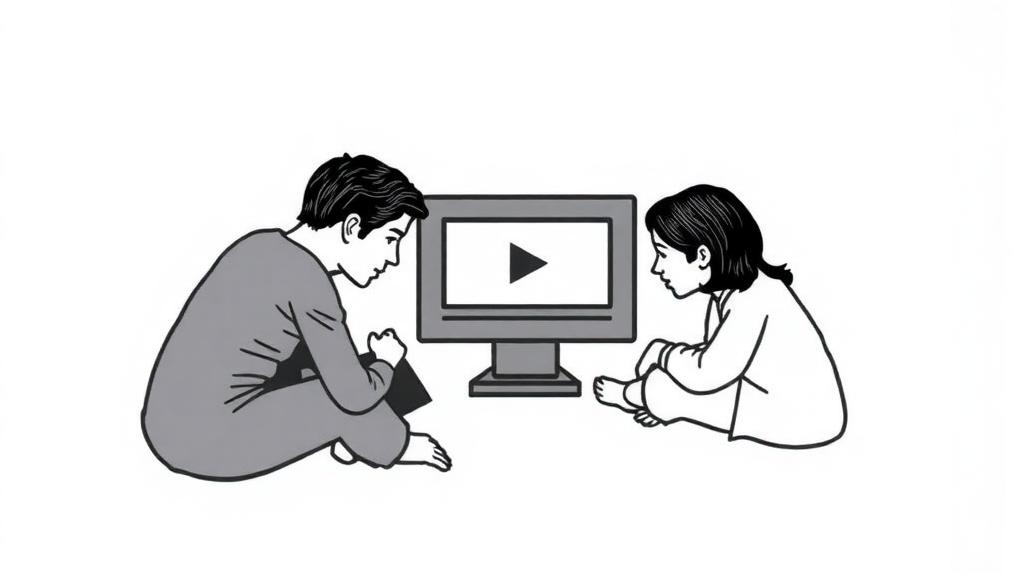
Perhaps the most striking finding concerns the internet blackouts that accompanied the conflict. The study describes these blackouts as functioning paradoxically. On one hand, the sudden loss of connectivity intensified what researchers call ambiguous loss, the distressing state of not knowing whether distant relatives were safe, whether a child at university had reached shelter, or whether a spouse stuck across town was alive. Information deprivation deprived families of the reassurance that normally buffers fear during disasters. On the other hand, the same disconnection pushed family members into deeper physical and emotional presence with one another. With phones silent and news feeds inaccessible, households turned inward, talking, praying, sharing meals in stairwells and basements, and attending to one another with an intensity that many participants had not experienced in years of digitally saturated daily life.
This paradox carries significant implications for how disaster psychologists think about technology in crisis. In digitally connected societies, communication infrastructure is often treated purely as a protective resource, and its loss as pure harm. The Iranian families’ accounts suggest a more complicated picture: disconnection from the network can simultaneously sever access to life-saving information and force a return to face-to-face emotional exchange that strengthens family bonds. The study is careful not to romanticize blackouts, noting that the ambiguous loss they produced was genuinely painful, but it highlights sensory hyperarousal and sudden technological disconnection as salient contextual conditions that appeared to shape how resilience processes were activated in acute urban warfare. Sirens, explosions, and the constant bodily vigilance of living under fire formed the sensory backdrop against which every family conversation and decision took place.
The emotional communication theme revealed how families deliberately modulated what they said to one another. Parents described calibrating honesty with children, offering reassurance without dismissing danger, and creating spaces where fear could be voiced safely rather than suppressed. Adults who had been strangers to emotional conversation in ordinary times found themselves discussing mortality, fear, and love with unprecedented openness. This mirrors Walsh’s framework, which holds that resilient families communicate clearly, express emotions openly, and collaborate in problem-solving rather than deferring to rigid hierarchies. The wartime conditions, paradoxically, seemed to accelerate the loosening of traditional communication barriers within some households.
The fourth theme, co-constructing shared meanings, spirituality, and posttraumatic growth, speaks to the belief systems domain of the resilience framework. Participants described drawing on religious faith, prayer, and culturally resonant concepts such as family cohesion and spiritual endurance to interpret the ordeal in ways that made it bearable. The study notes that no local Iranian resilience models were adopted as primary frameworks because Walsh’s model provided the most systematic mapping of the observed processes, although culturally specific concepts informed the interpretation. Families also reported forms of posttraumatic growth, including a deepened appreciation of relationships, a reordering of life priorities, and a strengthened sense of collective identity. The author is appropriately cautious, framing these as emergent meanings co-constructed within families rather than as clinical outcomes measured on standardized scales.
Methodologically, the study demonstrates the value of phenomenology for capturing dimensions of trauma that surveys and scales often miss. By interviewing mothers and fathers individually rather than treating the family as a single unit, the design preserved the idiographic depth that interpretative phenomenological analysis requires, allowing divergent experiences within the same households to surface. The audit trail and peer debriefing, acknowledged in the paper, strengthened the trustworthiness of the analysis. The research received no external funding and was approved by the Ethics Committee of Kharazmi University in accordance with the Declaration of Helsinki, with informed consent obtained from all participants and no identifiable personal data presented.
The practical implications may prove the study’s most durable contribution. The author points toward culturally sensitive, short-term family preparedness interventions that address digital disconnection and sensory overload in conflict-affected urban settings. In an era when high-intensity, short-duration conflicts, natural disasters, and infrastructure failures can strike digitally dependent societies with little warning, the Iranian families’ experience offers a template: households that can rapidly reorganize roles, sustain honest emotional communication, and draw on shared meaning systems appear better equipped to absorb even the most compressed forms of trauma. As urban populations worldwide remain tethered to networks that can vanish in an instant, this research suggests that the oldest communication technology of all, the family talking face to face in the dark, remains a formidable buffer against catastrophe.
Subject of Research: Family resilience processes among Iranian urban families during the 12-day Iran-Israel conflict
Article Title: Family resilience in the face of short-term war trauma: an interpretative phenomenological analysis of iranian urban family members’ lived experiences during the 12-day Iran-Israel conflict
Article References: Otaghvar, M. A. (2026). Family resilience in the face of short-term war trauma: an interpretative phenomenological analysis of iranian urban family members’ lived experiences during the 12-day Iran-Israel conflict. BMC Psychology. https://doi.org/10.1186/s40359-026-05764-z
Image Credits: AI Generated
DOI: 10.1186/s40359-026-05764-z
Keywords: family resilience, war trauma, Iran-Israel conflict, interpretative phenomenological analysis, internet blackout, ambiguous loss, posttraumatic growth, Walsh Family Resilience Framework, urban warfare, spirituality, emotional communication, Iranian families
Cite Scienmag News
Glenn Wilkins. (October 11, 2026). When the Internet Went Dark: How Iranian Families Held Together Through 12 Days of War. Scienmag. https://scienmag.com/when-the-internet-went-dark-how-iranian-families-held-together-through-12-days-of-war/
Glenn Wilkins. "When the Internet Went Dark: How Iranian Families Held Together Through 12 Days of War." Scienmag, 11 October 2026, https://scienmag.com/when-the-internet-went-dark-how-iranian-families-held-together-through-12-days-of-war/. Accessed 11 October 2026.
Glenn Wilkins. "When the Internet Went Dark: How Iranian Families Held Together Through 12 Days of War." Scienmag. October 11, 2026. https://scienmag.com/when-the-internet-went-dark-how-iranian-families-held-together-through-12-days-of-war/


