


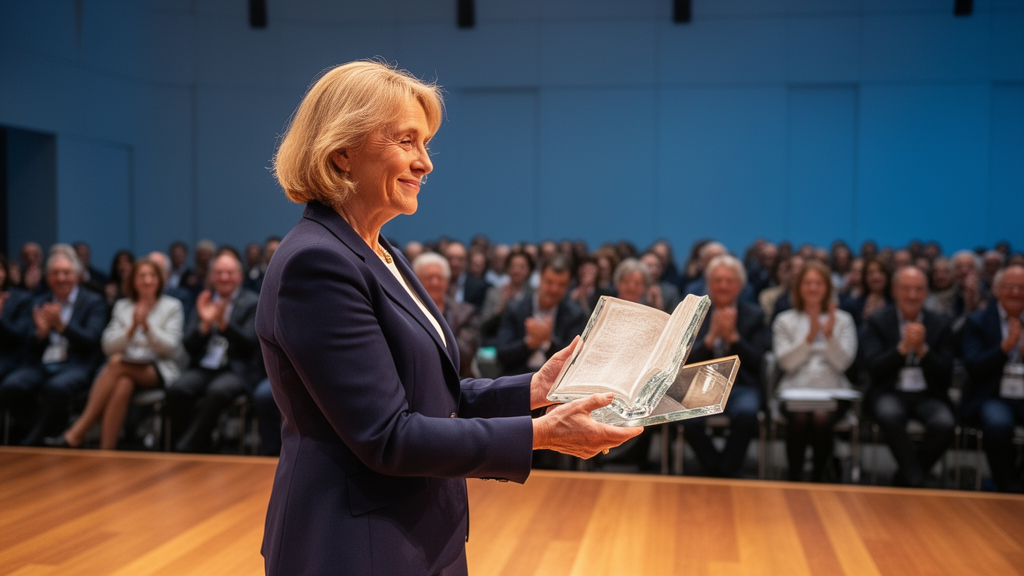
Springer Nature has announced the recipients of its Editor of Distinction Awards for 2026, an annual program that recognizes the academic editors whose behind-the-scenes work sustains the quality and credibility of the scientific record. Among the journals celebrating honorees this year is BMC Pharmacology and Toxicology, part of the BMC series of open access titles, which has named winners in two categories: the Springer Nature Editorial Contribution Award and the Springer Nature Author Service Award. The awards shine a rare public light on a group of researchers whose contributions to science are usually invisible to readers, even though virtually every paper that appears in a peer reviewed journal has passed through the hands of editors like them.
The Editorial Contribution Award, the larger of the two categories this year, honors editors for what the publisher describes as meticulous assessment of submissions and rigorous management of the peer review process, work that safeguards the scientific accuracy of the published record. Thirteen editors received the distinction: Abdelwahab Omri, Anshuman Chandra, Catherine Sherwin, Giovanni Tarantino, Hualin Cai, Imran Khan, Jeffrey Raj, Josef Yayan, Koushik Debnath, Marcelo Arbo, Md Jakaria, Zhengwei Huang, and Zhenwei Yu. The list reflects the international character of modern scientific publishing, with honorees affiliated with institutions across multiple continents and research cultures, mirroring the global authorship base that open access pharmacology and toxicology journals serve.
Understanding what these awards actually measure requires a clear picture of what an academic editor at a BMC journal does. Unlike the editors in chief of many traditional subscription journals, who often set strategy and make final acceptance decisions, handling editors at BMC titles are practicing researchers who manage the day to day flow of manuscripts. When a submission arrives, the editor assesses whether it falls within the journal’s scope, whether the underlying science is technically sound, and whether the study design, statistical analysis, and interpretation meet community standards. The editor then selects and invites peer reviewers, monitors their reports, weighs conflicting opinions, and issues a decision that must be justified to authors who have often invested years of work in the research.
That gatekeeping role has never been more consequential. Pharmacology and toxicology sit at the intersection of drug discovery, regulatory science, and public health, meaning that flawed studies in these fields can ripple outward into clinical practice and safety policy. A rigorous editor who catches an inappropriate dose selection in a preclinical toxicity study, or an unsupported claim of therapeutic efficacy, is performing a form of quality control that no automated system can yet replicate. The Editorial Contribution Award explicitly frames this work as safeguarding scientific accuracy, a phrase that acknowledges the editor’s role as the first and often most important line of defense against error, bias, and in the worst cases, research misconduct entering the literature.
The second category, the Springer Nature Author Service Award, recognizes a complementary dimension of editorial work. This year’s recipients are Anindya Bose, Josef Yayan, Simone Brogi, Zhenwei Yu, and, in a sign of how the two honors can overlap, Josef Yayan and Zhenwei Yu appear in both lists. The Author Service Award is given for exceptional service in improving the author experience and for ensuring that peer review is efficient, constructive, and fair. In practical terms, this means editors who return decisions promptly, who write decision letters that explain problems clearly rather than simply rejecting a paper, and who treat authors, including those whose work is ultimately declined, with professional respect.
The emphasis on constructive review reflects a growing consensus in the publishing world that peer review should be a collaborative process rather than an adversarial one. Studies of reviewer behavior have repeatedly shown that the tone and specificity of feedback strongly influence whether authors can successfully revise a manuscript. An editor who identifies a missing control experiment, suggests an appropriate statistical reanalysis, or flags overinterpretation of marginal results is not merely filtering submissions but actively helping to improve the science. For early career researchers in particular, a well handled first submission to an international journal can be a formative professional experience, and a poorly handled one can discourage talented scientists from continuing a line of work.
The dual recognition of Yayan and Yu underscores a point that publishing observers have long made: the best editors combine the skepticism of a referee with the service orientation of a mentor. Rigor and kindness are often portrayed as opposing virtues in peer review, with strict editors cast as gatekeepers and supportive ones as pushovers. The awards structure challenges that framing by honoring, in the same program, both meticulous assessment of submissions and exceptional service to authors. In reality, the two qualities are intertwined, because a review process that is thorough but opaque, or fast but superficial, fails both the authors and the readers who depend on the published record.
The awards also arrive at a moment when the peer review system itself is under intense scrutiny. Journals worldwide report rising submission volumes, growing difficulty in recruiting qualified reviewers, and increasing pressure from preprint servers that allow researchers to publish findings before formal review. Against that backdrop, the voluntary labor of academic editors has become more valuable and more fragile. Most academic editors receive little or no direct compensation for the hundreds of hours they devote to manuscript handling each year, performing the work alongside their own research, teaching, and clinical duties. Recognition programs such as the Editor of Distinction Awards are one of the few institutional mechanisms for acknowledging that contribution, and publishers increasingly pair them with tangible benefits such as waived article processing charges, free access to publications, and professional development opportunities.
For BMC Pharmacology and Toxicology specifically, the celebration of thirteen Editorial Contribution Award recipients and five Author Service Award recipients signals the scale of the editorial operation required to run a high volume open access journal. Open access publishing in pharmacology and toxicology has expanded rapidly over the past decade, driven by funder mandates and by the demand from researchers in low and middle income countries for unrestricted access to the literature. That growth multiplies the number of manuscripts each editor must evaluate and raises the stakes for consistent decision making, since the open access model makes accepted papers immediately and permanently available to a global readership that includes clinicians, regulators, and patients as well as scientists.
The publisher’s announcement closes with a broader tribute to editorial teams, crediting them with developing networks for authors and peer reviewers, helping authors improve their papers, and advocating for their journal communities. That description captures a shift in how the publishing industry understands editorial work: not as a passive sorting function, but as community building. Editors recruit reviewers, mentor new board members, represent their journals at conferences, and shape the standards that define what counts as sound science in their fields. The 2026 Editor of Distinction Awards, by naming Omri, Chandra, Sherwin, Tarantino, Cai, Khan, Raj, Yayan, Debnath, Arbo, Jakaria, Huang, Yu, Bose, and Brogi, makes visible the human infrastructure on which trust in scientific publishing ultimately rests, and offers a reminder that behind every published paper stands a chain of unpaid experts who chose to spend their time making it better.
Subject of Research: Recognition of academic editors for peer review and author service at BMC Pharmacology and Toxicology
Article Title: Springer Nature Editor of Distinction Awards 2026
Article References: Springer Nature Editor of Distinction Awards 2026. (n.d.). Original publication
Image Credits: AI Generated
DOI: Not provided
Keywords: Springer Nature, Editor of Distinction Awards, BMC Pharmacology and Toxicology, peer review, academic publishing, open access, editorial contribution award, author service award, pharmacology, toxicology, scientific record, research integrity
Cite Scienmag News
Ophelia Keating. (October 11, 2026). Peer Review Champions Honored in Springer Nature Editor of Distinction Awards 2026. Scienmag. https://scienmag.com/peer-review-champions-honored-in-springer-nature-editor-of-distinction-awards-2026-3/
Ophelia Keating. "Peer Review Champions Honored in Springer Nature Editor of Distinction Awards 2026." Scienmag, 11 October 2026, https://scienmag.com/peer-review-champions-honored-in-springer-nature-editor-of-distinction-awards-2026-3/. Accessed 11 October 2026.
Ophelia Keating. "Peer Review Champions Honored in Springer Nature Editor of Distinction Awards 2026." Scienmag. October 11, 2026. https://scienmag.com/peer-review-champions-honored-in-springer-nature-editor-of-distinction-awards-2026-3/


