


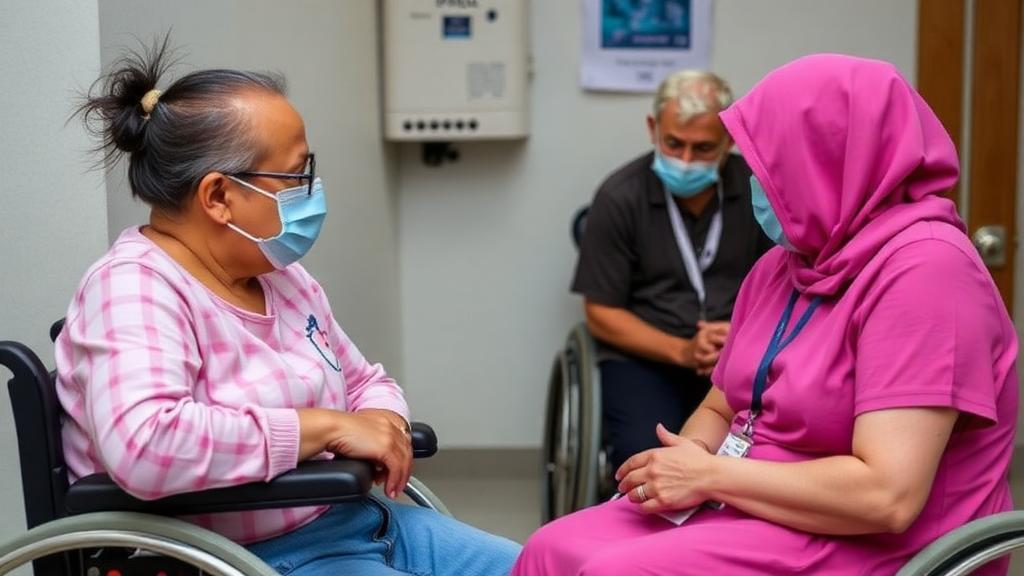
A large population-based study from Northern Italy has revealed a stark and troubling pattern: people living with disabilities are substantially more likely than those without impairments to have digestive system cancers diagnosed only after an emergency presentation, and they face markedly higher mortality in the first year after diagnosis. The research, published in Nature Communications, draws on linked cancer registry and administrative healthcare data to provide some of the most robust population-based evidence yet that disability is associated with inequities at multiple points along the cancer care pathway.
The study focused on cancers of the digestive system, a group that includes tumors of the esophagus, stomach, colon, rectum, pancreas, liver, and biliary tract. These cancers are among the most common and most lethal malignancies worldwide, and their outcomes depend heavily on how early they are detected. When a cancer is caught through organized screening, opportunistic testing, or a prompt diagnostic workup of symptoms, patients are far more likely to receive curative treatment. When it is diagnosed in an emergency department, the disease is typically advanced, the patient is often acutely unwell, and survival prospects deteriorate sharply.
Between 2018 and 2021, the researchers identified all individuals diagnosed with digestive system cancers in their Northern Italian study population and classified them according to whether they had pre-existing impairments. Drawing on administrative healthcare records, the team was able to characterize impairments across heterogeneous categories, including mental function impairments and neuromusculoskeletal impairments, and to trace how each person’s cancer came to medical attention. The diagnostic route was categorized as either emergency presentation or a non-emergency pathway, and the researchers followed all patients for at least one year to assess survival.
The headline finding is difficult to ignore. Among people with impairments, 51.8 percent of digestive system cancers were diagnosed following emergency presentation, compared with 37.9 percent among people without impairments. After adjusting for socio-demographic and clinical factors, this translated into a 41 percent higher odds of emergency diagnosis for people with impairments, with an adjusted odds ratio of 1.41 and a 95 percent confidence interval of 1.23 to 1.61. The association was particularly pronounced for individuals with impairments of mental and neuromusculoskeletal functions, suggesting that the mechanisms driving delayed detection may differ across disability groups but converge on the same adverse outcome.
Survival data reinforced the scale of the problem. Individuals with pre-existing impairments had significantly higher mortality within one year of diagnosis, with a hazard ratio of 1.36 and a 95 percent confidence interval of 1.26 to 1.46. Critically, this excess risk persisted after the researchers accounted for a broad range of socio-demographic and clinical characteristics, indicating that the survival gap cannot be explained away by age, sex, socioeconomic position, tumor type, or comorbidities alone. The finding points instead to systemic differences in how, and how quickly, people with disabilities access and move through cancer diagnostic and treatment services.
Why might disability so strongly shape the route to diagnosis? The study itself does not establish mechanisms, but the epidemiological pattern is consistent with several plausible pathways that clinicians and health services researchers have long hypothesized. Communication barriers are a leading candidate: patients with mental function impairments may struggle to describe symptoms, and clinicians may find it harder to elicit a reliable history, so that early warning signs of gastrointestinal cancer are missed or misattributed. Neuromusculoskeletal impairments can complicate physical examinations, imaging, and procedures such as endoscopy, potentially making both patients and providers more hesitant to pursue timely investigation.
Access barriers compound these clinical challenges. People with disabilities may face practical obstacles in attending outpatient appointments, arranging transport, or navigating hospital environments that are not physically adapted to their needs. Caregiver availability, health literacy, and the tendency of both patients and physicians to prioritize disability-related conditions over new symptoms can all contribute to what researchers call diagnostic overshadowing, in which a new and serious illness is overlooked because attention is focused on a pre-existing condition. When symptoms finally become unbearable, the result is often an emergency department visit, which is precisely the pattern the data reveal.
The consequences of emergency presentation are well documented in oncology. Emergency-diagnosed cancers are typically diagnosed at later stages, and patients are frequently too unstable for immediate optimal treatment. Emergency pathways also fragment care: rather than a planned diagnostic sequence leading to a multidisciplinary treatment decision, patients arrive acutely ill and are managed reactively. For digestive system cancers in particular, where surgical resection offers the best chance of cure for many tumor types, delays that allow disease progression can be decisive. The one-year mortality excess observed in this study is therefore plausibly linked, at least in part, to the elevated rate of emergency diagnosis, although the adjusted survival analysis suggests that disability-related disadvantage may extend beyond diagnostic route alone.
The study’s methodology deserves attention because it strengthens the credibility of its conclusions. By linking cancer registry data, which capture standardized clinical information on every diagnosed malignancy, with administrative healthcare databases, which record healthcare contacts and diagnoses over time, the researchers could identify pre-existing impairments across the whole population rather than relying on self-report or small clinical samples. This population-based cohort design minimizes selection bias and allows findings to be generalized to the broader community, something that hospital-based studies of disability and cancer have struggled to achieve. The analysis of multiple impairment categories is also a methodological advance, since disability is heterogeneous and treating it as a single binary variable can obscure important differences between, for example, cognitive, sensory, and mobility-related impairments.
The implications for health policy and clinical practice are significant. Northern Italy is served by a universal healthcare system with organized cancer screening programs, which makes the persistence of such disparities particularly striking. If these gaps exist in a high-income European setting with comprehensive coverage, they are likely to be at least as severe in health systems with fewer resources or less equitable access. The authors note that population-based evidence on cancer diagnosis and survival among people with disabilities has remained limited, and this study helps fill that gap with concrete, quantified estimates that can inform intervention design.
Potential responses include adapting screening and diagnostic services to be more accessible, training primary care clinicians to recognize cancer symptoms in patients with communication or cognitive impairments, involving caregivers more systematically in symptom monitoring, and building flagging systems that alert clinicians when patients with disabilities present with symptoms that warrant urgent investigation. Reducing emergency presentations is a well-recognized target in cancer control more broadly, and this study makes clear that disability-focused strategies must be part of that effort. As the population ages and the number of people living with disabilities grows, ensuring equitable cancer outcomes for this group will become an increasingly central test of whether modern health systems can deliver on the promise of care that leaves no one behind.
Subject of Research: Disability-related disparities in the diagnosis and survival of digestive system cancers
Article Title: Disability related disparities in diagnosis and survival of digestive system cancers in Northern Italy
Article References: Pennisi, F., Buzzoni, C., Gervasi, F., Greco, M. T., Signorelli, C., Russo, A. G., & Renzi, C. (2026). Disability related disparities in diagnosis and survival of digestive system cancers in Northern Italy. Nature Communications. https://doi.org/10.1038/s41467-026-78262-w
Image Credits: AI Generated
DOI: 10.1038/s41467-026-78262-w
Keywords: cancer epidemiology, disability, health disparities, emergency presentation, digestive system cancers, cancer survival, diagnostic delay, Northern Italy, cancer registry, health equity, one-year mortality, population-based cohort
Cite Scienmag News
Ophelia Keating. (October 11, 2026). People With Disabilities Face Emergency Cancer Diagnoses and Poorer Survival in Italy. Scienmag. https://scienmag.com/people-with-disabilities-face-emergency-cancer-diagnoses-and-poorer-survival-in-italy/
Ophelia Keating. "People With Disabilities Face Emergency Cancer Diagnoses and Poorer Survival in Italy." Scienmag, 11 October 2026, https://scienmag.com/people-with-disabilities-face-emergency-cancer-diagnoses-and-poorer-survival-in-italy/. Accessed 11 October 2026.
Ophelia Keating. "People With Disabilities Face Emergency Cancer Diagnoses and Poorer Survival in Italy." Scienmag. October 11, 2026. https://scienmag.com/people-with-disabilities-face-emergency-cancer-diagnoses-and-poorer-survival-in-italy/


