


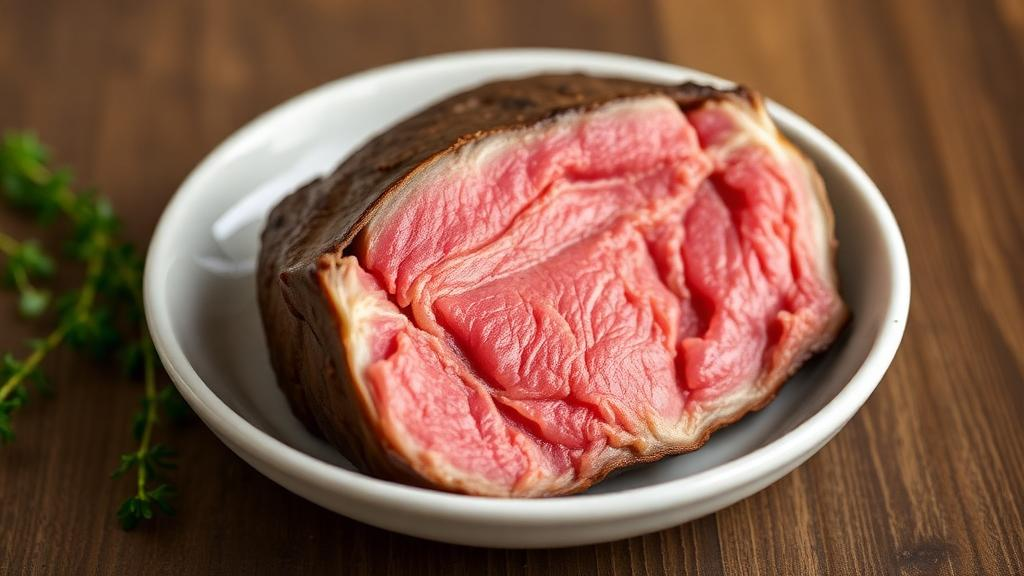
On the Qinghai–Tibet Plateau, yak meat is more than a staple food. It is the emblematic protein of a livestock species that has survived for millennia above 3,000 meters in cold, hypoxic, high-ultraviolet conditions, and its distinctive flavor commands growing attention in high-end meat markets. Yet as demand rises, traditional grazing is giving way to confined fattening systems designed to shorten production cycles and stabilize supply. That shift carries a hidden cost: barn feeding, with its homogeneous rations and reduced physical activity, is widely reported to dull the sensory quality of yak meat, particularly its flavor. A new study published in Food Chemistry: X suggests a surprising remedy may lie in the gut of the animals themselves.
Researchers led by Yanbin Zhu and Wangdui Basang of the Xizang Academy of Agriculture and Animal Husbandry Sciences investigated whether a probiotic bacterium originally isolated from free-grazing yaks could alter the aroma chemistry of meat from confined animals. The strain, Enterococcus faecalis JM263, is a facultative anaerobic lactic acid bacterium that had previously shown tolerance to gastric acid and bile salts, antimicrobial and antioxidant activity, strong fiber-degrading capacity, and favorable effects on in vitro rumen fermentation. A separate 60-day goat feeding trial had already linked the strain to improvements in growth, antioxidant status, intestinal barrier integrity, and liver health, providing a biological rationale for testing it in yaks.
The experiment took place at an experimental base in Shigatse, Tibet, at roughly 4,000 meters above sea level. Twelve healthy male yaks weighing about 280 kilograms were randomly assigned to two groups of six. The control group received a basal diet, while the treatment group received the same diet supplemented with E. faecalis JM263 at 0.5 grams per kilogram of feed, delivering one hundred million colony-forming units per gram. After a 15-day adaptation period, the 60-day experimental feeding phase began. At slaughter, longissimus dorsi muscle samples were excised from the left carcass between the ninth and twelfth ribs and snap-frozen in liquid nitrogen within approximately fifteen minutes, then stored at minus 80 degrees Celsius until analysis.
The team deployed an unusually comprehensive analytical battery. A PEN3 electronic nose, a device that mimics the human olfactory system using ten metal-oxide sensors, captured the overall odor signature of each sample. Gas chromatography–mass spectrometry with headspace solid-phase microextraction profiled the volatile compounds, while liquid chromatography–tandem mass spectrometry on a triple quadrupole–linear ion trap platform mapped the lipidome. Crucially, the researchers treated their statistics with unusual candor for an exploratory study of this size: they applied Benjamini–Hochberg false discovery rate correction, ran 200-iteration permutation tests on their supervised models, and performed a sensitivity power analysis showing the design could reliably detect only large effects.
The electronic nose results were striking. Five of the ten sensors responded significantly more strongly to meat from the probiotic group: W1C, sensitive to aromatic compounds, rose by 32.44 percent; W5C, responsive to short-chain alkanes and aromatics, by 21.30 percent; W1S, which detects short-chain alkanes such as methane, by 32.63 percent; W1W, sensitive to sulfur-containing compounds, by 67.76 percent; and W2S, which responds to alcohols and organosulfur compounds, by 23.58 percent. All five differences survived multiple-testing correction and were backed by very large effect sizes, with Cohen’s d values ranging from 2.44 to 4.16. Principal component and discriminant analyses both separated the two groups cleanly.
The volatile chemistry told a subtler story. In total, 688 volatile features were putatively annotated, 677 of them shared between groups and 11 unique to the probiotic-fed animals. Screening by relative odor activity value identified 42 candidate odor-relevant compounds in control meat and 45 in probiotic meat. Using combined criteria of variable importance, fold change, and nominal significance, the team flagged 24 exploratory candidate differential volatiles, 16 upregulated and 8 downregulated. Notably, none of these remained significant after false discovery rate correction, a limitation the authors state plainly. Among the most prominent candidates were a propionate ester whose decline might reduce green, pungent notes, and an upregulated terpenoid derivative, cyclohexene with two dimethyl-hexadienyl substituents, whose low odor threshold could matter despite its low abundance.
Aroma-descriptor annotation lent the findings sensory texture. Features putatively identified as ethyl decanoate, pentadecane, and gamma-dodecalactone were linked to apple, brandy, waxy, fruity, balsamic, floral, and fatty descriptors, while benzoic acid and the cyclohexene derivative carried waxy, aldehydic, citrus, and balsamic notes. These annotations, the authors caution, are exploratory indications of potential aroma character rather than proof of sensory contribution, since no trained panel or consumer test was conducted. Still, the direction of change is consistent with a probiotic-associated shift in the volatile signature of the meat.
The lipidomics data provided the deepest statistical signal. Of 764 lipid species annotated across six major categories, dominated by glycerophospholipids and glycerolipids, 60 were screened as candidate differential lipids, 35 upregulated and 25 downregulated. Five species remained significant after false discovery rate correction: two phosphatidylethanolamines, PE(16:1_17:1) and PE(17:0_18:1), phosphatidic acid PA(18:0_18:1), an N-acyl phosphatidylethanolamine, LNAPE(18:1/N-17:0), and PE(16:0_22:4). Because phospholipids oxidize during cooking and storage into aldehydes, ketones, alcohols, and esters that react further with proteins and amino acids, these membrane lipids are prime candidates as aroma precursors. An exploratory rise in Carnitine C14:1 hinted at possible changes in fatty-acyl transport and beta-oxidation, though the authors stress that oxidation flux was not directly measured. Pathway enrichment pointed to fatty acid metabolism and secondary metabolite biosynthesis among upregulated lipids, and ether lipid and inositol phosphate metabolism among downregulated ones.
Perhaps most intriguing were the integrative analyses. Mantel tests, which compare entire data matrices rather than individual variables, linked the electronic nose responses to specific volatiles, including the propionate ester, benzoic acid, and a dimethyl cyclooctadiene, and separately to specific lipids, including PE(17:0_18:1), LNAPE(18:1/N-17:0), and PE(16:0_22:4), the latter with a correlation of 0.78. The authors interpret these as hypothesis-generating associations rather than evidence of direct lipid-to-volatile conversion, noting that the correlations partly reflect treatment differences between groups. They also emphasize that the high-altitude environment, shared by all animals, could not be disentangled as an independent factor, and that six animals per group limits statistical power for smaller effects.
The study’s honesty about its limits is itself notable in a field prone to overclaiming. Because no formal sensory evaluation was performed, the authors explicitly decline to claim that the probiotic improved flavor as perceived by consumers; what they demonstrate is a measurable, statistically supported shift in the instrumental aroma profile and in the lipid species that plausibly feed it. The mechanism, whether mediated through rumen fermentation, gut microbial ecology, antioxidant status, or systemic metabolism, remains unproven, as none of those variables were directly measured here. Even so, the work opens a concrete path: a yak-adapted probiotic strain, isolated from the very animals whose meat quality it may influence, appears capable of reshaping the volatile and lipid chemistry of muscle under confined feeding at extreme altitude. If larger cohorts, targeted lipid quantification, and trained sensory panels confirm these signals, gut microbiome engineering could become a practical tool for preserving the flavor of one of the world’s most distinctive meats as its production modernizes.
Subject of Research: Effects of Enterococcus faecalis JM263 probiotic supplementation on volatile aroma compounds and lipid metabolism in yak meat
Article Title: Integrated volatilomics and lipidomics reveal aroma-related volatile and lipidomic changes associated with Enterococcus faecalis JM263 supplementation in yak meat
Article References: Zhu, Y., Cisang, Z., Khan, A., Jiang, M., Cidan, Y., Liu, G., Gao, F., Wen, S., Zhou, X., & Basang, W. (2026). Integrated volatilomics and lipidomics reveal aroma-related volatile and lipidomic changes associated with Enterococcus faecalis JM263 supplementation in yak meat. Food Chemistry: X, Article 104590. https://doi.org/10.1016/j.fochx.2026.104590
Image Credits: AI Generated
DOI: 10.1016/j.fochx.2026.104590
Keywords: yak meat, probiotics, Enterococcus faecalis, volatile compounds, lipidomics, electronic nose, flavor chemistry, Qinghai-Tibet Plateau, confined feeding, phospholipids, GC-MS, meat quality
Cite Scienmag News
Bethany Barker. (October 11, 2026). Gut Probiotic Supplement Reshapes the Aroma Chemistry of Yak Meat. Scienmag. https://scienmag.com/gut-probiotic-supplement-reshapes-the-aroma-chemistry-of-yak-meat/
Bethany Barker. "Gut Probiotic Supplement Reshapes the Aroma Chemistry of Yak Meat." Scienmag, 11 October 2026, https://scienmag.com/gut-probiotic-supplement-reshapes-the-aroma-chemistry-of-yak-meat/. Accessed 11 October 2026.
Bethany Barker. "Gut Probiotic Supplement Reshapes the Aroma Chemistry of Yak Meat." Scienmag. October 11, 2026. https://scienmag.com/gut-probiotic-supplement-reshapes-the-aroma-chemistry-of-yak-meat/


