


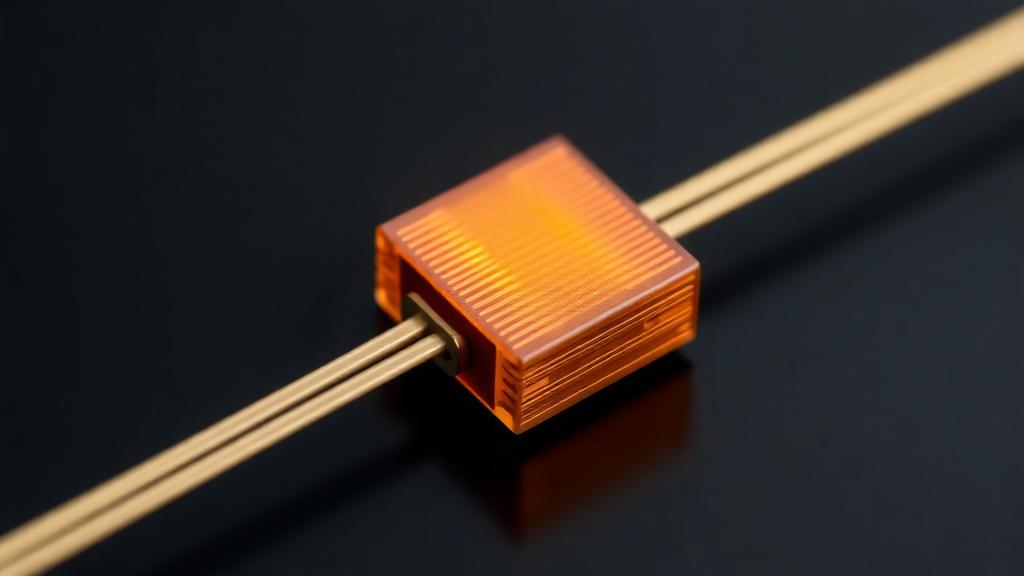
Flexible pressure sensors promise a future where electronic skin feels a feather’s touch, wearable health patches track a pulse through fabric, and soft robots grip delicate objects with the same confidence as a human hand. Yet behind the flood of impressive laboratory numbers, a quiet crisis of comparability has been building. A new open-access review published in Advanced Composites and Hybrid Materials argues that the field has been measuring success in the wrong way, and that the key to better sensors lies not in chasing ever-higher sensitivity figures but in understanding how the microscopic shapes borrowed from nature actually determine whether a device works, endures, and fails.
The review, led by Mohammed Nabeel and Ali J. Addie of the Scientific Research Commission in Baghdad, together with Nabil Kadhim Taieh of Middle Technical University, László Vanyorek of the University of Miskolc, and Ying Li of Chengdu University, takes a deliberately morphology-centered view. Instead of sorting bio-inspired pressure sensors by the transduction mechanism they use, the authors organize the literature by the engineered structural motifs that govern how those devices deform, make contact, and adapt at their interfaces. This reframing matters because, as the authors point out, reported performance is too often discussed through isolated sensitivity values, while the structural origins of the signal, the pressure regime in which that signal is valid, and the reliability limits of the architecture beneath it are examined separately, if at all.
The logic of the bio-inspired approach is straightforward in principle. Biological structures such as the microhairs on insect cuticles, the dermal papillae of human skin, the interlocking scales of reptiles, and the hierarchical porosity of plant tissues have all been refined by evolution to regulate deformation, contact evolution, and interfacial adaptation under load. Materials scientists have translated these motifs into engineered architectures: surface-relief and contact-engineered topographies that concentrate stress at designed asperities, porous and three-dimensional frameworks that compress reversibly under pressure, interfacial and interlocking systems that convert normal loads into lateral deformation, and hierarchical or discontinuity-driven designs that amplify small displacements into measurable electrical changes. Each motif is a mechanical decision, and each decision leaves a fingerprint on the sensor’s electrical response.
That fingerprint is where the review’s central insight emerges. The authors trace how these structural classes couple with the major transduction pathways in the field, including piezoresistive, capacitive, iontronic, triboelectric, piezoelectric, and hybrid mechanisms, and then follow the consequences across the full set of performance dimensions: sensitivity, operating range, dynamic response, hysteresis, drift, durability, and failure behavior. The pattern that emerges is uncomfortable but clarifying. Features designed to amplify signal, such as sharp surface spikes, fragile porous skeletons, or engineered discontinuities, often also set the boundaries for reversibility and long-term stability. The very geometry that produces a spectacular sensitivity number in a fresh device may be the geometry that collapses, flattens, or fatigues after thousands of press cycles.
Consider the piezoresistive case, the most common transduction route in wearable prototypes. A porous conductive elastomer achieves high sensitivity because compression dramatically changes the density of conductive pathways, producing a large resistance change per unit of pressure. But the same porosity concentrates strain locally, invites viscoelastic creep in the polymer skeleton, and creates hysteresis as air and polymer recover at different rates. A capacitive device built on a dielectric layer patterned with micropyramids gains sensitivity because the pyramids increase the effective contact area change under load, yet the sharp tips are precisely where plastic deformation and delamination begin. In iontronic sensors, the enormous interfacial capacitance at electrode-electrolyte junctions yields exquisite sensitivity at low pressures, but the operating range and the drift behavior are dictated by how the engineered interface deforms and rehydrates over time.
Tribioelectric and piezoelectric architectures tell a parallel story from a different angle. Triboelectric pressure sensors depend on contact electrification between engineered surfaces, so their output is exquisitely sensitive to surface morphology, humidity, and the evolution of that morphology through repeated contact and separation. Hierarchical textures borrowed from natural surfaces can boost charge generation, but abrasion gradually erases the texture, and with it the signal. Piezoelectric devices convert dynamic pressure directly into charge, making them ideal for pulse and motion sensing, yet their response to static loads is inherently limited, and the alignment and connectivity of the active phase, itself a morphological property, determines both sensitivity and fatigue resistance. Hybrid designs that combine mechanisms inherit the strengths of each but also the coupled failure modes, which is precisely why the authors insist that structure and mechanism cannot be evaluated in isolation.
The review’s second major contribution is its diagnosis of the field’s benchmarking problem. Because sensitivity is usually reported as a slope measured in a narrow, favorable pressure window, two sensors with wildly different architectures can post similar headline numbers while behaving completely differently in the low-pressure regime relevant to pulse monitoring, the mid-range relevant to grip force, or the high-pressure regime relevant to gait analysis. Without morphology-traceable reporting, meaning documentation of the structural features that generate the response and the pressure regimes over which those features behave reversibly, comparisons between studies become nearly meaningless. The authors call for the structural origins of the signal to be stated explicitly, so that a reader can tell whether a sensitivity figure comes from contact-area amplification, porosity collapse, interfacial charge trapping, or some combination of all three.
Reliability assessment receives equally pointed criticism. Real applications subject flexible sensors to cyclic loading, temperature swings, humidity, sweat, abrasion against skin or textile, and mechanical deformation of the substrate itself, yet many published durability tests consist of a single cyclic-press experiment under ideal laboratory conditions. The review argues for realistic reliability evaluation that connects observed drift, hysteresis growth, and eventual failure to specific pressure-responsive structural features, so that failure is understood as a morphological event rather than an anecdote. A sensor whose microstructured surface flattens after ten thousand cycles fails for a different reason than one whose porous filler network fractures, and the remedies are correspondingly different: surface stiffening and material selection in the first case, tougher composites and graded architectures in the second.
What the authors ultimately propose is a shift from intuition-driven mimicry to structure-guided design rules. Nature-inspired morphology should not be copied for its visual appeal but selected for the mechanical function it performs, matched deliberately to the transduction mechanism and the target pressure regime, and validated against the reliability demands of the intended application. In that framing, the trade-off between signal amplification and reversibility becomes a design variable to be managed rather than a surprise to be discovered. For a field racing toward electronic skin, human-machine interfaces, and soft robotics, the message is that the next generation of flexible pressure sensors will be won not by the highest single sensitivity number but by architectures whose shapes, mechanisms, and lifetimes are understood as one connected story.
Subject of Research: Bio-inspired flexible pressure sensors and morphology-guided structure-function relationships
Article Title: Bio-inspired flexible pressure sensors: morphology-guided structure–function relationships, reliability, and future perspectives
Article References: Nabeel, M., Addie, A. J., Taieh, N. K., Vanyorek, L., & Li, Y. (2026). Bio-inspired flexible pressure sensors: morphology-guided structure–function relationships, reliability, and future perspectives. Advanced Composites and Hybrid Materials. https://doi.org/10.1007/s42114-026-02119-5
Image Credits: AI Generated
DOI: 10.1007/s42114-026-02119-5
Keywords: flexible pressure sensors, bio-inspired materials, morphology, wearable electronics, electronic skin, soft robotics, piezoresistive, triboelectric, reliability, structure-function relationships, biomimetic architectures, flexible electronics
Cite Scienmag News
Denise Maddox. (October 11, 2026). Why Copying Nature’s Shapes Could Fix the Weakest Link in Flexible Pressure Sensors. Scienmag. https://scienmag.com/why-copying-natures-shapes-could-fix-the-weakest-link-in-flexible-pressure-sensors/
Denise Maddox. "Why Copying Nature’s Shapes Could Fix the Weakest Link in Flexible Pressure Sensors." Scienmag, 11 October 2026, https://scienmag.com/why-copying-natures-shapes-could-fix-the-weakest-link-in-flexible-pressure-sensors/. Accessed 11 October 2026.
Denise Maddox. "Why Copying Nature’s Shapes Could Fix the Weakest Link in Flexible Pressure Sensors." Scienmag. October 11, 2026. https://scienmag.com/why-copying-natures-shapes-could-fix-the-weakest-link-in-flexible-pressure-sensors/


