


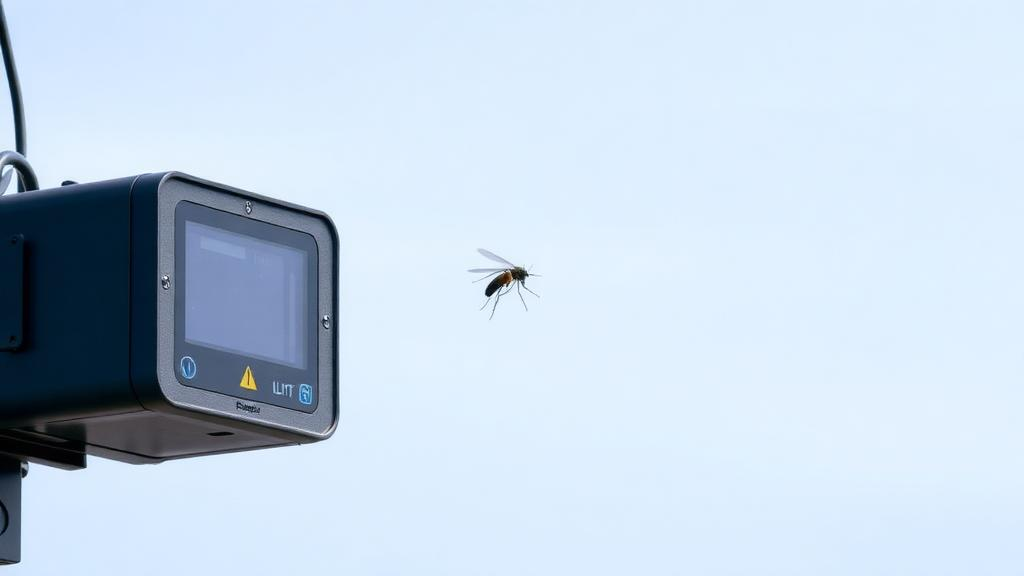
Malaria remains one of the world’s most persistent public health challenges, and the battle against it depends heavily on knowing where and when the mosquitoes that transmit the parasite are active. A research team led by Chenyu Han, Yiquan Cai, and colleagues has now unveiled and rigorously tested a new surveillance tool designed to close a critical gap in vector monitoring. Their device, nicknamed the Black Box, is a 3D-printed, internet-enabled mosquito trap that combines multiple attractants with automated insect counting and wireless data transmission, allowing health authorities to watch mosquito activity unfold in near real time rather than waiting for labor-intensive field collections to be processed. The work, published in PLOS Neglected Tropical Diseases, presents laboratory, semi-field, and open-field evidence that the system can match or exceed conventional trapping methods while streaming its findings directly over the internet.
The motivation behind the device stems from well-recognized weaknesses in existing malaria vector surveillance. Traditional monitoring relies on human collectors and light traps, both of which are labor-intensive and subject to delays between capture and data availability. These delays matter because Anopheles mosquito populations can shift rapidly in response to weather, irrigation, and intervention campaigns, and control measures are most effective when they are deployed against a precisely timed surge in vector activity. Compounding the problem, mosquito behavior itself is changing: shifts in biting times and habitats have eroded the effectiveness of indoor-focused strategies, and outdoor-biting or blood-fed individuals are increasingly relevant to transmission. Previous attempts at electronic monitoring have often stumbled over low sensitivity and specificity, meaning they either miss mosquitoes or miscount other insects, undermining confidence in the resulting data.
The Black Box addresses these shortcomings through an integrated engineering approach. The device is manufactured by 3D printing, which keeps production flexible and inexpensive, and it packs several mosquito-luring technologies into a single housing. Multispectral light provides visual attraction tuned to the preferences of target species, while a thermal simulation mimics the body heat signature that draws host-seeking mosquitoes toward people. Chemical attractants add olfactory cues, and photocatalytic materials are incorporated to support the trapping environment. Once insects enter, an automated counting module registers each capture, and a wireless transmission system pushes the counts to remote servers over the internet. This architecture means that a network of Black Boxes scattered across a village or district can report mosquito activity continuously, without a technician needing to visit each unit and manually tally specimens.
Laboratory trials formed the first tier of validation, and the results were striking. When tested against three important malaria vector species—Anopheles sinensis, Anopheles stephensi, and Anopheles anthropophagus—the device achieved trapping rates of 94.00 to 95.00 percent. Just as important for a system intended to generate trustworthy automated data, the consistency between the device’s electronic counts and the actual contents of the trap exceeded 97.00 percent in these controlled conditions. In a laboratory setting, where environmental variables can be held constant, these figures demonstrate that the combination of attractants reliably draws mosquitoes into the device and that the counting mechanism registers them with a high degree of accuracy across multiple vector species with different behaviors and sensory preferences.
Semi-field testing introduced a greater degree of realism, placing the device in large enclosed environments that approximate outdoor conditions while still allowing researchers to know exactly how many mosquitoes are present. Under these more challenging circumstances, trapping rates ranged from 73.60 to 90.80 percent, and data consistency remained above 92.00 percent. The drop from laboratory performance is expected, since semi-field settings introduce air currents, temperature fluctuations, and spatial complexity that can interfere with both attraction and counting. Nevertheless, the authors emphasize that maintaining consistency above 92 percent in these conditions indicates the system retains its reliability outside the bench-top environment, a crucial step toward proving that the technology can function in the messy, variable conditions of actual transmission zones.
The decisive test came in open-field deployments, where the Black Box operated alongside conventional surveillance methods under fully natural conditions. Over the field observation period, the device captured a total of 5,109 mosquitoes, and its automated counts agreed with the physical trap contents at a rate of 94.17 percent. Notably, the Black Box captured more Anopheles mosquitoes than the standard light trap during the same observation period, suggesting that its multi-cue attraction strategy—light plus heat plus chemical lures—outperforms the single-cue approach of light alone. For vector control programs, this matters because the Anopheles count is the number that drives risk assessment; a device that records more of the relevant species, more accurately, and more frequently provides a stronger foundation for deciding when and where to intervene.
Beyond raw counts, the continuous data stream revealed patterns that intermittent sampling can easily miss. Real-time monitoring showed distinct bimodal activity peaks, with surges in mosquito captures at both dawn and dusk. This crepuscular rhythm is biologically meaningful: it defines the windows during which vector-human contact is most likely and therefore the windows in which personal protection, spatial repellents, or other targeted measures would deliver the greatest benefit. A surveillance system that can detect these peaks as they happen, rather than reconstructing them after the fact from nightly trap totals, gives public health teams the temporal resolution needed for genuinely dynamic risk assessment and adaptive response.
One of the most intriguing findings concerns the physiological state of the captured mosquitoes. Among the 112 female Anopheles sinensis collected in the field, 21 individuals—or 18.75 percent, with an exact 95 percent confidence interval of 12.60 to 26.97 percent—were blood-fed. This observation carries significant operational implications. Blood-fed mosquitoes have recently taken a blood meal, and their presence in outdoor collections indicates that blood-fed mosquitoes may occur in outdoor settings, complicating the assumption that feeding happens primarily indoors. If a substantial fraction of vectors feed or rest outdoors, indoor-based interventions such as insecticide-treated bed nets may not reach them, and outdoor surveillance becomes even more essential for tracking the true transmission risk. The Black Box’s ability to capture and document these individuals automatically makes it a valuable tool for detecting such behavioral shifts as they emerge.
The authors conclude that the Black Box provides a highly efficient, automated solution for real-time malaria vector surveillance. By delivering accurate and timely ecological data, the system supports dynamic risk assessment and enables targeted interventions, addressing key limitations of current control programs that have long depended on slow, manual, and sometimes insensitive monitoring. The combination of 3D-printed affordability, multi-sensory attraction, high counting consistency across laboratory, semi-field, and field conditions, and internet-based data transmission positions the device as a candidate for deployment in networks spanning the landscapes where malaria transmission occurs. As vector populations continue to adapt to existing control measures, tools that reveal their behavior in real time may prove decisive in the effort to anticipate outbreaks, time interventions precisely, and ultimately reduce the burden of a disease that still threatens hundreds of millions of people worldwide.
Subject of Research: Development and field validation of an internet-based real-time automated monitoring device for malaria vector mosquitoes
Article Title: Development and effectiveness test of an internet-based real-time monitoring device for malaria parasite vector mosquitoes
Article References: Han, C., Cai, Y., Yang, H., Li, Y., Zhang, X., Wang, X., Duan, Y., Liu, H., Zuo, L., Yan, G., & Chen, X.-G. (2026). Development and effectiveness test of an internet-based real-time monitoring device for malaria parasite vector mosquitoes. PLOS Neglected Tropical Diseases, 20(10), e0014778. https://doi.org/10.1371/journal.pntd.0014778
Image Credits: AI Generated
DOI: 10.1371/journal.pntd.0014778
Keywords: malaria, Anopheles, vector surveillance, Black Box device, mosquito trapping, real-time monitoring, automated counting, wireless data transmission, Anopheles sinensis, blood-fed mosquitoes, vector control, PLOS Neglected Tropical Diseases
Cite Scienmag News
Ophelia Keating. (October 10, 2026). Black Box Device Delivers Real-Time Automated Surveillance of Malaria Mosquitoes. Scienmag. https://scienmag.com/black-box-device-delivers-real-time-automated-surveillance-of-malaria-mosquitoes/
Ophelia Keating. "Black Box Device Delivers Real-Time Automated Surveillance of Malaria Mosquitoes." Scienmag, 10 October 2026, https://scienmag.com/black-box-device-delivers-real-time-automated-surveillance-of-malaria-mosquitoes/. Accessed 10 October 2026.
Ophelia Keating. "Black Box Device Delivers Real-Time Automated Surveillance of Malaria Mosquitoes." Scienmag. October 10, 2026. https://scienmag.com/black-box-device-delivers-real-time-automated-surveillance-of-malaria-mosquitoes/


