


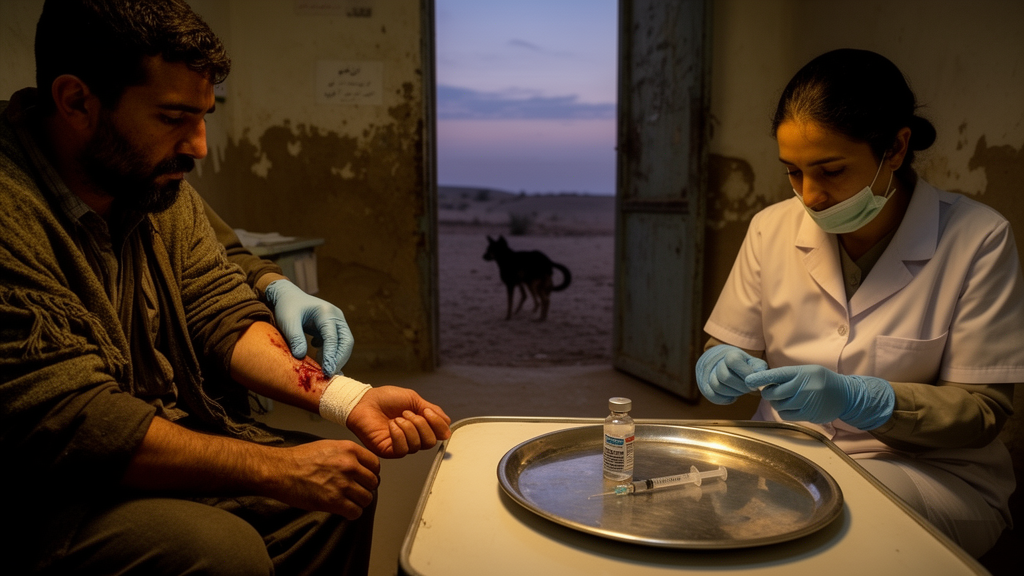
Rabies remains one of the deadliest infectious diseases known to medicine, with a case fatality rate approaching 100 percent once symptoms appear, yet it is also one of the most preventable, provided that exposed individuals receive timely and correctly administered post-exposure prophylaxis. A new nationwide analysis from Iran, published in PLOS Neglected Tropical Diseases, has now offered one of the most detailed pictures to date of how a large middle-income country manages the enormous burden of animal bites and how faithfully its clinical practice follows international recommendations. Drawing on more than half a million registry records, the study reveals both impressive system performance and troubling inconsistencies that could matter for the country’s rabies control ambitions.
The research team, led by Ebrahim Babaee and colleagues, carried out a secondary analysis of 507,404 animal bite cases recorded in Iran’s national rabies registry between March 2022 and September 2023. Rather than following individual patients prospectively, the investigators mined the existing surveillance database, treating each registry-recorded exposure visit as the unit of analysis. This approach allowed them to describe who is bitten, by what animals, where, and how the resulting wounds were managed in relation to the Iranian national rabies protocol and the guidance issued by the World Health Organization. The sheer scale of the dataset makes it a rare window into the real-world functioning of a national bite management system.
The demographic and epidemiological patterns that emerged are striking. Males accounted for 73.6 percent of all recorded cases, a skew consistent with the greater likelihood of men to work outdoors, handle animals, and engage in activities that bring them into contact with dogs and other potentially rabid mammals. The largest single age group among patients was 31 to 40 years, which comprised 19.8 percent of cases, suggesting that working-age adults bear a substantial share of the exposure burden. Dogs were responsible for the overwhelming majority of exposures, at 76.2 percent, while cats accounted for another 20.8 percent, leaving a small but epidemiologically important residue of bites from other mammals, including bats.
Geography mattered considerably. The highest incidence rates were concentrated in northern provinces, with North Khorasan recording 773 bite cases per 100,000 population and Golestan close behind at 767 per 100,000. These figures point to regional variation in the intensity of human-animal contact, likely reflecting differences in ecology, animal population management, rural livelihoods, and access to reporting facilities. Such spatial heterogeneity is a critical input for public health planners, because rabies control resources, from vaccine stocks to community education campaigns, can be targeted more efficiently when the geographic hotspots of exposure are clearly identified.
On the positive side of the ledger, the documented management of bites showed several strengths. Wound irrigation, the immediate and thorough washing of the bite site with soap and water, which is a cornerstone of rabies prevention because it physically removes virus from the wound before it can enter nerve endings, was documented in 94.3 percent of patients. Even more encouraging, 96.4 percent of patients received their first dose of rabies vaccine within 48 hours of presentation. Rapid initiation of prophylaxis is essential because the virus must travel from the wound to the central nervous system before it becomes untreatable, and every hour of delay narrows the window in which vaccination can interrupt that journey.
Vaccine completion, however, told a more complicated story. Overall, 68.1 percent of patients received three vaccine doses and 24.2 percent received four doses, figures that raise questions about whether patients are completing the full schedules recommended for their exposure categories, and about whether the recorded regimens themselves always matched the protocol. Rabies immunoglobulin, the passive antibody product that provides immediate protection in the interval before vaccine-induced immunity develops, was administered to 95.6 percent of Category III exposures, the most severe class involving transdermal bites or contamination of mucous membranes. That high figure represents strong performance in the group where immunoglobulin is most critical, since without it, patients with deep or head-and-neck wounds face the greatest risk of rapid viral progression.
The study also documented deviations that cut in the opposite direction. Inappropriate administration of rabies immunoglobulin was observed in 6.1 percent of Category I exposures and 4.7 percent of Category II exposures, categories in which the WHO does not recommend immunoglobulin at all. Category I exposures involve touching or feeding animals or licks on intact skin, which carry no risk requiring vaccination, while Category II exposures involve nibbling of uncovered skin or minor scratches without bleeding, which warrant vaccination but not immunoglobulin. Administering an expensive and scarce biological product in these situations wastes limited resources and can contribute to shortages for the patients who genuinely need it.
Perhaps the most concerning findings concerned bat-related exposures, a small but disproportionately dangerous category. Bats are reservoirs of rabies and related lyssaviruses, and because their bites can be tiny and easily overlooked, international guidance treats any direct contact with a bat with heightened suspicion, generally recommending that such exposures be classified as Category III and managed with both vaccine and immunoglobulin. Yet in the Iranian registry, only 36.8 percent of bat-related exposures were classified as Category III, and just 38.7 percent of these patients received rabies immunoglobulin. This suggests that frontline providers may not uniformly recognize the special risk posed by bats, leaving a potential gap in protection against a route of transmission that, while rare, has been responsible for the majority of human rabies cases in some parts of the world.
The authors are careful to frame their conclusions appropriately. The findings reflect patterns within the national bite registry and should not be interpreted as a comprehensive evaluation of all attributes of Iran’s rabies surveillance system. Registry data depend on the accuracy of the clinicians and registrars who enter them, and misclassification of exposure categories, gaps in documentation, and deviations from vaccine regimens may partly reflect recording practices rather than clinical failures alone. Nevertheless, the consistency of certain errors, such as the systematic under-classification of bat exposures, points to genuine knowledge or protocol-adherence issues that training could address. The study’s authors argue that strengthening provider education, reinforcing adherence to the national protocol, and improving data quality within the registry could support national rabies control efforts and inform broader prevention strategies aligned with global elimination goals.
The significance of this work extends beyond Iran’s borders. The World Health Organization and its partners have set a target of zero human deaths from dog-mediated rabies by 2030, and achieving that goal requires exactly the kind of granular, system-level evidence this study provides: knowing where bites cluster, which animals transmit them, whether prophylaxis is started on time, and whether expensive biologics are used where they matter most. Iran’s experience demonstrates that a functioning national registry can generate actionable intelligence at scale, but also that registries must be continuously audited for completeness and accuracy if they are to serve as reliable instruments of policy. For a disease that kills tens of thousands of people each year worldwide, almost all of them in Asia and Africa, the difference between a well-run and a poorly-run bite management system is measured in human lives, and studies like this one show precisely where the weaknesses lie and how they might be closed.
Subject of Research: Epidemiology of animal bites and adherence to rabies post-exposure prophylaxis in Iran
Article Title: Nationwide registry-based analysis of rabies exposures in Iran: Epidemiological patterns and post-exposure prophylaxis adherence
Article References: Babaee, E., Yousefzadeh Eshkoori, A., Eshrati, B., Nojomi, M., Shirzadi, M. R., Asadi-Aliabadi, M., & Moosazadeh, A. (2026). Nationwide registry-based analysis of rabies exposures in Iran: Epidemiological patterns and post-exposure prophylaxis adherence. PLOS Neglected Tropical Diseases, 20(9), e0014751. https://doi.org/10.1371/journal.pntd.0014751
Image Credits: AI Generated
DOI: 10.1371/journal.pntd.0014751
Keywords: rabies, animal bites, post-exposure prophylaxis, Iran, public health surveillance, rabies immunoglobulin, PLOS Neglected Tropical Diseases, vaccine adherence, exposure classification, bat exposures, epidemiology, dog-mediated rabies
Cite Scienmag News
Kristina Jarvis. (October 9, 2026). Half a Million Animal Bites Reveal Gaps in Iran’s Rabies Defense. Scienmag. https://scienmag.com/half-a-million-animal-bites-reveal-gaps-in-irans-rabies-defense/
Kristina Jarvis. "Half a Million Animal Bites Reveal Gaps in Iran’s Rabies Defense." Scienmag, 9 October 2026, https://scienmag.com/half-a-million-animal-bites-reveal-gaps-in-irans-rabies-defense/. Accessed 9 October 2026.
Kristina Jarvis. "Half a Million Animal Bites Reveal Gaps in Iran’s Rabies Defense." Scienmag. October 9, 2026. https://scienmag.com/half-a-million-animal-bites-reveal-gaps-in-irans-rabies-defense/


