


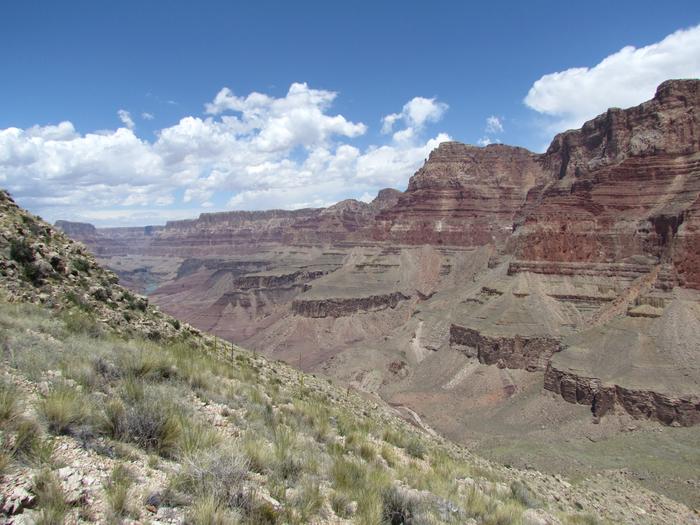
New study introduces a pioneering application of dolomite U-Pb geochronology, shedding new light on the evolution of ancient marine environments. By uncovering discrepancies in dolomite samples U-Pb ratios, the team developed a reliable proxy for reconstructing the levels of oxygen within ancient marine habitats, in which the first animals emerged and evolved. Their findings reveal a significant rise in marine oxygenation during the Late Paleozoic era (400 million years ago), hundreds of millions of years after the emergence of animal-life. These findings suggest that early-animals have evolved in oceans that were mostly oxygen-poor, and deepen our understanding of interactions between ecosystems and the evolution of complex life-forms. Understanding these relationships provides critical context for future observations of exoplanet’s atmospheres using the new generation of space-telescopes in search for extra-terrestrial life.

Credit: Uri Ryb
New study introduces a pioneering application of dolomite U-Pb geochronology, shedding new light on the evolution of ancient marine environments. By uncovering discrepancies in dolomite samples U-Pb ratios, the team developed a reliable proxy for reconstructing the levels of oxygen within ancient marine habitats, in which the first animals emerged and evolved. Their findings reveal a significant rise in marine oxygenation during the Late Paleozoic era (400 million years ago), hundreds of millions of years after the emergence of animal-life. These findings suggest that early-animals have evolved in oceans that were mostly oxygen-poor, and deepen our understanding of interactions between ecosystems and the evolution of complex life-forms. Understanding these relationships provides critical context for future observations of exoplanet’s atmospheres using the new generation of space-telescopes in search for extra-terrestrial life.
Dr. Uri Ryb and Dr. Michal Ben-Israel from the Institute of Earth Sciences at the Hebrew University, along with their collaborators, have made an important discovery in Earth sciences. Their study, published in Nature Communications, introduces a new approach to reconstruct the rise of oxygen in ancient marine environments using U and Pb measurements in dolomite rocks spanning the last 1.2 billion years.
Scientists commonly estimated the oxygen levels in ancient oceans from the composition of ‘redox sensitive’ elements preserved in ancient sedimentary rocks. But, these compositions can be easily altered in the course of geological history. The team overcame this challenge by developing a new approach that uses dolomite U-Pb dating to detect signals of oxygenation that are resistant to such alteration, giving us an unbiased perspective on marine oxygenation dynamics.
Their record indicates a dramatic increase in the oxygenation of the oceans during the Late Paleozoic era, hundreds of millions of years after the emergence of the first animals. This aligns with other evidence indicating the oxygenation of the ocean at the same time, support the hypothesis that animals have evolved in oceans that were mostly oxygen-limited, and suggests that changes in ocean oxygen were driven by evolution.
According to Dr. Ryb, these discoveries not only enhance our understanding of ancient Earth ecosystems but also have implications for the search of extra-terrestrial life. “Revealing the dynamics between evolution and oxygen levels in early Earth environments can put observations on the atmospheric composition of exoplanets that now become available through the new generation of space telescopes in context. Specifically, suggesting that low levels of oxygen are sufficient for complex life-forms to thrive.”
Journal
Nature Communications
Method of Research
Observational study
Subject of Research
Not applicable
Article Title
Late Paleozoic oxygenation of marine environments supported by dolomite U-Pb dating
Article Publication Date
3-Apr-2024
Cite Scienmag News
Violet Maxwell. (April 4, 2024). Ancient ocean oxygenation timeline revealed. Scienmag. https://scienmag.com/ancient-ocean-oxygenation-timeline-revealed/
Violet Maxwell. "Ancient ocean oxygenation timeline revealed." Scienmag, 4 April 2024, https://scienmag.com/ancient-ocean-oxygenation-timeline-revealed/. Accessed 4 September 2026.
Violet Maxwell. "Ancient ocean oxygenation timeline revealed." Scienmag. April 4, 2024. https://scienmag.com/ancient-ocean-oxygenation-timeline-revealed/

